


α2-Antiplasmin Inhibition and the Future of Thrombolysis
Could targeting one of the body’s key antifibrinolytic proteins make thrombolysis more effective and safer?
Thrombolytic therapy remains one of the most effective approaches for restoring blood flow in patients with acute ischemic stroke, pulmonary embolism, myocardial infarction and other thromboembolic disorders.
By promoting the conversion of plasminogen into plasmin, thrombolytic agents help break down the fibrin network that stabilizes a blood clot.
Yet this treatment is associated with a persistent clinical dilemma. The same fibrinolytic activity that dissolves a pathological thrombus can also interfere with normal hemostasis and increase the risk of major bleeding, including intracranial hemorrhage.
For this reason, researchers are exploring strategies that could improve the efficiency of thrombolysis without simply increasing the dose of alteplase or tenecteplase. One of the most promising approaches involves targeting α2-antiplasmin, the primary physiological inhibitor of plasmin.
The Role of α2-Antiplasmin
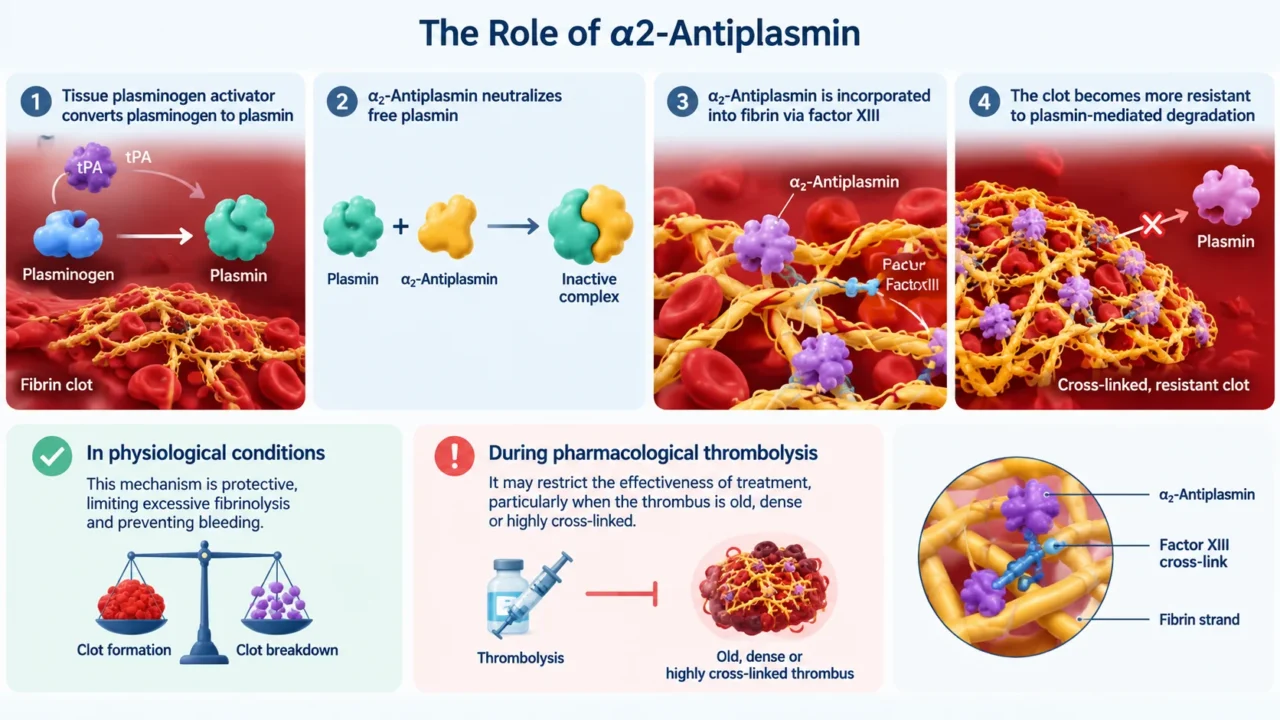
The fibrinolytic system is regulated by a delicate balance between clot formation and clot breakdown. Tissue plasminogen activator converts plasminogen into plasmin, which then degrades fibrin and helps dissolve the thrombus.
Because uncontrolled plasmin activity could lead to excessive bleeding, the body rapidly neutralizes free plasmin through α2-antiplasmin. This protein binds plasmin in an irreversible reaction and limits systemic fibrinolysis.
α2-Antiplasmin also becomes incorporated into the fibrin structure through factor XIII-mediated cross-linking. As a result, the clot becomes more resistant to plasmin-mediated degradation.
In physiological conditions, this mechanism is protective. During pharmacological thrombolysis, however, it may restrict the effectiveness of treatment, particularly when the thrombus is old, dense or highly cross-linked.
Why Conventional Thrombolysis May Be Limited
Alteplase and tenecteplase can restore blood flow, but their effectiveness varies between patients. Some thrombi dissolve rapidly, whereas others remain resistant despite treatment.
This variability may reflect differences in clot composition, thrombus age, fibrin structure, inflammation and the patient’s baseline fibrinolytic capacity. In addition, increasing the dose of a thrombolytic agent may improve clot dissolution while simultaneously increasing systemic plasmin activity, fibrinogen depletion and bleeding risk.
This is particularly important in acute ischemic stroke. A patient may benefit from rapid reperfusion, but the same treatment can increase the risk of hemorrhagic transformation in damaged brain tissue.
The central question is therefore not simply how to generate more plasmin. It is how to make plasmin more effective at the site of the thrombus while preserving hemostatic protection elsewhere.
How α2-AP Inhibition Could Enhance Fibrinolysis
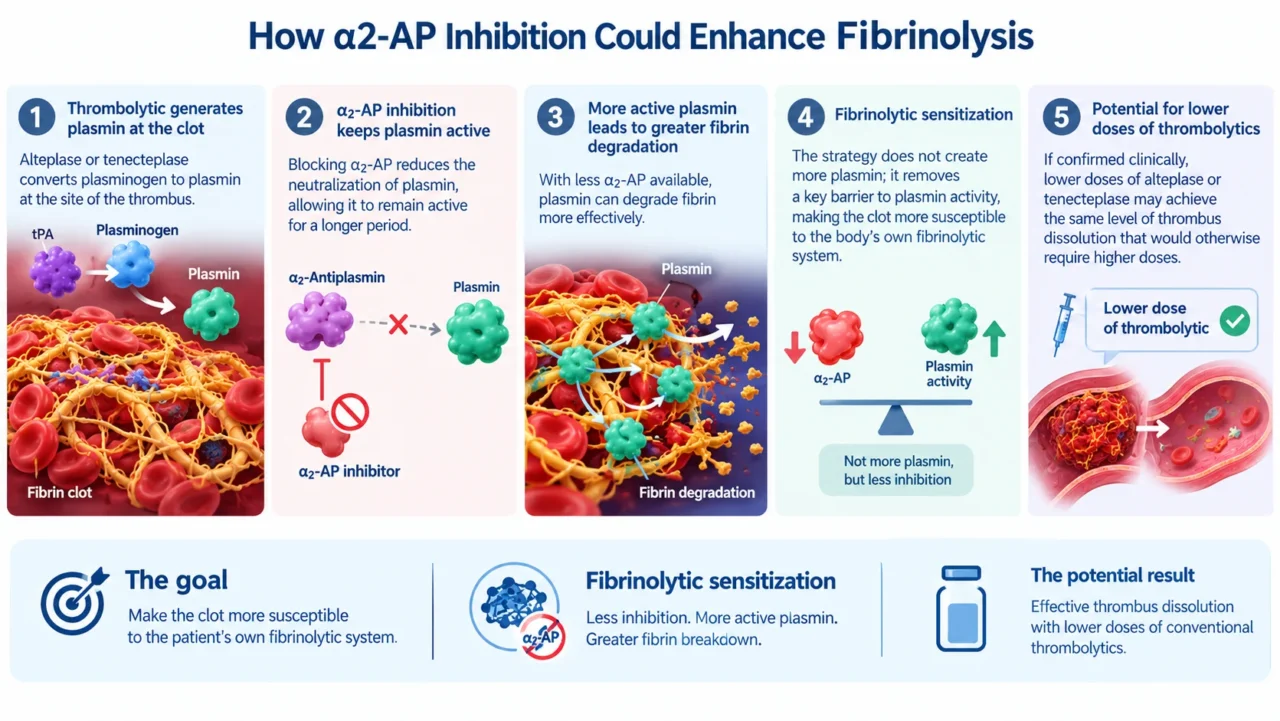
α2-AP inhibition is designed to reduce the neutralization of plasmin. When a thrombolytic agent generates plasmin at the site of a clot, inhibition of α2-AP may allow plasmin to remain active for a longer period.
This could increase fibrin degradation without requiring a proportionally higher dose of alteplase or tenecteplase. In other words, the strategy aims to make the clot more susceptible to the patient’s own fibrinolytic system.
This mechanism has been described as fibrinolytic sensitization. The treatment does not necessarily produce more plasmin; instead, it reduces one of the principal barriers to plasmin activity.
If this concept is confirmed clinically, lower doses of conventional thrombolytics may achieve a level of thrombus dissolution that would otherwise require higher doses.
Evidence From Preclinical Studies
Laboratory and animal studies have provided a biological rationale for this approach. In experimental clot models, inhibition of α2-antiplasmin enhanced tissue plasminogen activator-mediated fibrinolysis. The combination of an α2-AP inhibitory antibody with low-dose tenecteplase produced more extensive clot dissolution than a substantially higher dose of tenecteplase alone. These findings were not accompanied by a proportional increase in fibrinogen depletion or experimental bleeding.
Further research in ischemic stroke models has suggested that α2-AP can limit tenecteplase-mediated fibrinolysis. Inhibition of α2-AP was associated with improved clot lysis and, in experimental animals, smaller infarct volumes and less hemorrhagic injury after reperfusion.
These results are encouraging, but they remain preclinical. Animal models cannot fully reproduce the complex clinical conditions encountered in human stroke, pulmonary embolism or deep vein thrombosis. The safety and efficacy of α2-AP inhibition must therefore be established in well-designed clinical trials.
Early Clinical Development
One of the investigational agents in this field is TS23, a monoclonal antibody designed to inhibit α2-antiplasmin.
TS23 is being studied in several thrombotic conditions, including intermediate-risk pulmonary embolism and acute ischemic stroke. Other anti-α2-AP antibodies are also being developed for the treatment of deep vein thrombosis.
The objective is not necessarily to replace standard thrombolytic therapy. Instead, α2-AP inhibition may eventually be used as an adjunct that enhances the effect of low-dose fibrinolytic treatment or improves the performance of catheter-directed procedures.
Pulmonary Embolism
A Phase II study is evaluating ascending doses of TS23 in patients with intermediate-risk, or submassive, acute pulmonary embolism. The trial is designed to assess safety and thrombolytic activity when TS23 is used alongside standard anticoagulation.
Intermediate-risk pulmonary embolism presents a difficult therapeutic situation. Patients may be normotensive at presentation but still have right ventricular dysfunction and a risk of clinical deterioration. Systemic thrombolysis may provide rapid reperfusion, but it is often avoided because of the risk of major bleeding.
A more efficient, lower-dose thrombolytic strategy could potentially occupy the space between anticoagulation alone and full-dose systemic thrombolysis. However, the clinical value of α2-AP inhibition will depend on whether it improves right ventricular function and patient outcomes without producing an unacceptable increase in bleeding.
Acute Ischemic Stroke
The potential application of α2-AP inhibition in ischemic stroke is particularly significant. The SISTER study is a Phase II, randomized, placebo-controlled, blinded, dose-finding trial evaluating TS23 in patients with acute ischemic stroke and imaging evidence of salvageable brain tissue who are not candidates for standard reperfusion treatment.
This approach could be relevant for patients who present outside conventional treatment windows or who cannot receive standard thrombolysis. The possibility of extending pharmacological reperfusion to carefully selected patients is clinically attractive, especially when viable penumbral tissue remains.
At the same time, stroke is likely to represent one of the most demanding indications for α2-AP inhibition. The damaged cerebral microvasculature is vulnerable to bleeding, and even a modest increase in intracranial hemorrhage could offset the benefits of improved reperfusion.
For this reason, future trials will need to evaluate not only recanalization but also symptomatic intracranial hemorrhage, neurological recovery, functional independence and long-term disability.
Deep Vein Thrombosis
α2-AP inhibition may also have an important role in the treatment of deep vein thrombosis. Bayer has reported the development of BAY-3018250, an anti-α2-AP antibody intended to support targeted thrombolysis in DVT.
In this setting, the goal may extend beyond rapid symptom relief. More efficient thrombus resolution could potentially reduce venous obstruction, preserve venous valve function and lower the risk of post-thrombotic syndrome.
However, changes in thrombus size alone will not be sufficient to establish clinical benefit. Future studies must determine whether α2-AP inhibition improves venous function, reduces chronic symptoms and provides a meaningful benefit over anticoagulation alone.
The Safety Question
The principal safety concern is straightforward: α2-antiplasmin is an important component of normal hemostasis. Reducing its activity could make it more difficult for the body to stabilize clots at sites of vascular injury.
The duration and degree of α2-AP inhibition will therefore be critical. A short and controlled period of inhibition may support therapeutic thrombolysis while limiting the risk of prolonged bleeding. In contrast, excessive or sustained inhibition could interfere with physiological fibrinolytic regulation.
Another important question is whether the effect can be rapidly reversed. A short-acting agent or a reliable reversal strategy would be particularly valuable in patients who develop bleeding or require urgent surgery.
Researchers must also determine whether α2-AP inhibition influences biological pathways beyond fibrin degradation. Plasmin participates in inflammation, tissue remodeling and interactions with the complement system. These effects may become clinically relevant when plasmin activity is prolonged.
A More Individualized Approach to Thrombolysis
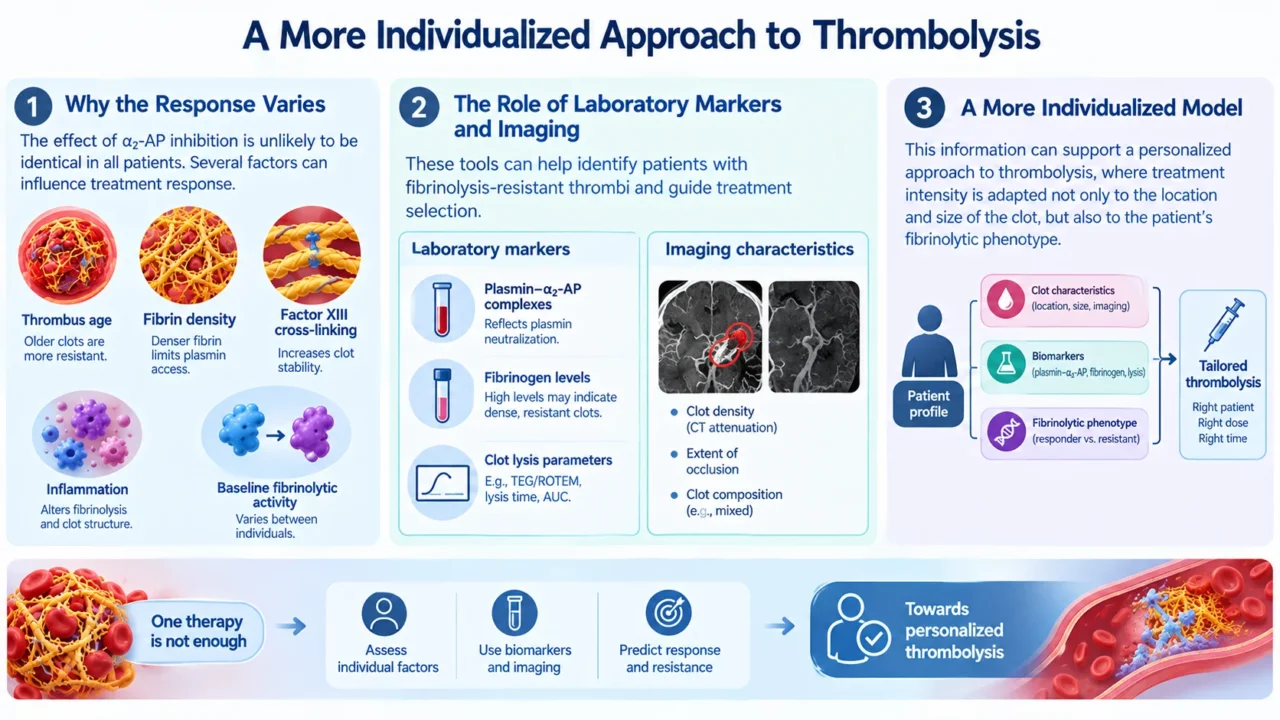
The response to α2-AP inhibition is unlikely to be identical in all patients. Thrombus age, fibrin density, factor XIII-mediated cross-linking, inflammation and baseline fibrinolytic activity may all influence treatment response.
In the future, laboratory markers and imaging characteristics could help identify patients with fibrinolysis-resistant thrombi. Measurements such as plasmin–α2-AP complexes, fibrinogen levels and clot lysis parameters may contribute to treatment selection.
This could support a more individualized model of thrombolysis, in which the intensity of treatment is adapted not only to the location and size of the clot but also to the patient’s fibrinolytic phenotype.
Combination With Current Reperfusion Therapies
α2-AP inhibition is more likely to complement existing therapies than to replace them.
Possible combinations include tenecteplase, alteplase, catheter-directed thrombolysis, ultrasound-assisted thrombolysis and mechanical thrombectomy.
For example, in pulmonary embolism, an α2-AP inhibitor could potentially enhance the effect of catheter-directed low-dose thrombolysis. In acute ischemic stroke, it might help dissolve residual distal thrombus after mechanical thrombectomy or reduce the risk of re-occlusion.
Research on ultrasound-assisted thrombolysis has also demonstrated that fibrinolysis interacts with inflammatory and complement pathways. This suggests that the success of thrombus resolution depends on a broader biological environment rather than fibrin degradation alone.
Current Guidelines and the Future of α2-AP Inhibition
Current international guidelines do not yet recommend α2-antiplasmin inhibition as an established treatment for thromboembolic disease. The strategy remains investigational and is currently being evaluated as a potential adjunct to established reperfusion therapies.
The most relevant guideline for acute ischemic stroke is the 2026 AHA/ASA Guideline for the Early Management of Patients With Acute Ischemic Stroke.
It provides updated recommendations on intravenous thrombolysis, patient selection, tenecteplase and alteplase, extended treatment windows, advanced imaging, and endovascular thrombectomy. At present, these recommendations apply to established thrombolytic agents and do not include α2-antiplasmin inhibitors.
For acute pulmonary embolism, the most important recent document is the 2026
This multisociety guideline provides updated recommendations on risk assessment, anticoagulation, systemic thrombolysis, catheter-directed thrombolysis, mechanical thrombectomy, and surgical embolectomy.
The guideline was published in both JACC and Circulation. The JACC version and the Circulation version provide the full recommendations for the evaluation and management of acute pulmonary embolism.
These recommendations help explain the potential future role of α2-antiplasmin inhibition. In patients for whom conventional thrombolysis may be beneficial but is limited by bleeding risk, an α2-AP inhibitor could theoretically enhance fibrinolysis without requiring a proportional increase in the dose of alteplase or tenecteplase.
However, this potential benefit remains unconfirmed. Before α2-antiplasmin inhibition can be incorporated into clinical guidelines, randomized clinical trials must demonstrate improved reperfusion, better functional outcomes, and an acceptable safety profile.
At present, α2-antiplasmin inhibition should be considered an investigational strategy. It should not replace guideline-directed anticoagulation, systemic thrombolysis, catheter-based intervention, or mechanical thrombectomy.
What Clinical Trials Must Establish
Before α2-AP inhibitors can become part of routine practice, clinical trials must demonstrate that improved clot dissolution leads to better patient outcomes.
The most important outcomes will include major bleeding, intracranial hemorrhage, mortality, functional recovery, right ventricular improvement in pulmonary embolism, venous function after DVT and the need for rescue intervention.
Imaging-based reduction in thrombus burden will be useful, but it will not be enough on its own. A successful treatment must improve outcomes that matter to patients, including survival, neurological independence, exercise capacity and quality of life.
Conclusion
α2-Antiplasmin inhibition represents a new way of thinking about thrombolytic therapy. Rather than simply increasing the amount of thrombolytic drug, this strategy aims to reduce the natural resistance of the clot to plasmin-mediated degradation.
If clinical studies confirm the early experimental findings, α2-AP inhibitors could improve the efficiency of low-dose thrombolysis and create new options for patients with pulmonary embolism, ischemic stroke and deep vein thrombosis.
The main challenge will be achieving the right balance between effective reperfusion and preservation of hemostasis. For now, α2-AP inhibition remains investigational, but it may become an important component of a future in which thrombolytic therapy is more targeted, individualized and biologically precise.
FAQ
1. What is the role of α2-antiplasmin in the body?
α2-Antiplasmin binds and neutralizes plasmin, limiting fibrin degradation and preventing excessive fibrinolysis.
2. Why might α2-AP inhibition improve thrombolysis?
By reducing plasmin neutralization, α2-AP inhibition may allow plasmin to remain active within the thrombus for longer and increase fibrin breakdown.
3. Is α2-AP inhibition the same as administering a higher dose of alteplase?
No. The strategy is intended to improve the activity of generated plasmin rather than simply increasing the amount of thrombolytic drug administered.
4. What is TS23?
TS23 is an investigational monoclonal antibody designed to inhibit α2-antiplasmin. It is being evaluated in clinical trials for thrombotic disorders, including pulmonary embolism and ischemic stroke.
5. Could α2-AP inhibitors reduce bleeding risk?
Possibly, but this has not yet been established in definitive clinical trials. The theoretical benefit is that improved thrombolysis may be achieved with a lower dose of conventional thrombolytic therapy.
6. Is α2-AP inhibition currently approved for clinical use?
No. α2-AP inhibitors remain investigational and are being evaluated in clinical studies.
7. Which diseases could potentially be treated with α2-AP inhibition?
Potential applications include acute ischemic stroke, pulmonary embolism, deep vein thrombosis, myocardial infarction, and other thrombotic conditions requiring pharmacological reperfusion.
8. What is the greatest safety concern?
The most important concern is excessive bleeding, especially intracranial hemorrhage in patients with acute ischemic stroke.
9. Could α2-AP inhibition replace thrombectomy?
There is currently no evidence that it can replace mechanical thrombectomy. In the future, it may be studied as a complementary therapy for residual or distal thrombus.
10. What is the future of α2-AP inhibition?
If ongoing clinical trials demonstrate improved reperfusion without an unacceptable increase in bleeding, α2-AP inhibition could become a new adjunctive platform for safer and more individualized thrombolysis.
Written by Anna Stepanyan, MD
Stay updated with Hemostasis Today.
-
Sep 17, 2026, 15:20Fatma M. Attia: Expanding the Evidence Base for Therapeutic Plasma Exchange Across Multiple Indications
-
Sep 17, 2026, 15:19Conan McIlwrath: The Haemophilia Society Engages With IBCA
-
Sep 17, 2026, 15:06Eleftheria Hatzimichael: A Contemporary Diagnostic Approach to Inherited Microcytic Anemias
-
Sep 17, 2026, 14:51Konstantin Yenkoyan: Emicizumab and the Power of Translational Science
-
Sep 17, 2026, 14:47Zachary Sutton: Translating the 2026 KDIGO Guideline Into Practice
-
Sep 17, 2026, 14:43Leah Williams: Evaluating Medical Device Haemocompatibility Under ISO 10993-4
-
Sep 17, 2026, 14:32Ria Ahuja: Scaling Evidence-Informed Anemia Interventions Through Training
-
Sep 17, 2026, 14:23Neil Blumberg: ABO Nonidentical Transfusions and Mortality in Massive Transfusion
-
Sep 17, 2026, 14:21Jay Mohan: Thrombectomy and Balloon Angioplasty for Pacemaker-Induced Thrombosis