


Mohamed Magdy Badr: Post-Thrombotic Limb – The Hidden Burden After DVT
Mohamed Magdy Badr, Wound Care Consultant at Armed Force Rehabilitation Center, posted on LinkedIn:
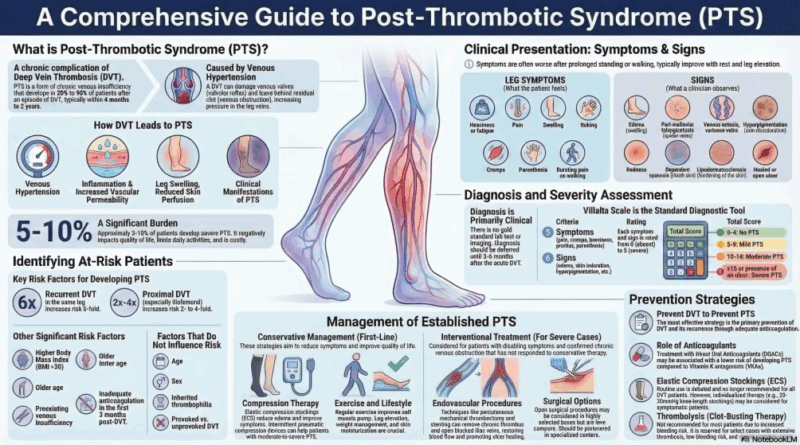
”Post-Thrombotic Limb: The Hidden Burden After DVT
Why Many Patients Continue to Suffer Long After the Clot Is Gone
Post-Thrombotic Syndrome (PTS) is one of the most challenging chronic complications we see after Deep Vein Thrombosis (DVT).
Despite adequate treatment of the acute clot, 5–10% of patients will develop significant PTS – impacting mobility, quality of life, and ulcer risk.
Here is a concise, clinically focused overview every healthcare professional should keep in mind:
Why Does PTS Occur?
- PTS develops due to residual venous obstruction and valve damage, leading to chronic venous hypertension.
This triggers:
- Increased vascular permeability
- Leg swelling and heaviness
- Skin inflammation and hyperpigmentation
- Reduced skin perfusion → higher ulcer risk
Recognizing the Clinical Picture
Patients commonly report:
- Leg heaviness or fatigue
- Pain or bursting sensation
- Swelling
- Itching or cramps
- Paresthesia
Clinicians often observe:
- Edema and varicose veins
- Hyperpigmentation
- Dependent cyanosis
- Lipodermatosclerosis
- Healed or active venous ulcer
Diagnosis: Villalta Score
- No imaging test defines PTS.
- Diagnosis is clinical, using symptoms + signs, with severity categorized as:
- 0–4: No PTS
- 5–9: Mild
- 10–14: Moderate
- ≥15 or venous ulcer: Severe
Management Strategy
First-line
- Compression therapy + lifestyle modifications
- Graduated compression stockings
- Leg elevation
- Regular walking
- Skin care and moisturization
For Severe Cases
- Interventional strategies:
- Venous stenting for obstruction
- Endovascular procedures
- In selected cases: surgical options
Prevention Is the Best Treatment
- Preventing DVT remains the strongest weapon against PTS.
Key pillars include:- Correct anticoagulation
- Adequate treatment duration
- Early mobilization
- Compression therapy when appropriate
Take-Home Message
- Post-Thrombotic Limb is not a simple “swelling after DVT”—it’s a progressive, debilitating condition that must be recognized early and managed proactively.
- Compression, lifestyle modification, and timely intervention can significantly improve outcomes and prevent chronic disability.”
Stay informed with Hemostasis Today.
-
Sep 30, 2026, 15:58Bernhard Merget: New Frontiers in Thrombosis and Stroke Research
-
Sep 30, 2026, 15:39Ifeanyichukwu Ifechidere: The Molecular Orchestra of Primary Hemostasis
-
Sep 30, 2026, 15:28Reassessing the Benefit–Risk Balance of Extended Anticoagulation in Cancer Patients – ESC Working Group on Cardiovascular Pharmacotherapy
-
Sep 30, 2026, 15:07Chiranjeev Sharma: Targeting Factor XIa with the Synthetic Inhibitor SB-01
-
Sep 30, 2026, 14:41Bruna Gigante: Balancing Thrombosis and Bleeding in Cardiovascular Care
-
Sep 30, 2026, 14:13Ashok Choudhury: Portal Vein Thrombosis and Outcomes in Cirrhosis
-
Sep 30, 2026, 13:57Leslye Conde Bazán: When Conventional Imaging Is Not Enough – The Role of IVUS
-
Sep 30, 2026, 13:41Huda Salah Eldin: The Challenge of Balancing Antithrombotic Therapy After PCI
-
Sep 30, 2026, 13:29Abdus Salam: What Can CT Venography Reveal About the Veins?