


Soumen Bhattacharyya: Microangiopathic Hemolytic Anemia Is Often a Hematologic Clue to Underlying Malignancy
Soumen Bhattacharyya, College Teacher in the Department of Physiology at RBC College for Women, shared on LinkedIn:
”Microangiopathic Hemolytic Anemia (MAHA) is more than a lab diagnosis—it’s often a clinical signal of an underlying systemic process, and sometimes, a hidden malignancy.
One particularly important association is with metastatic carcinoma, especially mucin-secreting adenocarcinomas (classically stomach and breast, but also pancreas, lung, and prostate).
What’s the mechanism?
Tumor-derived mucin activates the coagulation cascade – formation of microvascular thrombi – red blood cells get mechanically sheared as they pass through these vessels.
This results in:
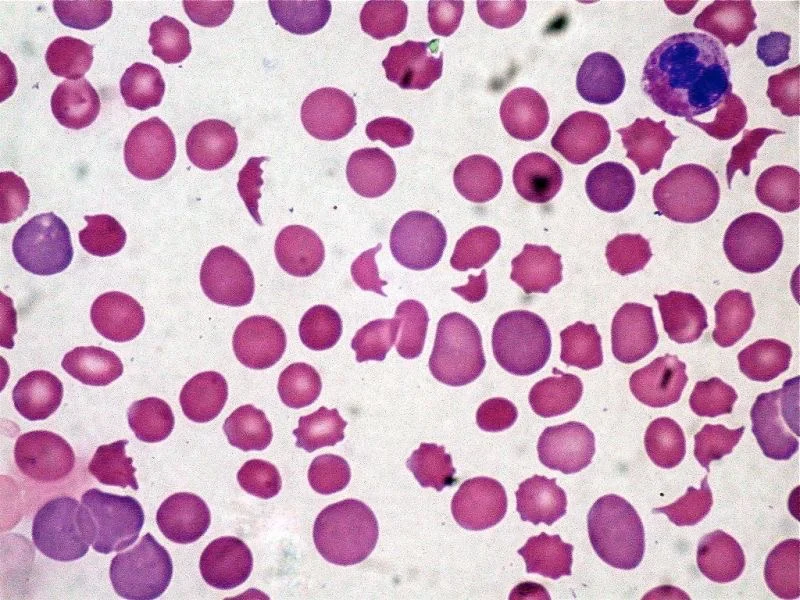
- Fragmented RBCs (schistocytes)
- Intravascular hemolysis
- Thrombocytopenia
On peripheral smear, schistocytes appear as irregular, jagged RBC fragments—formed when red cells are literally ‘ripped apart’ in the circulation.
Clinical and lab features:
- Moderate to severe anemia (often abrupt onset)
- Thrombocytopenia
- High LDH, high indirect bilirubin
- Haptoglobin
- Possible hemoglobinuria
Why this matters
MAHA may precede the diagnosis of malignancy or indicate advanced disease.
Recognizing this pattern early can change outcomes.
Key takeaway
Mucin – coagulation activation – microthrombi – RBC fragmentation – MAHA
Always respect the peripheral smear—it often provides the earliest clue to a much bigger diagnosis.”
Stay updated with Hemostasis Today.
-
Sep 20, 2026, 12:34Sabrine Mekni: Advancing HSCT for Children With Fanconi Anemia
-
Sep 20, 2026, 12:11Giacomo Buso: Silent Atherosclerosis Begins Earlier Than Expected
-
Sep 20, 2026, 12:0310 Posts Not to Miss This Week
-
Sep 20, 2026, 11:27Edward Lee Carter: Prasugrel Dosing Matters in P2Y12 Inhibitor Comparisons After PCI
-
Sep 20, 2026, 09:51Ceasovschih Alexandr: A Closer Look at Lipid Disorders in CKM Syndrome
-
Sep 20, 2026, 09:05World Stroke Academy: Can Adjunct IAT Improve Tissue Reperfusion?
-
Sep 20, 2026, 06:46Neeraj Songara: From Donated Blood to Engineered Therapeutics
-
Sep 20, 2026, 06:24Louise St. Germain Bannon: Improving Awareness and Care for Women Across the Lifespan
-
Sep 20, 2026, 05:17Maxime Dely: When ABO Compatibility Isn’t Enough for Safe Transfusion