

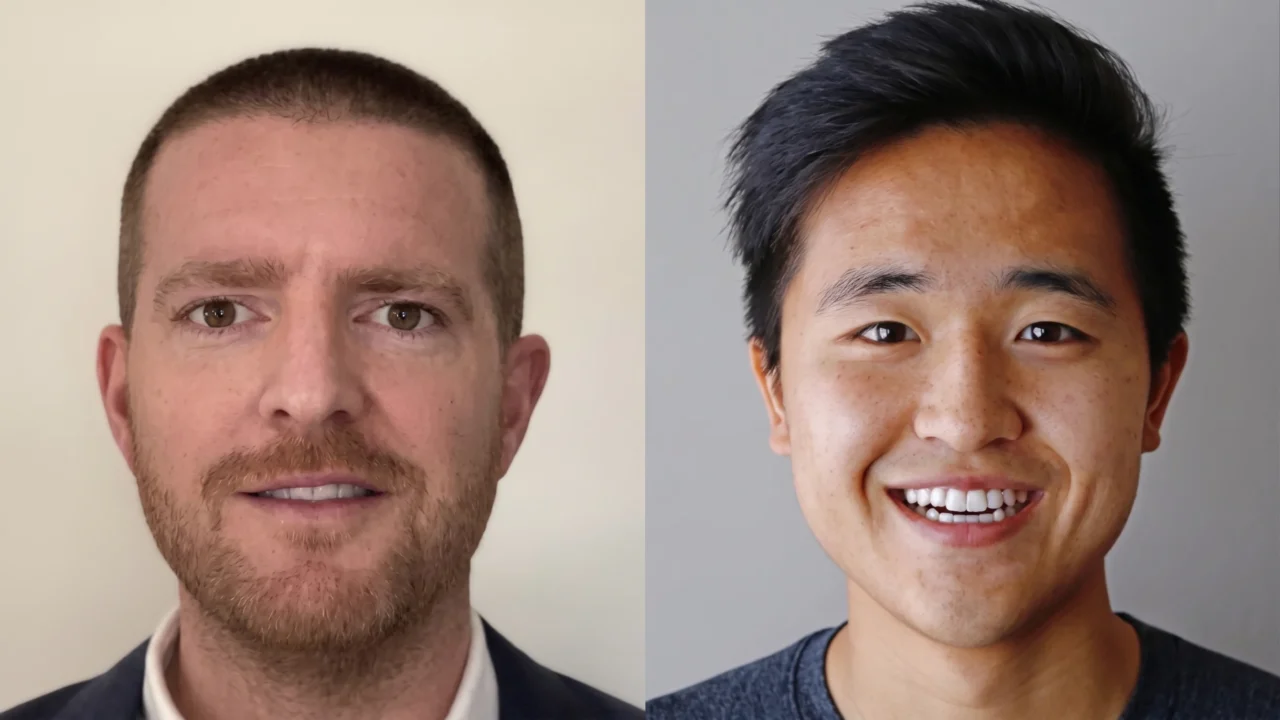
Ben Kleinstiver: Overcoming a Major Barrier to Scalable Gene Editing
Ben Kleinstiver, Associate Professor at Harvard Medical School, shared Mass General Brigham Research‘s post on LinkedIn, adding:
“Thanks Mass General Brigham Research for featuring our research!
In this study, we sought to overcome a key challenge for inserting large DNA sequences into the genome: that DNA molecules above a certain length are toxic & trigger serious innate immune responses.
Our paper was recently published in Nature.
Why was this an important advance?
Inserting large DNA segments into the genome could transform the development of therapies in ways that could enable their application to a wide diversity of patients.
Think about inserting 1,000s of DNA letters (kilobases) encoding an entire gene into a precise genomic location. A therapy that delivers a ‘wild-type’ gene could be applied to many individuals regardless of where their mutation is located.
This contrasts with editing approaches that fix the underlying genetic mutation by correcting one DNA letter at a time.
Although fixing single base mutations is now possible (with impressive clinical results!), there are challenges for scaling these approaches in terms of time, cost, and clinical regulatory paths.
What was the problem?
Gene editing technologies to insert large pieces of DNA into the genome are typically comprised of 2 or more components: (1) an enzyme that mediates the insertion reaction, and (2) a DNA ‘cargo’ molecule that encodes the correct gene.
We found that delivering these molecules into cells was inherently toxic, leading to unhappy cells and mice. It turns out, delivering large pieces of double-stranded DNA into cells activates our innate immune response, which has evolved to detect ‘foreign’ DNA in certain compartments of cells.
Unfortunately, most approaches to insert gene-sized sequences into cells require large double-stranded DNA donors, meaning that this toxicity is a barrier for many leading-edge DNA insertion tools.
How did we solve this challenge?
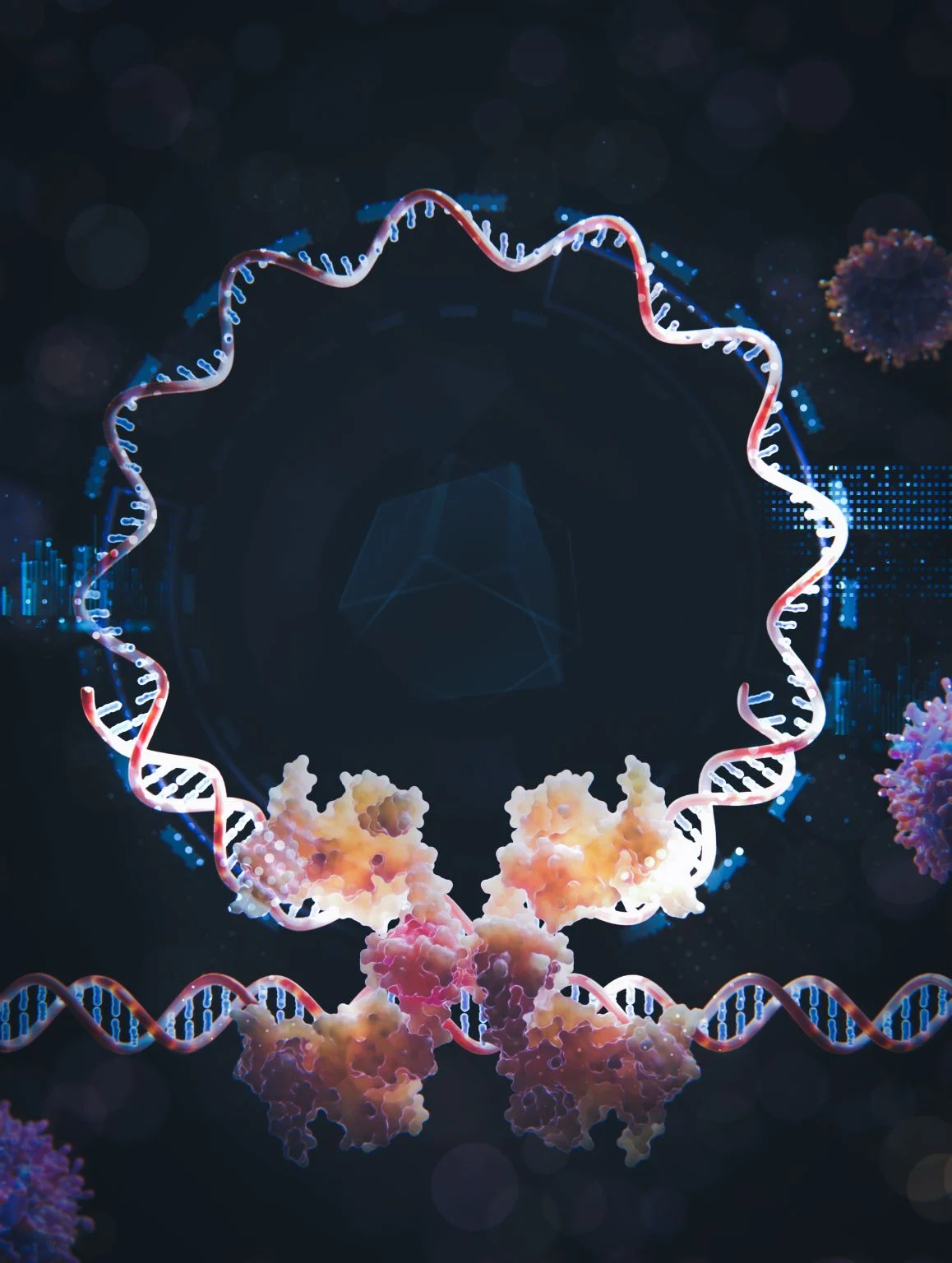
To circumvent the toxicity of dsDNA, we sought to develop a format of DNA that isn’t recognized by our immune system. Connor Tou synthesized key observations from other fields to conceptualize a solution: circular single stranded DNA molecules that should be ‘stealth’ to immune sensors, and then annealing a short piece of DNA to the circle to create a small region of double-stranded DNA (see the attached image in the MGB post!).
This DNA molecule should still be compatible with binding to the DNA insertion enzyme but no longer trigger an immune response. Excitingly, our study demonstrates that this new DNA format can enable efficient and non-toxic kilobase-scale DNA insertions into the genome.
What’s next?
Now with non-toxic DNA molecules that can be delivered to cells & in vivo, we optimistic that advances in enzyme engineering can move quickly ahead.
Solutions to both of these key components for DNA insertion bring us closer to new approaches that can be more widely applied to treat broader sets of patients. ”
Mass General Brigham Research shared a post on LinkedIn about a recent article by Connor Tou et al. published in Nature, adding:
“What if we could insert healthy genes into the chromosomes of cells without triggering the body’s natural defenses?
Researchers from the lab of Ben Kleinstiver, PhD, at Mass General Brigham, developed a new genome editing approach called INSTALL, which uses ‘stealth’ single-stranded DNA and specialized enzymes to safely insert large, gene-sized DNA sequences into the genome.
In their recent study led by Connor Tou, the Kleinstiver lab developed INSTALL to enable large-scale DNA insertion without the toxic immune responses often seen with conventional DNA insertion methods.
The team’s work represents an important step toward more scalable gene therapies that could one day help treat many patients with the same genetic disease, regardless of the specific mutation they carry.”
Title: Immune evasive DNA donors and recombinases license kilobase-scale writing
Authors: Connor J. Tou, Keqiang Xie, Joana Ferreira da Silva, Pazhanichamy Kalailingam, Eliz Amar-Lewis, David Rufino-Ramos, William Sawyer, Madeline L. Eller, Jakob Starzyk, Ishita Majumdar, Jiao Wang, Danna Lee, Shaobo Yang, Ronald J. Meis, Gary A. Dahl, Jiahe Li, Richard Shan, Natalie Artzi, Patricia L. Musolino, Hao Wu, Benjamin P. Kleinstiver
Stay updated on all scientific advances with Hemostasis Today.
-
Sep 19, 2026, 13:39Keisuke Goda: Decoding Platelet Phenotypes in COVID-19 With Optofluidic Imaging
-
Sep 19, 2026, 13:30Targeted Thrombolysis Beyond tPA
-
Sep 19, 2026, 13:21Paul Armstrong: From Summer Studentship to Young Researcher
-
Sep 19, 2026, 13:06Rabiya Masood: Breaking the Cycle of Thalassemia Through Screening
-
Sep 19, 2026, 10:52Consuela A. Albright: The Critical Role of Black Blood Donors in Sickle Cell Treatment
-
Sep 19, 2026, 10:47Amber Yates: Inside Agios’ Partnership with the Sickle Cell Community
-
Sep 19, 2026, 10:46Anton Farkas: Mechanical Thrombectomy for Acute PE in Early Pregnancy
-
Sep 19, 2026, 10:40Marjolein Smidt: ASH Raises Ferritin Thresholds for Iron Deficiency
-
Sep 19, 2026, 10:34Nawsherwan Mohammad: ASH 2026 Guidelines Redefine How We Detect Iron Deficiency