


Diane J.: Understanding the Impact of Sickle Cell Disease on Children’s Lives
Diane J., Bachelor of Science, Biological Sciences Student at University of Calgary, shared a post on Linkedin about articles, adding:
“What happens when blood flow is obstructed? And what does that mean for a child living with sickle cell disease?
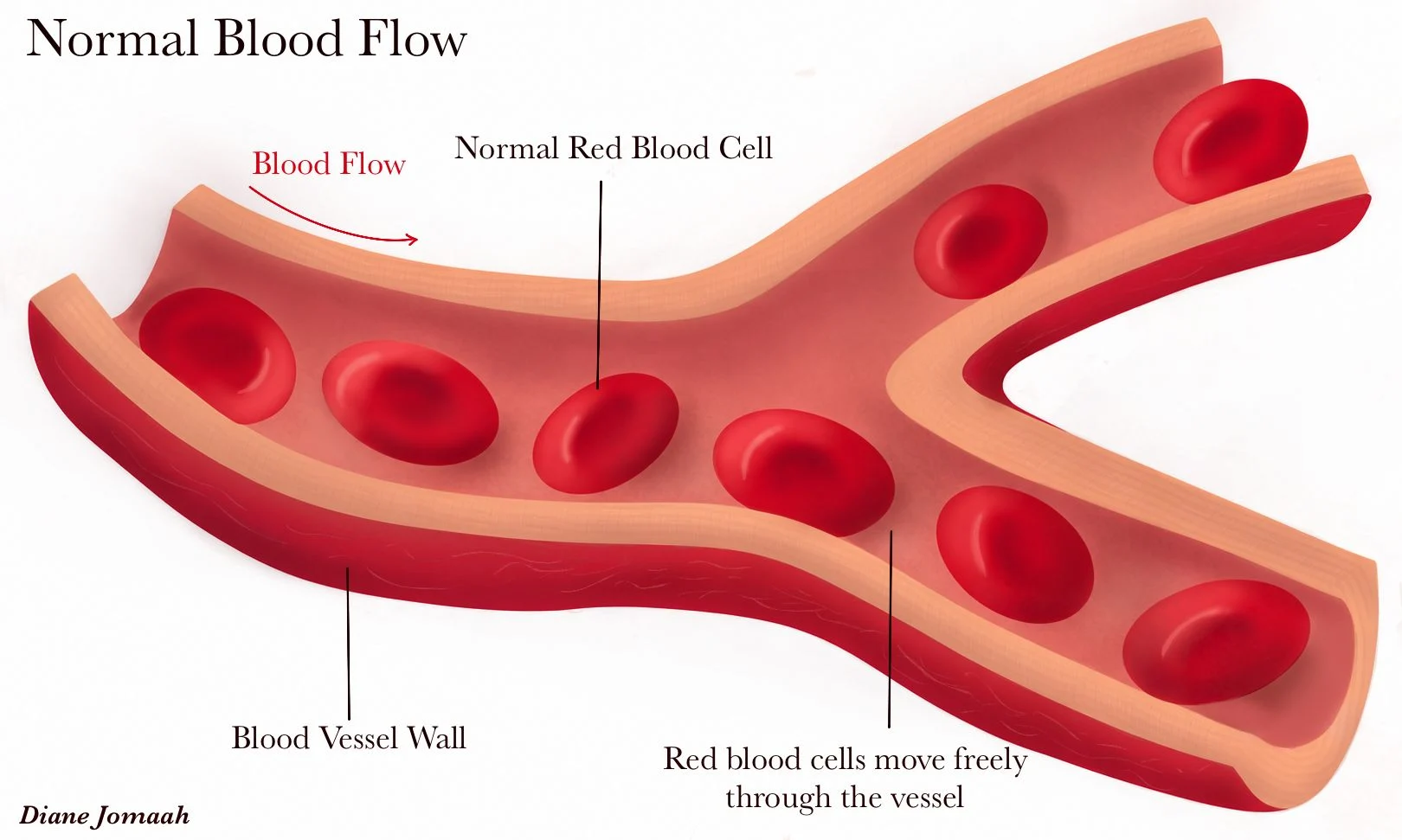
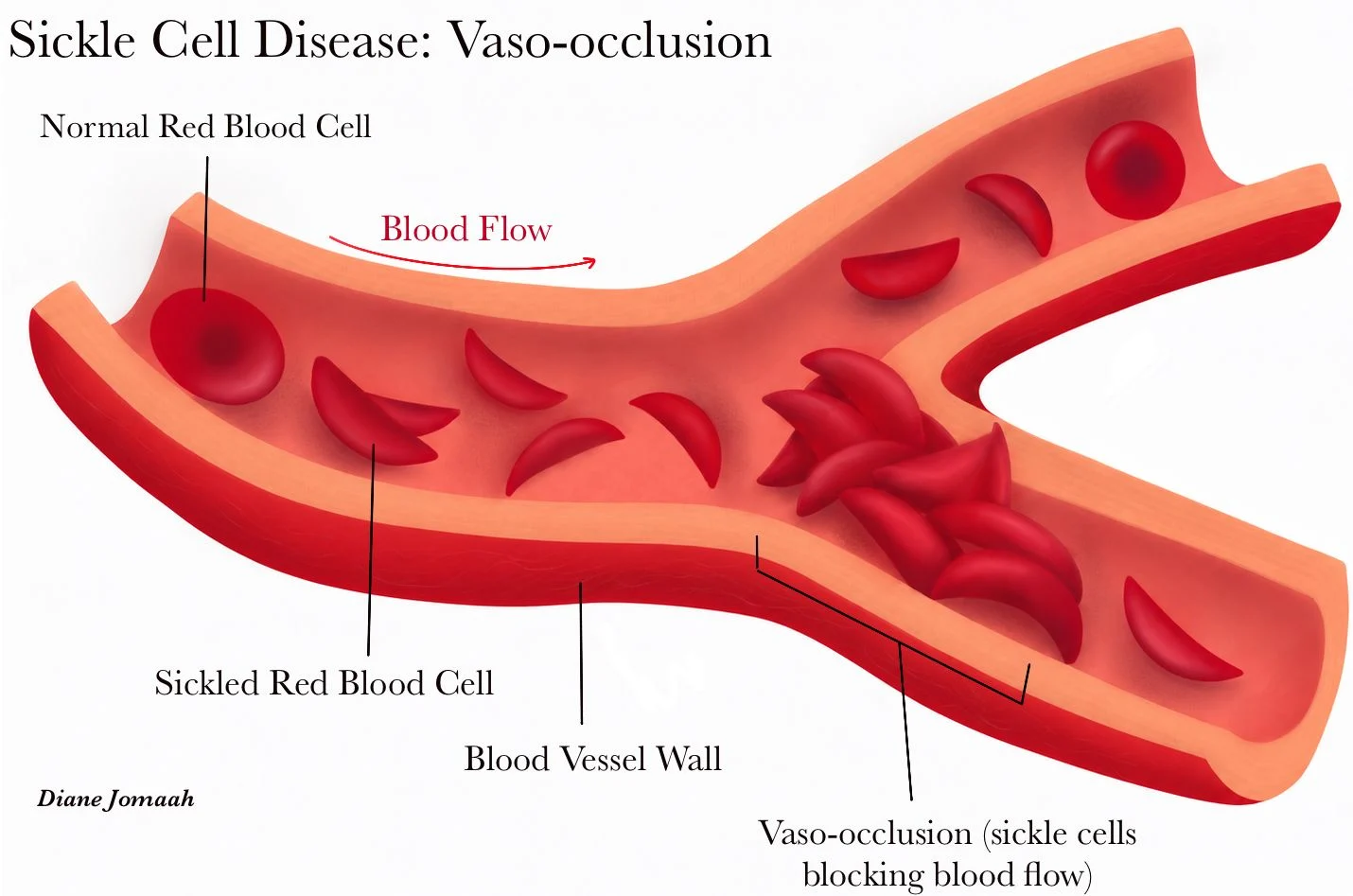
I created these two original medical illustrations to explore the difference between normal blood circulation and vaso-occlusion (the blockage of small blood vessels by sickled red blood cells), one of the most painful complications of sickle cell disease (SCD).
SCD is an inherited blood disorder caused by a genetic mutation that produces an abnormal form of hemoglobin called hemoglobin S (HbS).
When HbS becomes deoxygenated, it can polymerize (link together into long, stiff chains), causing red blood cells to become rigid and sickle-shaped (Manwani & Frenette, 2013; Vuong et al., 2023).
In the first illustration, flexible red blood cells move freely through a branching vessel. In the second, sickled cells accumulate at the branch point, obstructing blood flow.
But vaso-occlusion involves more than sickled cells simply getting stuck.
Manwani and Frenette (2013) describe how sickled red blood cells, vascular endothelial cells (the cells lining blood vessels), white blood cells, and inflammatory processes contribute to the obstruction of small blood vessels.
The resulting reduction in blood flow can lead to ischemia (inadequate blood supply to tissues), severe pain, and tissue injury.
For children living with sickle cell disease, the impact extends beyond the blood vessel.
In a longitudinal study involving 94 children with SCD, Vuong et al. (2023) found that hospitalization for vaso-occlusive crises was associated with reduced health-related quality of life. These differences were still observed up to one year after hospitalization, particularly in physical functioning.
A vaso-occlusive episode may be an acute clinical event, but its impact on a child’s life can extend well beyond hospitalization.
Creating these illustrations brought together two interests I care deeply about: pediatric medicine and the visual communication of science.
I hope to continue exploring medical illustration as a way to make scientific knowledge more accessible, particularly for children and families navigating serious health conditions.
Because understanding what happens inside the body is important, but so is understanding what it means for the child living through it.
Original medical illustrations by Diane Jomaah.”
1. Title: Vaso-occlusion in sickle cell disease: pathophysiology and novel targeted therapies
Authors: Deepa Manwani, Paul S. Frenette
Read the Full Article on American Society of Hematology.
 2. Title: Impact of hospitalization for vaso-occlusive crisis on health-related quality of life in children with sickle cell disease
Authors: Caroline Vuong, Ibtissame Moussa, Maud M. van Muilekom, Harriët Heijboer, Eva Rettenbacher, Lotte Haverman, Jos Twisk, Karin Fijnvandraat, Corien L. Eckhardt
Read the Full Article on Pediatric Blood & Cancer.
 Stay updated with Hemostasis Today.
-
Nov 28, 2026, 12:10Yannig Querel: Recognising Undiagnosed Bleeding Disorders in Women and Girls
-
Nov 28, 2026, 11:38Ohad Houri: Low-Dose Aspirin for Preeclampsia Prevention in Women with Heart Disease
-
Nov 28, 2026, 11:23Ahmed Elshal: Promoting Nutrition Awareness and Iron Deficiency Prevention
-
Nov 28, 2026, 11:19Andrew Emad: Roche Egypt Advances Healthcare Innovation and Partnerships for Better Patient Care
-
Nov 28, 2026, 11:16How Much Bleeding in VWD Goes Unseen Because It Has Been Normalised? – European Haemophilia Consortium
-
Nov 28, 2026, 11:10Giacomo Ramponi: Evaluating Catheter-Directed Thrombolysis for Intermediate-High-Risk Pulmonary Embolism
-
Nov 28, 2026, 11:09Sophia Delicou: Highlighting the Role of Clinical Trials in Advancing Medical Research and Patient Access
-
Nov 28, 2026, 11:07Akshay Hm: Investigating Deep Vein Thrombosis Risk in Critically Ill Patients With Coagulopathy
-
Nov 28, 2026, 11:02Suvha Ghoshal: Exploring the Potential Association Between Erythritol and Ischemic Stroke Risk