

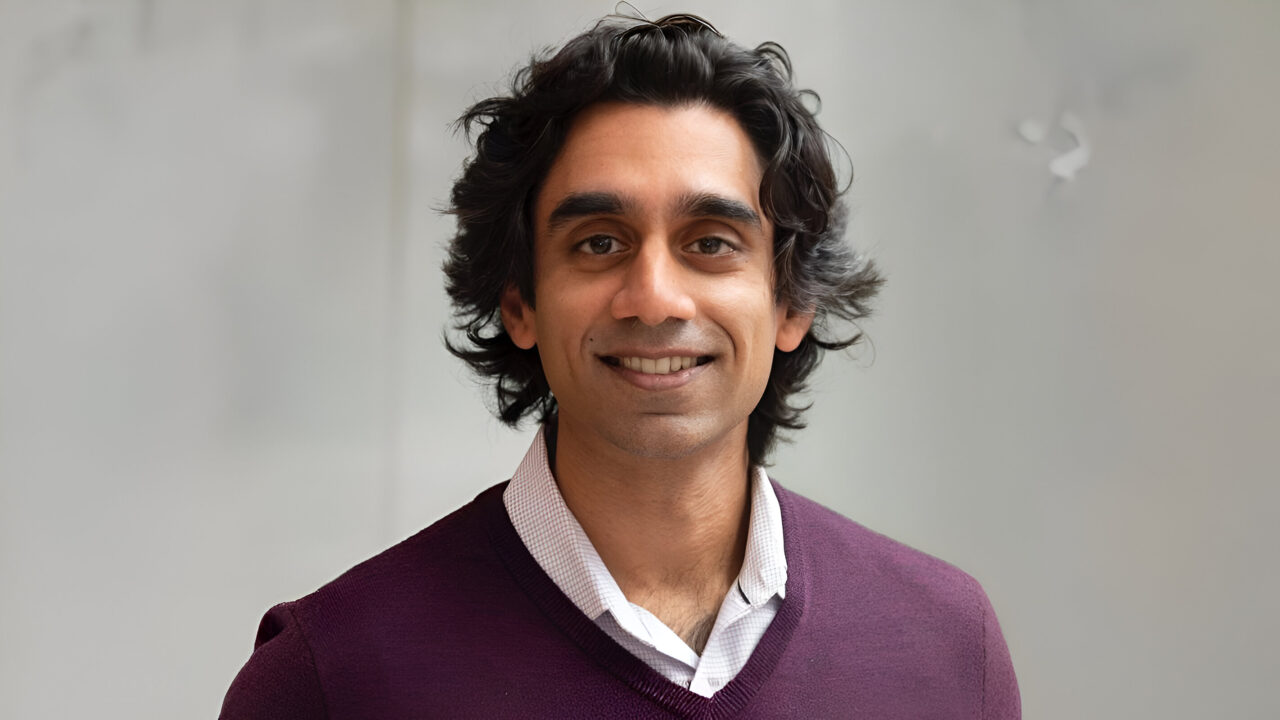
Pradeep Natarajan on Milvexian and Abelacimab vs Enoxaparin to Prevent VTE Post-Arthroplasty
Pradeep Natarajan, Director, Preventive Cardiology at Massachusetts General Hospital, shared on LinkedIn:
”Milvexian (oral FXIa inhibitor bid) and Abelacimab (FXI mAb x1) both have been shown to lower knee arthroplasty postop VTE vs enoxaparin (sc FXa and thrombin inhibitor).
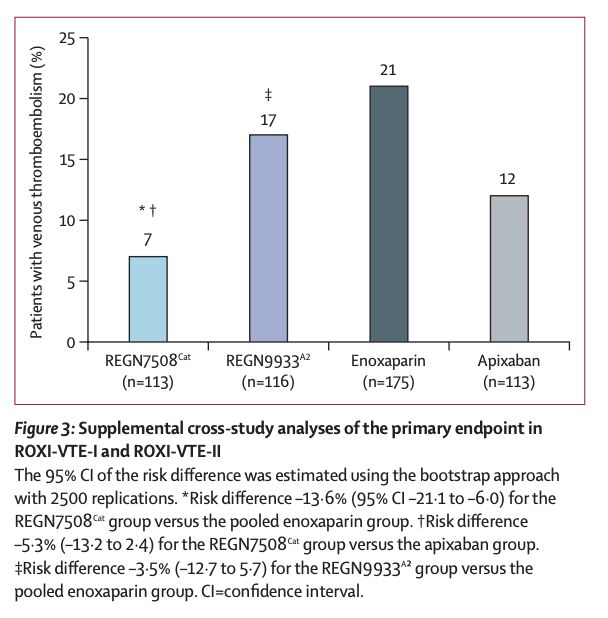
In new RCT in same context, REGN7508Cat x1 was superior to enoxaparin sc daily but REGN9933A2 x1 was non-inferior.
Bleeding rates were similar but postop anemia less common for both vs enopaxarin.
– REGN7508Cat blocks the catalytic domain of FXI, so it blocks FXIa activity and FXI activation by FXIIa *and* thrombin.
This is generally similar to Abelacimab, which locks FXI in its inactive state.
– REGN9933A2 blocks the apple 2 domain of FXI, blocking FXIIa-mediated activation but permits thrombin-mediated activation.
So it’s primarily a contact pathway FXI inhibitor.
The effect estimate for reduced VTE with REGN7508Cat vs enoxaparin seems similar for Abelacimab at the higher doses in ANT-005 TKA.
Milvexian BID had lower VTE rates relative to enoxaparin only at the highest studied dose of AXIOMATIC-TKR with similar bleeding rates.
The data continue to show that the deepest inhibition of FXI (Abelacimab, now REGN7508Cat) is most favorable for postop VTE prevention after knee arthroplasty.
This study effectively demonstrates that FXI activation by both FXIIa *and* thrombin play a role in postop VTE.
In exploratory analyses, REGN7508Cat had lower VTE rates vs apixaban (oral FXa inhibitor), which is exciting to see.
Such a comparison was not performed in the Milvexian and Abelacimab postop VTE trials.”
Read the full article here.
Article: Efficacy and safety of REGN9933A2 and REGN7508Cat for preventing postoperative venous thromboembolism (ROXI-VTE-I and ROXI-VTE-II): two randomised, open-label, phase 2 trials
Authors: Jeffrey I. Weitz, Aaron P. Kithcart, Meagan P. O’Brien, Oren Levy, Ethan Marin, Margaret Onisko, Kusha A. Mohammadi, Dateng Li, Karoline A. Meagher, Hannah H. Chang, Benjamin A. Olenchock, David E. Gutstein, Annelise Segers, Robin S. Roberts, Marc P. Bonaca, Gary E. Raskob
Stay updated on all scientific advances with Hemostasis Today.
-
Sep 21, 2026, 15:23Anis Mahjoubi: MRI Findings of Krukenberg Tumors
-
Sep 21, 2026, 15:08Fikreab Tesfaye Tefera: 10 Practical Take-Home Points for Diagnosing Iron Deficiency Anemia
-
Sep 21, 2026, 14:10Aswin K Mohan: Lessons from TRANSCON 2026: Building Resilient Blood Supply Systems Before Crisis Hits
-
Sep 21, 2026, 14:00Vincent Lu: Beyond PT and aPTT – How Hemostasis Evolves Across a Lifetime
-
Sep 21, 2026, 13:56Alex Knapp: Emerging Technologies and Advances in Hemophilia Care
-
Sep 21, 2026, 13:51Abdalhakim Shubietah: pLAAO Fails Noninferiority to OAC in Landmark Meta-Analysis of 7 RCTs
-
Sep 21, 2026, 13:21In His Last UNGA, António Guterres Delivers a Urgent Call for Global Unity
-
Sep 21, 2026, 13:14Fatih Mehmet Gul: Are We Moving Faster Than Our Ability to Ask ‘Should We?’
-
Sep 21, 2026, 13:08Sangita Reddy: How Does Our Own Healthcare Journey in India Look Through the Same Lens?