


Wolfgang Miesbach: Successful AAV Redosing in Severe Hemophilia B
Wolfgang Miesbach, Head of Hemostasis/Hemophilia Center at Medical Clinic 2 at University Hospital Frankfurt, shared a post on LinkedIn about a recent article he and his colleague co-authored, published in Molecular Therapy, adding:
“First successful systemic redosing of AAV gene therapy in a human! Ten years after a failed AAV8 gene transfer, a 78-year-old man with severe haemophilia B was dosed again — this time with an AAV5 vector. It worked.
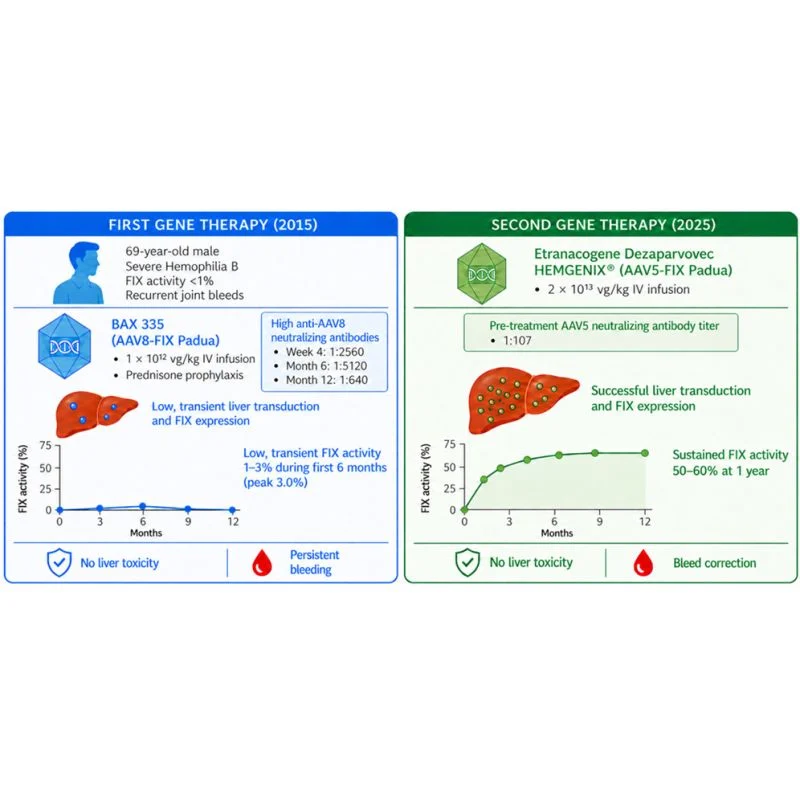
The first attempt in 2015 (BAX 335, 1 × 10¹² vg/kg) gave FIX activity of only 1–3% for a few months, followed by years of recurrent joint and muscle bleeds (approximately 30 per year), arthropathy and lost venous access. Anti-AAV8 antibodies peaked at 1:5120, and redosing was considered futile because anti-capsid immunity was assumed to close that door for good.
In May 2025 he received etranacogene dezaparvovec (2 × 10¹³ gc/kg) despite measurable pre-existing AAV5 NAbs (1:107). FIX activity rose within weeks, reached 50–60% by six months and remains there at one year. Transaminases stayed normal, and spontaneous joint and muscle bleeding resolved.
Two things make this interesting: AAV5 is the only non-primate serotype in clinical use and sits far from the others (approximately 65% capsid homology), and a decade had passed since the first exposure. Measurable neutralising activity in vitro did not preclude effective transduction in vivo.
One patient is not a licence to redose – the 20-fold higher dose, the ten-year interval and an unusual immunological history confound it, not least cisplatin-based chemoradiotherapy for a tonsillar carcinoma six months after the first vector, which may have hastened the decay of his anti-AAV8 antibodies.
But the premise that gene therapy is strictly a once-in-a-lifetime treatment no longer holds as an absolute.”
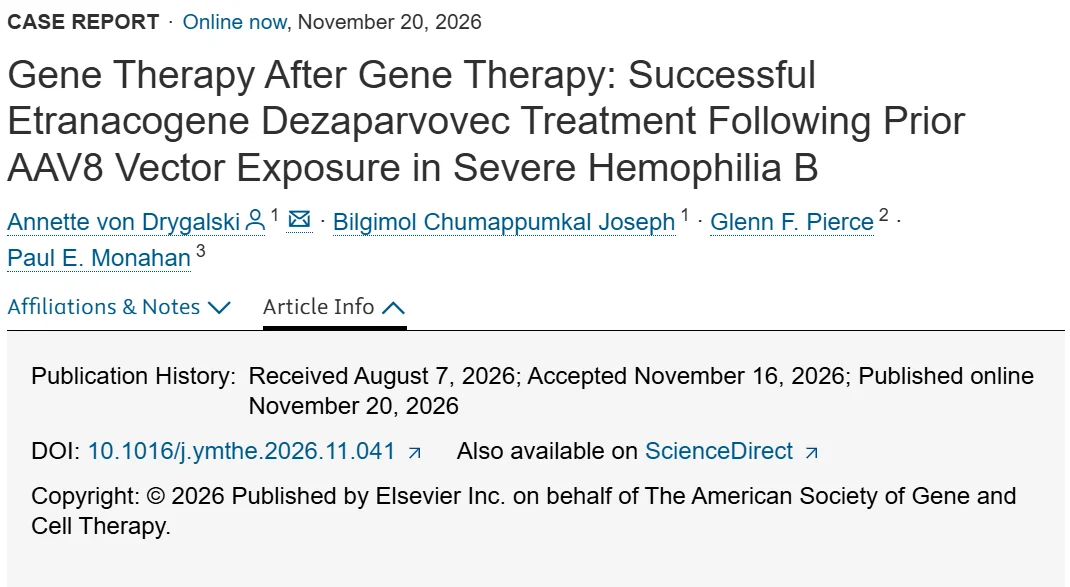
Title: Gene Therapy After Gene Therapy: Successful Etranacogene Dezaparvovec Treatment Following Prior AAV8 Vector Exposure in Severe Hemophilia B
Authors: Annette von Drygalski, Bilgimol Chumappumkal Joseph, Glenn F Pierce, Paul E Monahan
Other posts featuring Wolfgang Miesbach on Hemostasis Today.
-
Nov 27, 2026, 12:44Mehran Ghasemzadeh: The Hidden Dysfunction in Chronic ITP
-
Nov 27, 2026, 12:31Leonardo Roever: Platelet Activation in Myocardial Microvascular Obstruction
-
Nov 27, 2026, 09:29Katarina Glise Sandblad: DOACs and SSRIs in VTE Patients
-
Nov 27, 2026, 07:15Reza Shojaei: The Anti-D Paradox – When Success Threatens Supply
-
Nov 27, 2026, 06:45Maria Morelló Miravet: Making Gene-Edited Sickle Cell Therapy Accessible in Sweden
-
Nov 27, 2026, 05:55Maria Cherska: Inclisiran Plus Statins for Greater LDL Cholesterol Reduction
-
Nov 27, 2026, 03:30E. Shyam P. Reddy: Early Signs of Heart Disease Can Appear Decades Before an Event
-
Nov 27, 2026, 03:30Asim Alam: Blood Transfusion in Extreme Environments and the Future of Remote Healthcare
-
Nov 27, 2026, 03:12Robert Roland: Uncovering Silent Coronary Atherosclerosis in Type 1 Diabetes Using AI