

Pall T. Onundarson: White vs Red Thrombi – Where Do FXIa Inhibitors Fit
Pall T. Onundarson, Professor Emeritus of Hematology at University of Iceland, shared a post on LinkedIn:
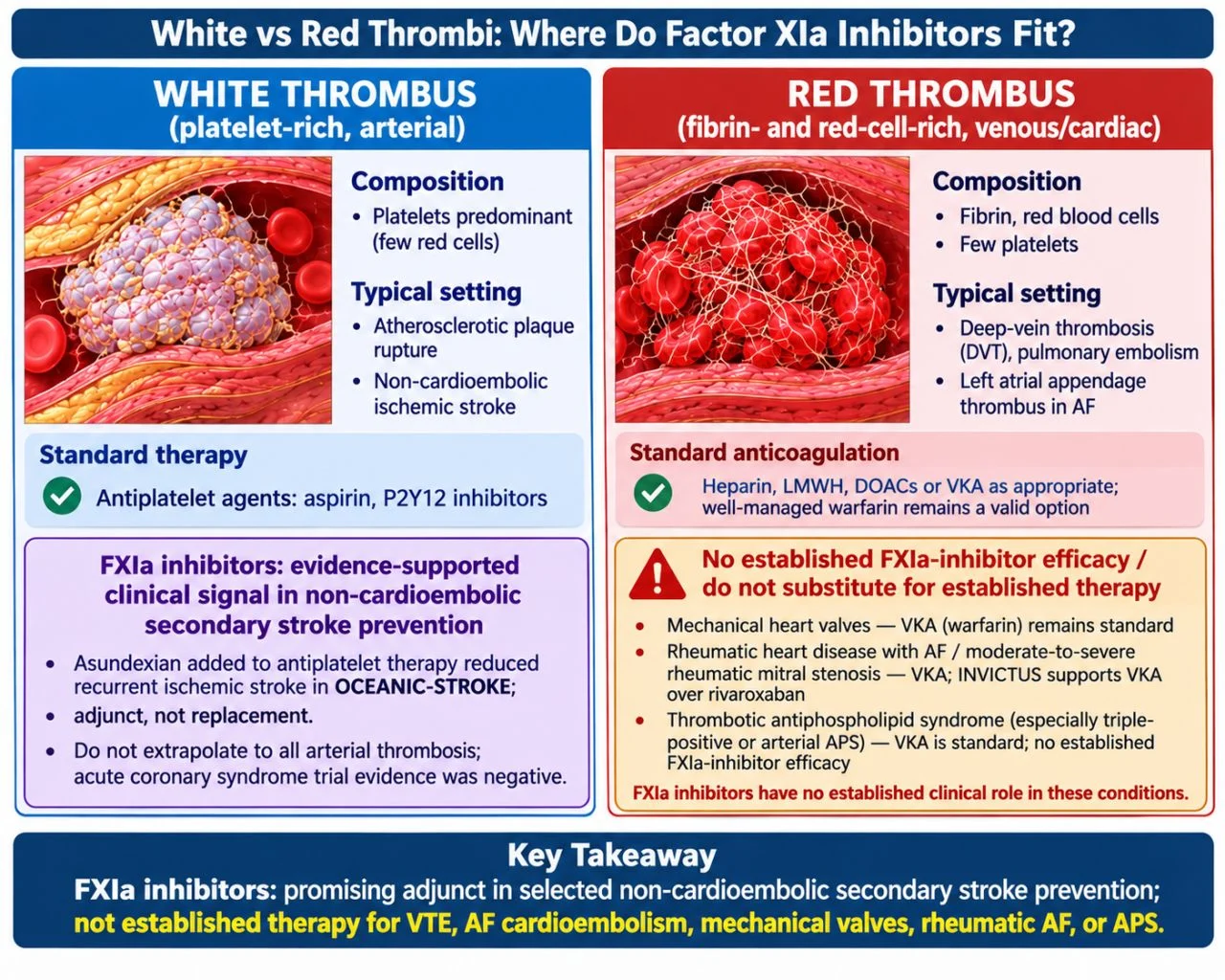
“Thrombosis can be broadly classified into two types:
1. White thrombi (platelet-rich)
Predominate in arterial thrombosis after atherosclerotic plaque rupture. Platelet activation and aggregation drive these events (eg, acute coronary syndromes, non-cardioembolic ischemic stroke). Treatment centers on antiplatelet agents such as aspirin and P2Y12 inhibitors.
2. Red thrombi (fibrin- and red-cell-rich)
Predominate in venous thrombosis and cardiac thrombi from stasis (eg, DVT, PE, AF-related thrombi). These require anticoagulation with heparin, DOACs, or VKAs. Well-managed warfarin (TTR at least 70%) remains a valid option; DOACs are not automatically superior. VKAs remain preferred for mechanical valves, rheumatic heart disease with AF/significant mitral stenosis, and triple-positive antiphospholipid syndrome.
Factor XIa inhibitors: where do they fit? These agents reduce thrombin generation via the contact pathway without blocking TF-initiated coagulation.
OCEANIC-STROKE showed reduced recurrent ischemic stroke when asundexian was added to antiplatelet therapy, suggesting promise for secondary prevention of non-cardioembolic stroke, but this should not be generalized to all arterial disease.
LIBREXIA-ACS (milvexian) did not show benefit in ACS. In OCEANIC-AF, FXIa inhibition was simply ineffective compared to apixaban and the trial was stopped. Currently there is no established evidence supporting FXIa inhibitors for VTE treatment or AF-related cardioembolic prevention.
So here is my take: Antiplatelets target platelet-driven arterial wall thrombosis; anticoagulants target coagulation-driven thrombosis. FXIa inhibitors are a promising, indication-specific addition to antithrombotic therapy (mainly to treat some white platelet rich thrombi).
Despite the promise of causing little bleeding, currently they cannot replace established anticoagulants that are used to treat red thrombi.”
Other posts featuring Pall T. Onundarson on Hemostatis Today.
-
Nov 26, 2026, 16:18Ukti Bhatt: Celebrating an ASH 2026 Oral Presentation and Abstract Achievement Award
-
Nov 26, 2026, 16:05Peter Loffelhardt: Advancing MPN Research Through Patient-Centred Innovation
-
Nov 26, 2026, 15:55Abdul Hanan: Blood Component Separation and Clinical Applications
-
Nov 26, 2026, 15:41Sara Altayeb: From Diagnosing Anaemia to Recognising Iron Deficiency Earlier
-
Nov 26, 2026, 15:35Farjah Hassan Algahtani: Hydroxyurea Use and Quality of Life in Sickle Cell Anaemia
-
Nov 26, 2026, 15:32Micah Robert: Balancing LAAO and Anticoagulation in Patients With Atrial Fibrillation
-
Nov 26, 2026, 15:23Anne Juanós: SHN Physiotherapy Group Receives Research Grant for Haemophilia
-
Nov 26, 2026, 15:21Alessandro Armaro։ Rethinking DAPT Duration After CABG
-
Nov 26, 2026, 15:16Junedh M Amrute: Decoding the Cellular and Molecular Basis of Coronary Artery Disease