

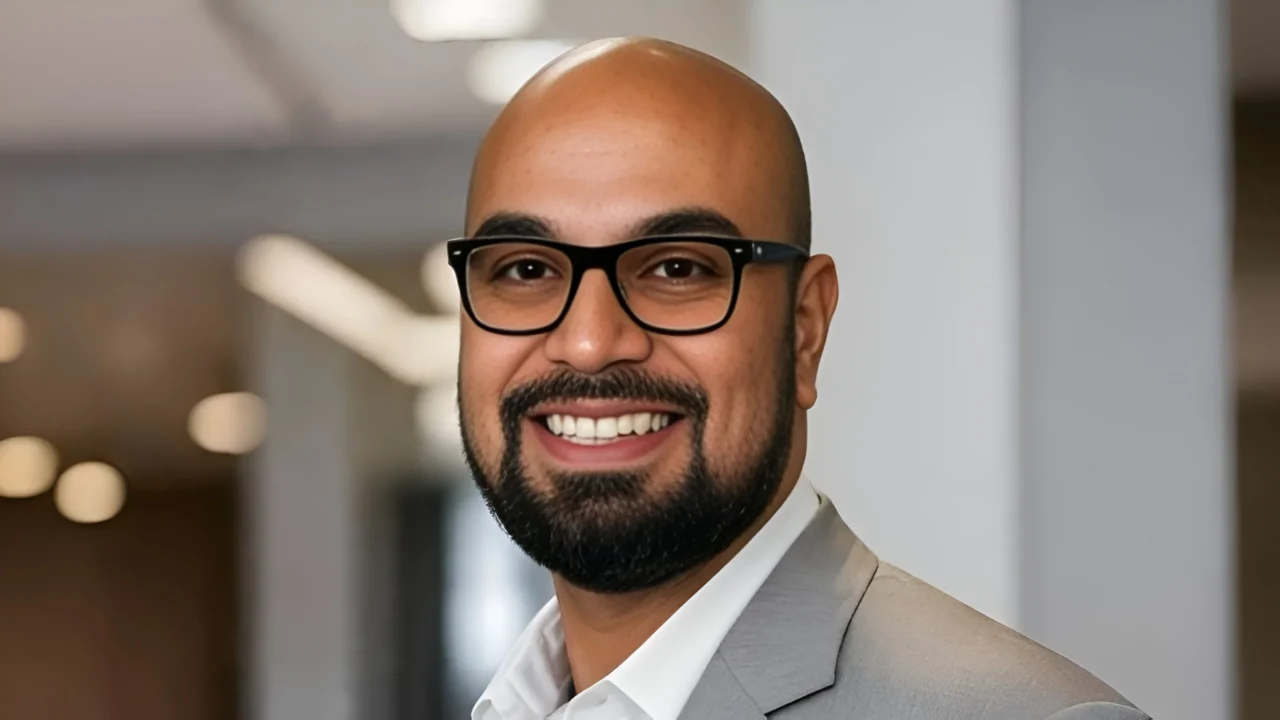
Asim Alam: Blood Transfusion in Extreme Environments and the Future of Remote Healthcare
Asim Alam, Medical Director of Utilization and Medical Services, Hospital Liaison Relations at Canadian Blood Services, shared a post on LinkedIn about a recent article by Kanwal Singh et al, published in Transfusion, adding:
“Blood is as essential as bullets. Now we know it can survive the journey.
Last winter, a Canadian research team transported whole blood, red blood cells, dried plasma and fibrinogen concentrate approximately 4,000 kilometres from Ottawa to Resolute Bay and Eureka in the Canadian High Arctic.
By truck, aircraft and snowmobile.
Temperatures ranged from 30°C inside overheated aircraft cabins to −40°C outside.
Remarkably, the cold chain was maintained throughout the three-week military exercise, with post-deployment testing demonstrating preservation of blood product quality and function.
The study, published this month in Transfusion, was co-led by Jason Acker. Andrew Beckett, who describes the High Arctic as a blood desert.
It may not have to remain one.
The quiet hero in this story is dried plasma.
Its extended shelf life, room-temperature storage and resilience to extreme environmental conditions make it particularly compelling for remote transfusion medicine.
Future opportunities include local blood collection, decentralized storage and drone-enabled delivery.
We often frame the last mile of blood delivery as a problem of geography.
But it is also a problem of shelf life, product stability, logistics and infrastructure. These are challenges we can solve.
The implications extend well beyond military medicine.
They speak directly to healthcare equity in Canada’s northern, rural and remote communities.
If blood can reach the High Arctic by snowmobile, perhaps we need to fundamentally rethink what is possible in remote transfusion medicine.”
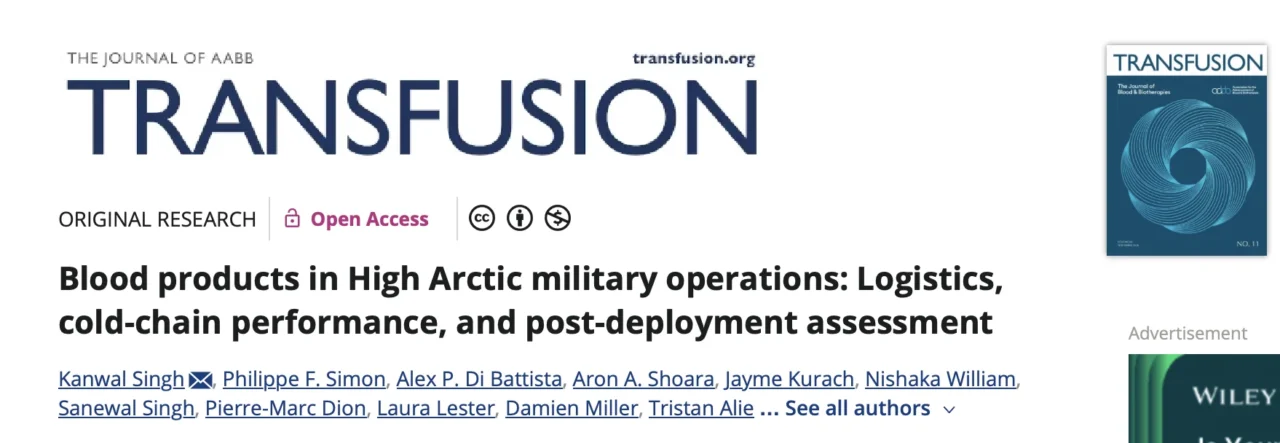
Title: Blood products in High Arctic military operations: Logistics, cold-chain performance, and post-deployment assessment
Authors: Kanwal Singh, Philippe F. Simon, Alex P. Di Battista, Aron A. Shoara, Jayme Kurach, Nishaka William, Sanewal Singh, Pierre-Marc Dion, Laura Lester, Damien Miller, Tristan Alie, Sebastian Vuong, Philippe Dauphin-Ducharme, Shawn G. Rhind, Jason P. Acker, Andrew Beckett
Stay updated on all scientific advances with Hemostasis Today.
-
Nov 27, 2026, 03:30E. Shyam P. Reddy: Early Signs of Heart Disease Can Appear Decades Before an Event
-
Nov 27, 2026, 03:12Robert Roland: Uncovering Silent Coronary Atherosclerosis in Type 1 Diabetes Using AI
-
Nov 27, 2026, 03:11Alex Slater: Understanding Platelet Receptors for Better Antithrombotic Drug Development
-
Nov 27, 2026, 03:01Shinya Goto: Catheter-Directed Thrombolysis and OAC Looks better than OAC Alone in Moderate or Severe PE
-
Nov 27, 2026, 02:54Emmanuel J Favaloro: Advancing Global Equity in Venous Thromboembolism Research
-
Nov 27, 2026, 02:54Seshika Ratwatte: Addresses Diastolic Dysfunction Challenges in Adults with Congenital Heart Disease
-
Nov 27, 2026, 02:43Increasing Demand for Ro Blood in Sickle Cell Disease – NTLM
-
Nov 27, 2026, 02:42Managing Teenage Pregnancy in von Willebrand Disease Through Multidisciplinary Care – Haemophilia Journal
-
Nov 27, 2026, 01:57Berkan Kurt: GLP-1 Receptor Agonists and the Role of Inflammation in Cardiovascular Protection