


Suvha Ghoshal: Exploring the Potential Association Between Erythritol and Ischemic Stroke Risk
Suvha Ghoshal, Strategic Project Manager at SMSRC, shared a post on LinkedIn about recent articles, adding:
“Can a sugar substitute influence stroke risk? Emerging research on erythritol raises an important question.
Erythritol, a low-calorie sweetener commonly used in sugar-free, keto and low-carbohydrate products, is attracting renewed scientific attention.
A 2026 study published in the International Journal of Molecular Sciences investigated its potential association with ischemic stroke using genetic and multi-omics approaches.
What did researchers find?
Genetically predicted circulating erythritol levels were associated with approximately 24.6% higher odds of ischemic stroke (OR: 1.246; 95% CI: 1.101–1.410).
Three genes emerged as potential molecular signatures:
- MMP9: Associated with tissue and vascular remodelling.
- TLR4: Involved in inflammatory signalling.
- HIF1A: Involved in cellular responses to oxygen deprivation.
The findings highlighted pathways related to inflammation, oxidative stress, hypoxia and vascular injury.
Why does this matter?
Earlier human intervention research also reported increased platelet reactivity following erythritol consumption, suggesting a potential mechanism worth investigating.
However, an important distinction is necessary:
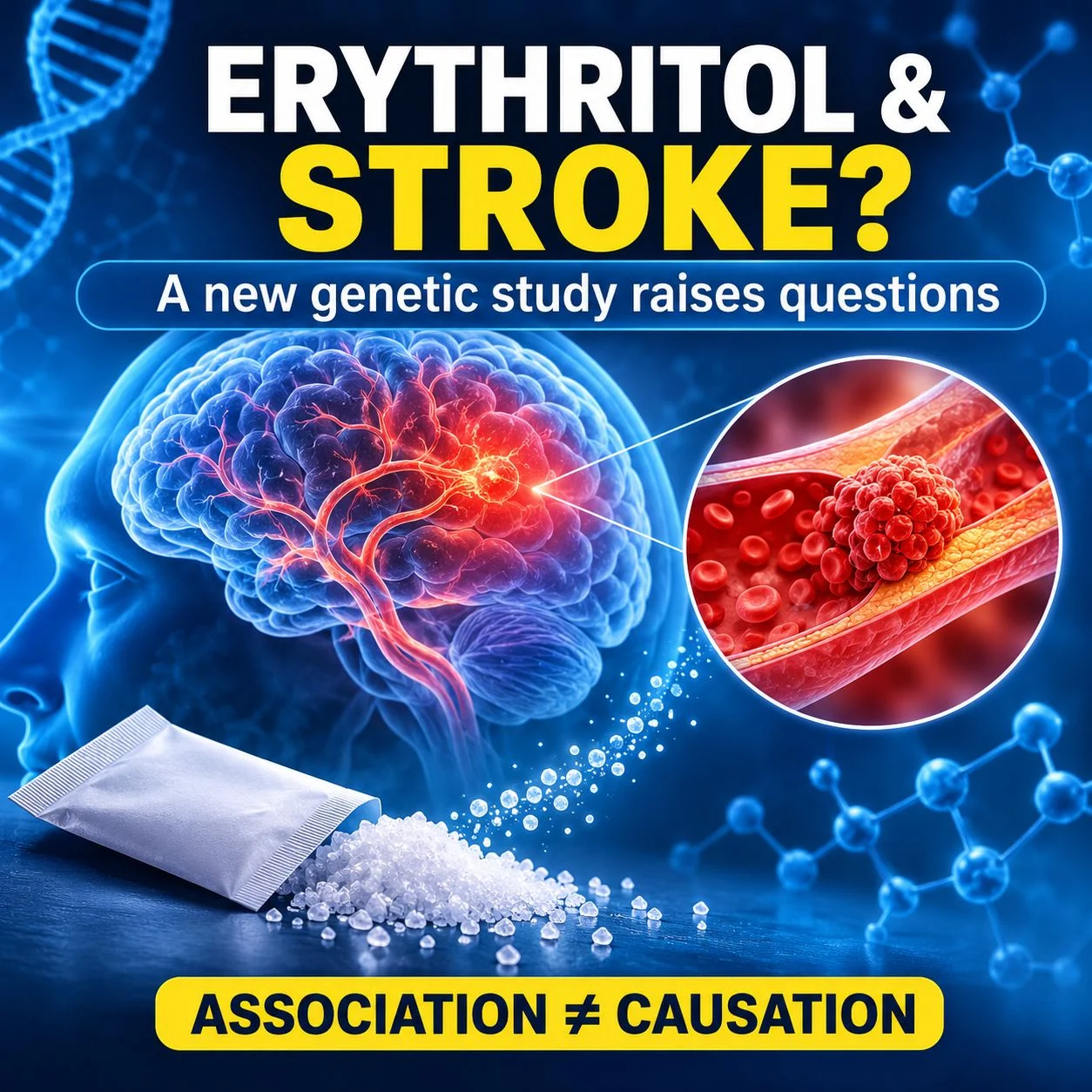
The 2026 study examined genetically predicted circulating erythritol levels, not actual dietary consumption. It does not establish that eating erythritol causes stroke or increases an individual’s absolute stroke risk by 25%.
The bigger takeaway:
As sugar substitutes become increasingly common in food products, understanding their long-term cardiometabolic effects remains an important research priority.
The question is no longer simply how to reduce sugar consumption, but also how to evaluate the alternatives we use.
Association is a signal for further research, not proof of causation.”
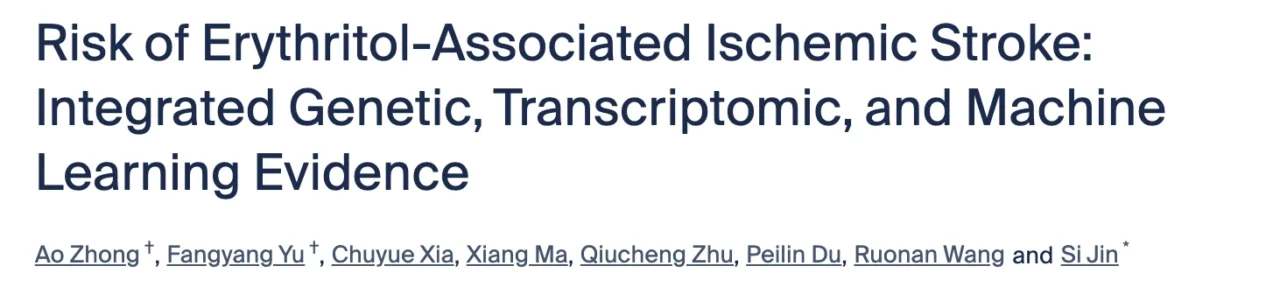
1.Title: Risk of Erythritol-Associated Ischemic Stroke: Integrated Genetic, Transcriptomic, and Machine Learning Evidence
Authors: Ao Zhong, Fangyang Yu, Chuyue Xia, Xiang Ma, Qiucheng Zhu, Peilin Du, Ruonan Wang, Si Jin
Read the Full Article on International Journal of Molecular Sciences
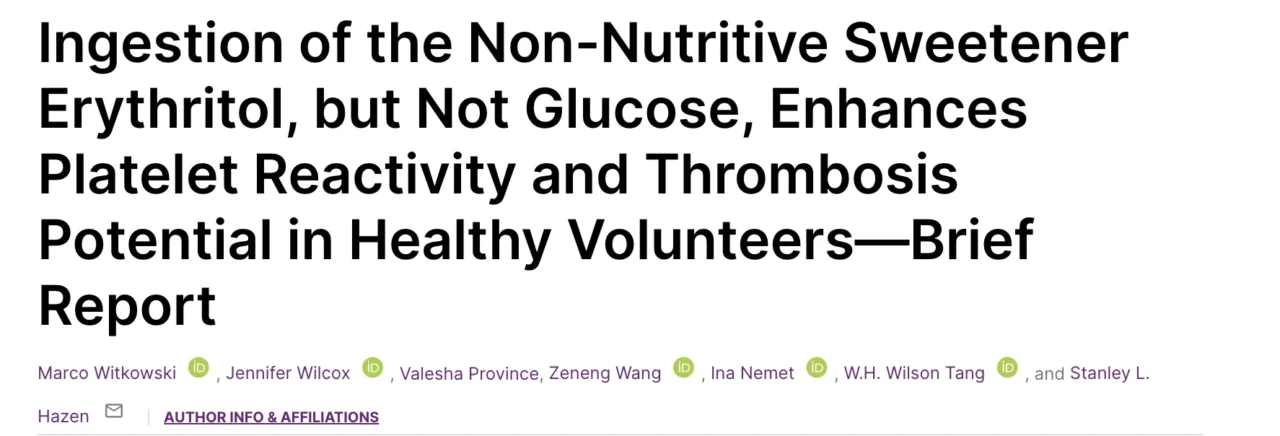
2 Title: Ingestion of the Non-Nutritive Sweetener Erythritol, but Not Glucose, Enhances Platelet Reactivity and Thrombosis Potential in Healthy Volunteers—Brief Report
Authors: Marco Witkowski, Jennifer Wilcox, Valesha Province, Zeneng Wang, Ina Nemet, W.H. Wilson Tang, Stanley L.
Read the Full Article on Arteriosclerosis, Thrombosis, and Vascular Biology
Stay updated on all scientific advances with Hemostasis Today.
-
Nov 28, 2026, 11:23Ahmed Elshal: Promoting Nutrition Awareness and Iron Deficiency Prevention
-
Nov 28, 2026, 11:19Andrew Emad: Roche Egypt Advances Healthcare Innovation and Partnerships for Better Patient Care
-
Nov 28, 2026, 11:16How Much Bleeding in VWD Goes Unseen Because It Has Been Normalised? – European Haemophilia Consortium
-
Nov 28, 2026, 11:10Giacomo Ramponi: Evaluating Catheter-Directed Thrombolysis for Intermediate-High-Risk Pulmonary Embolism
-
Nov 28, 2026, 11:09Sophia Delicou: Highlighting the Role of Clinical Trials in Advancing Medical Research and Patient Access
-
Nov 28, 2026, 11:07Akshay Hm: Investigating Deep Vein Thrombosis Risk in Critically Ill Patients With Coagulopathy
-
Nov 28, 2026, 10:59Andrija Velevski: Hyperbaric Oxygen Therapy and Its Role in Tissue Repair and Angiogenesis
-
Nov 28, 2026, 10:30Recurrent Epistaxis as a Diagnostic Clue: From Hereditary Hemorrhagic Telangiectasia to Platelet Dysfunction
-
Nov 28, 2026, 10:13Nichole Cerutti: The Kinetics Behind Emicizumab’s Mechanism of Action