

Andrija Velevski: Hyperbaric Oxygen Therapy and Its Role in Tissue Repair and Angiogenesis
Andrija Velevski, Founder and CEO of Baromedic, shared a post on LinkedIn:
“Increasing oxygen availability and increasing the tissue’s capacity to receive oxygen are not the same thing.
Hyperbaric oxygen therapy (HBOT) can increase tissue oxygen tension within minutes.
However, some of its potential biological effects develop over a much longer timescale.
Angiogenesis is one of them.
Angiogenesis is the formation of new blood vessels from existing vasculature a highly regulated process involving endothelial cell activation, migration, proliferation and vascular remodeling.
Repeated hyperbaric oxygen exposures can modulate redox sensitive signaling pathways through the generation of reactive oxygen species (ROS), influencing angiogenic mediators such as vascular endothelial growth factor (VEGF).
This mechanism is particularly relevant in selected chronic wounds and late radiation tissue injuries, where compromised microvascular integrity can limit tissue repair.
However, increased angiogenic signaling does not necessarily translate into functional neovascularization or improved clinical outcomes.
The underlying pathology, residual perfusion, cellular responsiveness and treatment regimen all matter.
HBOT must not be considered a substitute for revascularization when arterial insufficiency requires vascular intervention.
The distinction is fundamental.
One effect of HBOT is to increase oxygen availability within the existing vascular network.
Another potential effect is to support the biological processes through which that network develops.
In hyperbaric medicine, oxygen is not only something we deliver to tissue.
It is also a biological stimulus that may influence how tissue repairs itself.”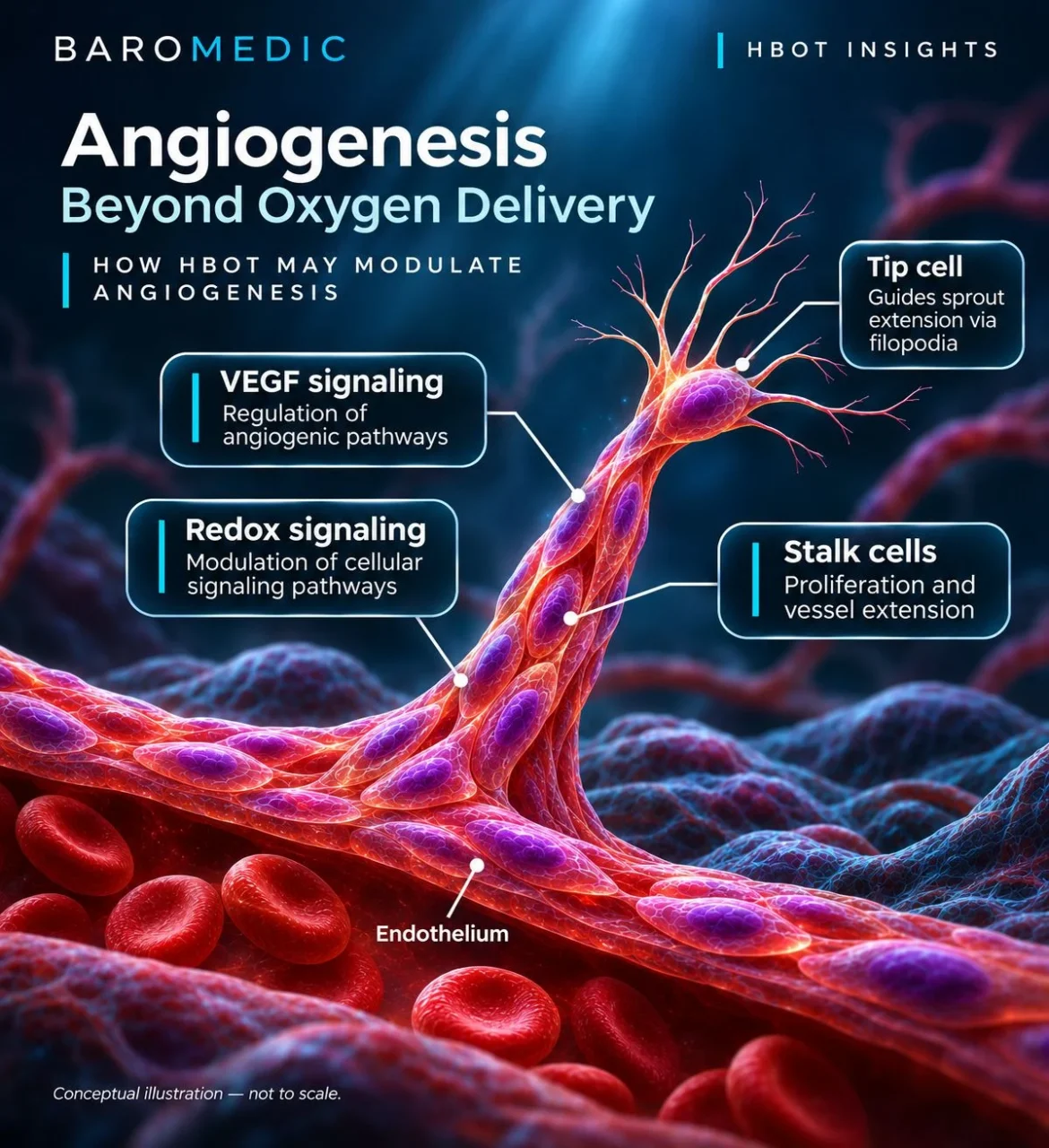
Stay updated with Hemostasis Today.
-
Nov 28, 2026, 11:23Ahmed Elshal: Promoting Nutrition Awareness and Iron Deficiency Prevention
-
Nov 28, 2026, 11:19Andrew Emad: Roche Egypt Advances Healthcare Innovation and Partnerships for Better Patient Care
-
Nov 28, 2026, 11:16How Much Bleeding in VWD Goes Unseen Because It Has Been Normalised? – European Haemophilia Consortium
-
Nov 28, 2026, 11:10Giacomo Ramponi: Evaluating Catheter-Directed Thrombolysis for Intermediate-High-Risk Pulmonary Embolism
-
Nov 28, 2026, 11:09Sophia Delicou: Highlighting the Role of Clinical Trials in Advancing Medical Research and Patient Access
-
Nov 28, 2026, 11:07Akshay Hm: Investigating Deep Vein Thrombosis Risk in Critically Ill Patients With Coagulopathy
-
Nov 28, 2026, 11:02Suvha Ghoshal: Exploring the Potential Association Between Erythritol and Ischemic Stroke Risk
-
Nov 28, 2026, 10:30Recurrent Epistaxis as a Diagnostic Clue: From Hereditary Hemorrhagic Telangiectasia to Platelet Dysfunction
-
Nov 28, 2026, 10:13Nichole Cerutti: The Kinetics Behind Emicizumab’s Mechanism of Action