

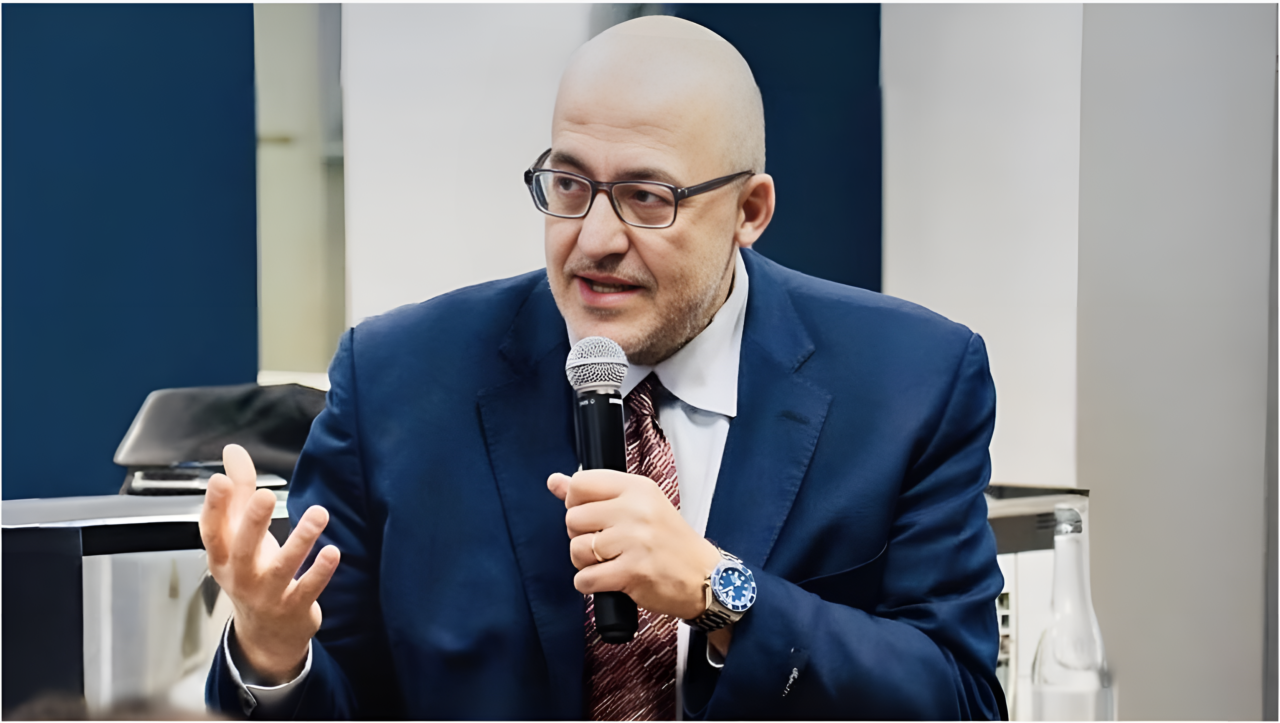
Filippo Cademartiri: 3 Biomarkers Are Better Than 1: Refining ASCVD Risk in MESA
Filippo Cademartiri, Consultant Advanced Cardiovascular Imaging at UPMC Salvator Mundi International Hospital, shared on LinkedIn:
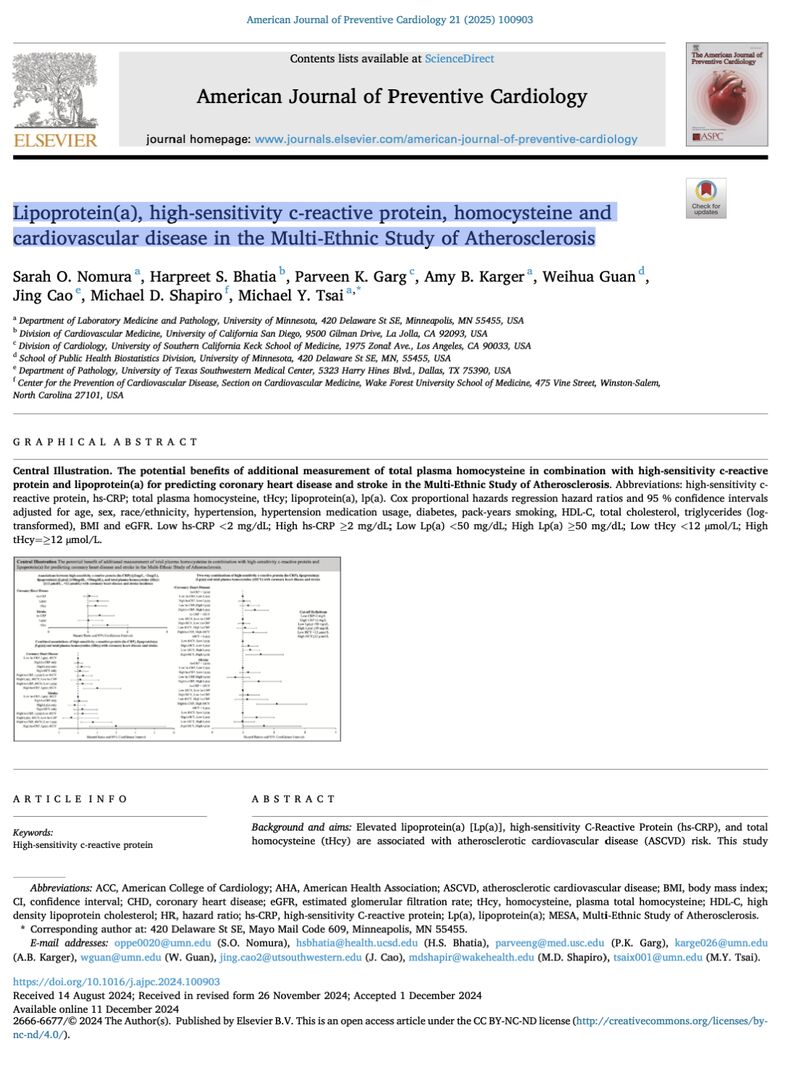
”Three biomarkers are better than one: refining ASCVD risk in MESA
Traditional risk assessment often treats biomarkers in isolation.
This large analysis from the Multi-Ethnic Study of Atherosclerosis (MESA) shows why that approach may miss the people at highest cardiovascular risk.
What was studied?
Researchers evaluated the individual and combined effects of:
Lipoprotein(a) [Lp(a)]
High-sensitivity CRP (hs-CRP)
Total homocysteine (tHcy)
on coronary heart disease (CHD) and stroke over ~16 years of follow-up in >6,600 asymptomatic adults.
Key findings
Alone, biomarkers showed modest or inconsistent associations.
Risk rose sharply only when biomarkers were elevated together.
Individuals with all three elevated had:
~2× higher risk of CHD
~3× higher risk of stroke
In contrast, having just one elevated marker often did not meaningfully increase risk after adjustment.
Why this matters
This study highlights a core limitation of single-marker thinking:
ASCVD risk is multidimensional
Inflammation, thrombosis, and atherogenesis interact
“Average” risk estimates can obscure high-risk biological phenotypes
Notably, homocysteine—not currently a guideline risk enhancer—emerged as a powerful amplifier of risk when combined with inflammation and Lp(a).
Important nuance
Adding these biomarkers only modestly improved population-level prediction metrics (C-statistics). But for individual risk stratification, the signal is clinically meaningful.
Take-home message
ASCVD risk is not additive—it’s synergistic.
Looking at biomarker combinations, rather than single values, may better identify who truly carries residual cardiovascular risk.
Precision prevention beats one-number medicine.”
Read the full article here.
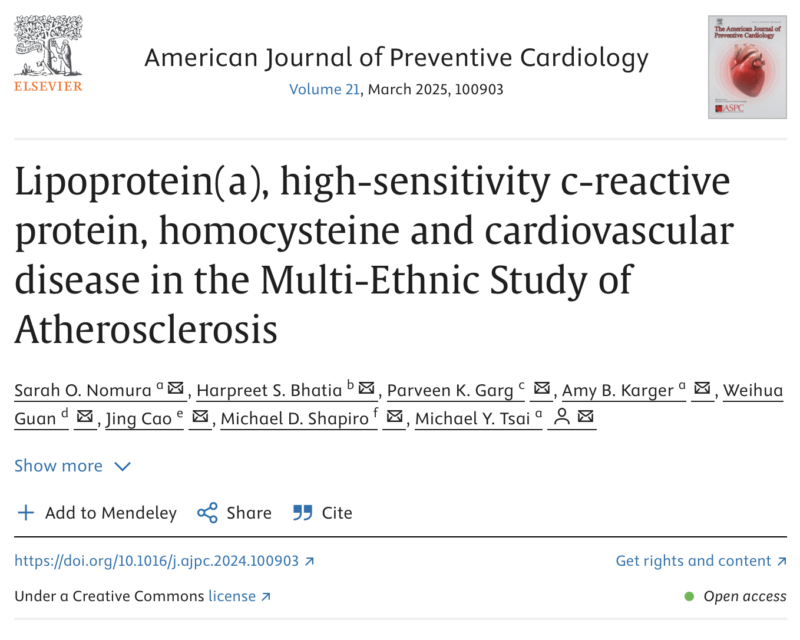
Article: Lipoprotein(a), high-sensitivity c-reactive protein, homocysteine and cardiovascular disease in the Multi-Ethnic Study of Atherosclerosis
Authors: Sarah O. Nomura, Harpreet S. Bhatia, Parveen K. Garg, Amy B. Karger, Weihua Guan, Jing Cao, Michael D. Shapiro, Michael Y. Tsai
Stay updated on all scientific advances with Hemostasis Today.
-
Sep 19, 2026, 14:17Abdul Mannan: What Exactly Is a Platelet?
-
Sep 19, 2026, 13:39Keisuke Goda: Decoding Platelet Phenotypes in COVID-19 With Optofluidic Imaging
-
Sep 19, 2026, 13:30Targeted Thrombolysis Beyond tPA
-
Sep 19, 2026, 13:21Paul Armstrong: From Summer Studentship to Young Researcher
-
Sep 19, 2026, 13:06Rabiya Masood: Breaking the Cycle of Thalassemia Through Screening
-
Sep 19, 2026, 10:52Consuela A. Albright: The Critical Role of Black Blood Donors in Sickle Cell Treatment
-
Sep 19, 2026, 10:47Amber Yates: Inside Agios’ Partnership with the Sickle Cell Community
-
Sep 19, 2026, 10:46Anton Farkas: Mechanical Thrombectomy for Acute PE in Early Pregnancy
-
Sep 19, 2026, 10:40Marjolein Smidt: ASH Raises Ferritin Thresholds for Iron Deficiency