


Soumen Bhattacharyya: Microangiopathic Hemolytic Anemia Is Often a Hematologic Clue to Underlying Malignancy
Soumen Bhattacharyya, College Teacher in the Department of Physiology at RBC College for Women, shared on LinkedIn:
”Microangiopathic Hemolytic Anemia (MAHA) is more than a lab diagnosis—it’s often a clinical signal of an underlying systemic process, and sometimes, a hidden malignancy.
One particularly important association is with metastatic carcinoma, especially mucin-secreting adenocarcinomas (classically stomach and breast, but also pancreas, lung, and prostate).
What’s the mechanism?
Tumor-derived mucin activates the coagulation cascade – formation of microvascular thrombi – red blood cells get mechanically sheared as they pass through these vessels.
This results in:
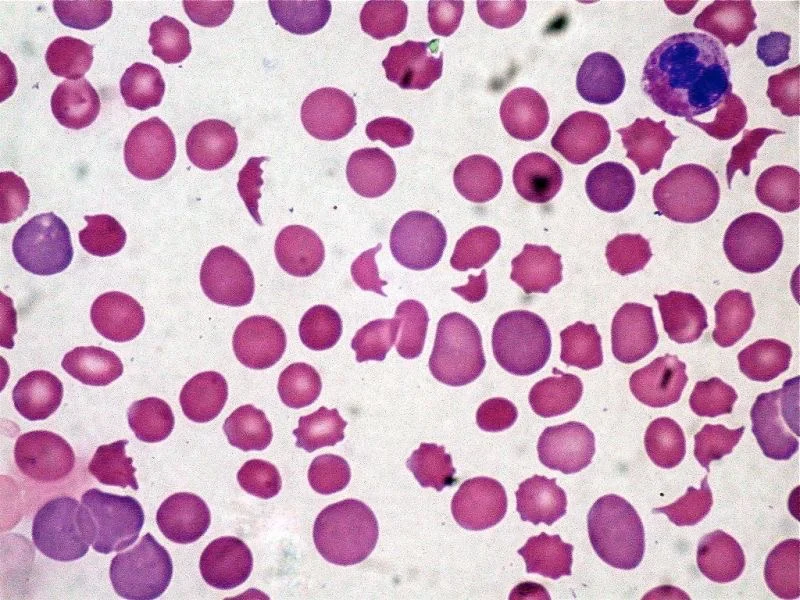
- Fragmented RBCs (schistocytes)
- Intravascular hemolysis
- Thrombocytopenia
On peripheral smear, schistocytes appear as irregular, jagged RBC fragments—formed when red cells are literally ‘ripped apart’ in the circulation.
Clinical and lab features:
- Moderate to severe anemia (often abrupt onset)
- Thrombocytopenia
- High LDH, high indirect bilirubin
- Haptoglobin
- Possible hemoglobinuria
Why this matters
MAHA may precede the diagnosis of malignancy or indicate advanced disease.
Recognizing this pattern early can change outcomes.
Key takeaway
Mucin – coagulation activation – microthrombi – RBC fragmentation – MAHA
Always respect the peripheral smear—it often provides the earliest clue to a much bigger diagnosis.”
Stay updated with Hemostasis Today.
-
Sep 25, 2026, 09:49Haley Coleman: Volunteering to Support Hemophilia Awareness
-
Sep 25, 2026, 08:55Hitarth Mehta: BHMS Students Gain Practical Exposure to Haemophilia Diagnosis
-
Sep 25, 2026, 07:25Varun Capoor: How Therapeutic Apheresis and Transfusion Medicine Can Complement Clinical Management in SCD
-
Sep 25, 2026, 07:14Manshi Kesharwani: SAK-GQDs Modulate Thrombus Burden and Endothelial Function in Deep Vein Thrombosis
-
Sep 25, 2026, 06:20Farjah Hassan Algahtani: How Can We Better Identify Patients at Risk of Blood Clots after Metabolic and Bariatric Surgery?
-
Sep 25, 2026, 05:59Carla Lewis: Kids Conquering Sickle Disease Joins Nemours Children’s Hospital for 2nd Annual Awareness Event
-
Sep 25, 2026, 05:47Omid Seidizadeh: Evolutionary Constraint and Population Variation Across Coagulation Genes
-
Sep 25, 2026, 05:40Gerald Bertrand: Presenting UMi-NGS Non-Invasive Foetal HPA Genotyping at DGTI 2026
-
Sep 25, 2026, 05:33Urge Congress to support the Sickle Cell Disease Comprehensive Care Act – ASH