


Venugopalan Unni: Guidelines for the Evaluation and Management of Acute Pulmonary Embolism in Adults
Venugopalan Unni, Chairman of the Department of Emergency Medicine at Meitra Hospital, shared a post on LinkedIn:
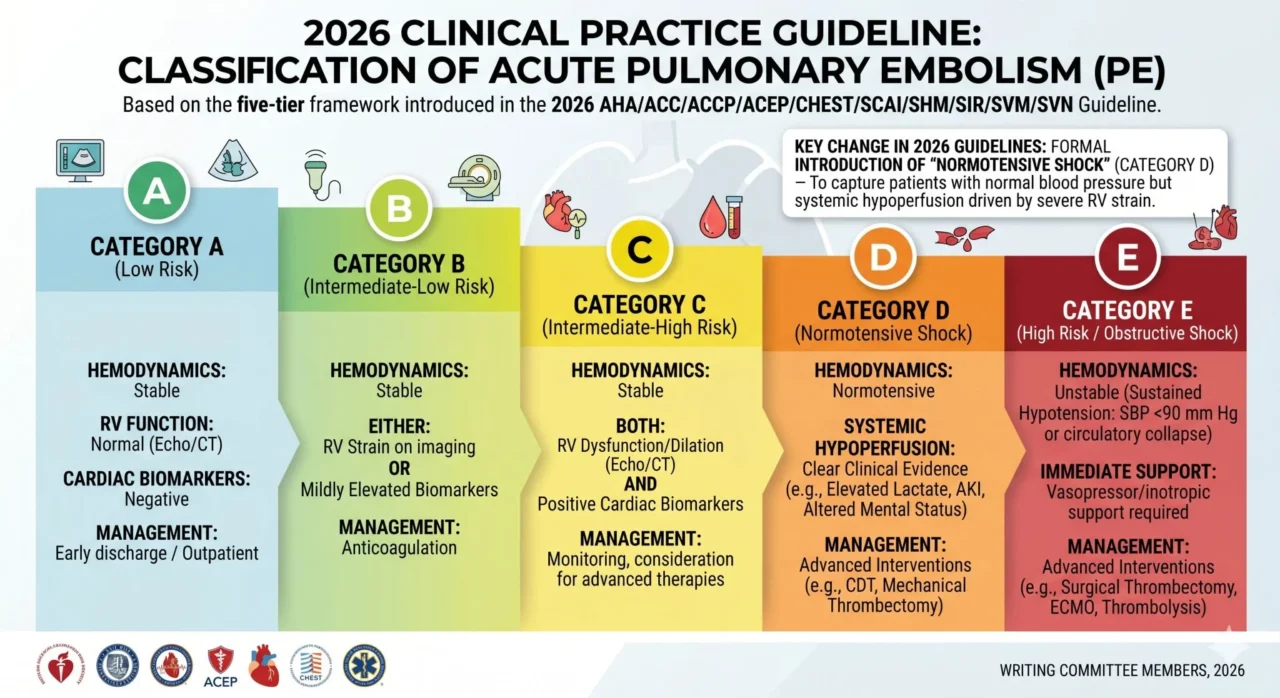
“The 2026 AHA, ACC,ACCP, ACEP, CHEST, SCAI, SHM, SIR, SVM, SVN Guideline for the Evaluation and Management of Acute Pulmonary Embolism in Adults marks a significant shift in the risk stratification of acute pulmonary embolism (PE).
Moving away from the traditional three-tier classification (low, sub-massive/intermediate, and massive/high risk), the new guidelines introduce a more precise five-tier classification framework labeled Categories A through E. This system incorporates clinical signs, hemodynamic stability, respiratory factors, cardiac biomarkers (such as troponin or BNP), and right ventricular (RV) size/function to enhance precision management.
Key Takeaways from the 2026 Updates:
Introduction of ‘Normotensive Shock’ (Category D):
This refinement captures a vulnerable subset of patients who maintain normal blood pressure but experience occult tissue hypoperfusion and depressed cardiac index due to severe RV strain.
Precision Advanced Therapies:
The categorization influences the escalation of care.
Advanced interventions, such as catheter-directed thrombolysis (CDT) or mechanical thrombectomy, are recommended for Categories D and E to rapidly relieve right ventricular outflow tract obstruction, while standard anticoagulation remains the primary approach for lower tiers.
References:
- Chaer, R. (2026). Surgical societies respond to updated pulmonary embolism clinical practice guidelines. Vascular Specialist.
- de Lange, M. (2026). Pulmonary embolism in the perioperative setting. UKZN Anesthetics Guideline Series.
- Roto, D. (2026). Navigating normotensive shock. CHEST Physician.
- Writing Committee Members. (2026). 2026 AHA, ACC,ACCP, ACEP, CHEST, SCAI, SHM, SIR, SVM, SVN Guideline for the Evaluation and Management of Acute Pulmonary Embolism in Adults. Circulation, 153(e00).”
Stay updated with Hemostasis Today.
-
Oct 19, 2026, 17:44Paul Riley: Moderating a Webinar on Anticoagulation Monitoring
-
Oct 19, 2026, 16:36Christopher Pittman: Blood Clot Prevention Cannot End at Hospital Discharge
-
Oct 19, 2026, 16:13Javier M. Floren: When Immune Cells Move With Their Environment
-
Oct 19, 2026, 16:04Hussnain Javaid: New EHA Guidelines for HbSC Disease Management
-
Oct 19, 2026, 15:50Deep Madkaiker: A New Academic Opportunity in Transfusion Medicine at ACTREC
-
Oct 19, 2026, 15:19Why Hematologists Should Care About Diminished Ovarian Reserve in SCD – ASH Education
-
Oct 19, 2026, 14:16Hyperfibrinolysis as an Underrecognized Cause of Bleeding
-
Oct 19, 2026, 13:36Shobhna Ladva: Aspen Pharma EME Raises Awareness of Blood Clot Risks During Hormonal Transitions
-
Oct 19, 2026, 13:11Giulia Furnari: Connecting With Global Hematology Experts at IACH 2026