


Natalya Shynhera: Using Anemia to Teach Medical English in Real Clinical Practice
Natalya Shynhera, Medical English Content Developer and Educator, shared a post on LinkedIn:
“A few weeks ago, one of my students – a family doctor working in Poland – told me that she had been seeing a lot of patients with anemia in her practice. She asked me to create a lesson on the topic. So I did.
But I didn’t want to make a lesson built around a list of medical terms and a few comprehension questions. Instead, I made it as close to real clinical practice as possible.
- We started with the patient’s symptoms and possible causes.
- We looked at laboratory results and discussed what they might indicate.
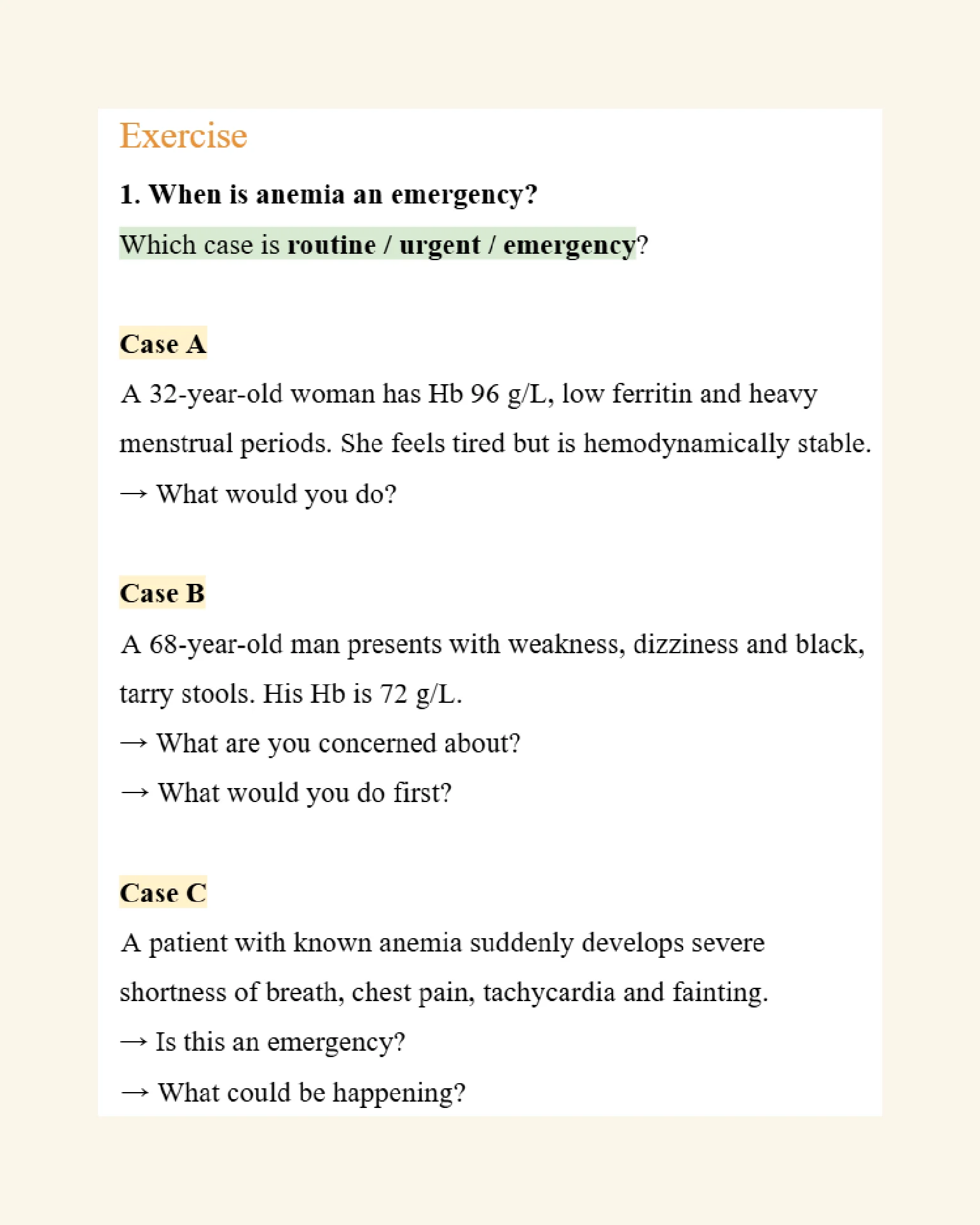
- We worked through clinical cases and decided whether each situation was routine, urgent, or an emergency.
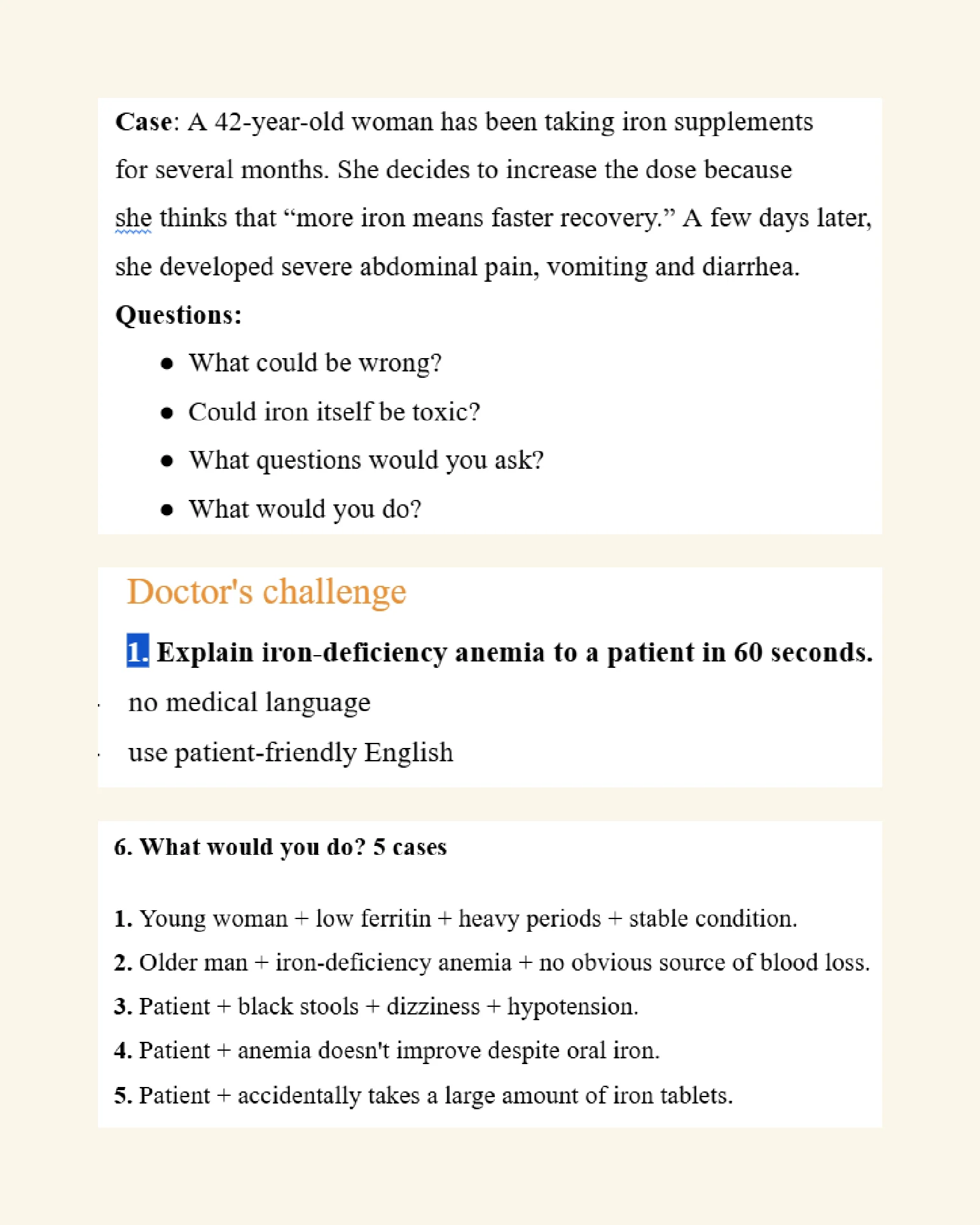
- We discussed when iron supplementation might be appropriate, when the underlying cause needs further investigation, and when IV iron might be considered.
- And then we moved from clinical reasoning to communication.
Because knowing what to do clinically is only part of the job.
A doctor also needs to be able to explain it.
So the student had to explain iron-deficiency anemia to a patient without using medical terminology, answer difficult patient questions, and then explain the same condition to another doctor using professional medical English.
This is what I mean by Medical English. Not learning medical vocabulary for the sake of vocabulary. Not translating medical terms. But using English to think, communicate, explain, discuss, and make professional decisions in real healthcare contexts. And sometimes the best lesson topic comes directly from what a doctor is seeing in practice.
The lesson was planned for one hour, but as you might have guessed, that wasn’t nearly enough to cover everything we wanted to discuss.”
Stay updated with Hemostasis Today.
-
Oct 19, 2026, 19:44Where You Live Should not Determine Whether You Receive Care – World Federation of Hemophilia
-
Oct 19, 2026, 19:42Belen Bianco: Prevention, Early Suspicion and an Interdisciplinary Approach Save Lives
-
Oct 19, 2026, 19:40Christina Chrysohoou: Catheter-Based LAAC vs OAC for Stroke Prevention in Atrial Fibrillation
-
Oct 19, 2026, 19:38Matthew Flick: A Two-Day Research Meeting on Fibrinogen, Hemostasis and Thrombosis
-
Oct 19, 2026, 19:37Hayat Saeed: Excited to Share Our Publication on the FGL1–Hepcidin Axis in Iron Homeostasis and Disease
-
Oct 19, 2026, 19:08IPAW 2026 Comes to a Close, but the Work Continues – PPTA
-
Oct 19, 2026, 17:44Paul Riley: Moderating a Webinar on Anticoagulation Monitoring
-
Oct 19, 2026, 16:36Christopher Pittman: Blood Clot Prevention Cannot End at Hospital Discharge
-
Oct 19, 2026, 16:13Javier M. Floren: When Immune Cells Move With Their Environment