


Faizan Khan: Why Common Exposures Matter in VTE Risk
Faizan Khan, Medical Science Liaison (Cardiovascular) at Bristol Myers Squibb, CIHR Banting Postdoctoral Fellow at University of Calgary, shared a post on LinkedIn about a recent article he and his colleagues co-authored, published in The Lancet, adding:
“A new publication from my Banting Canada 🇨🇦postdoctoral fellowship is out today in The Lancet Obstetrics, Gynaecology, and Women’s Health.
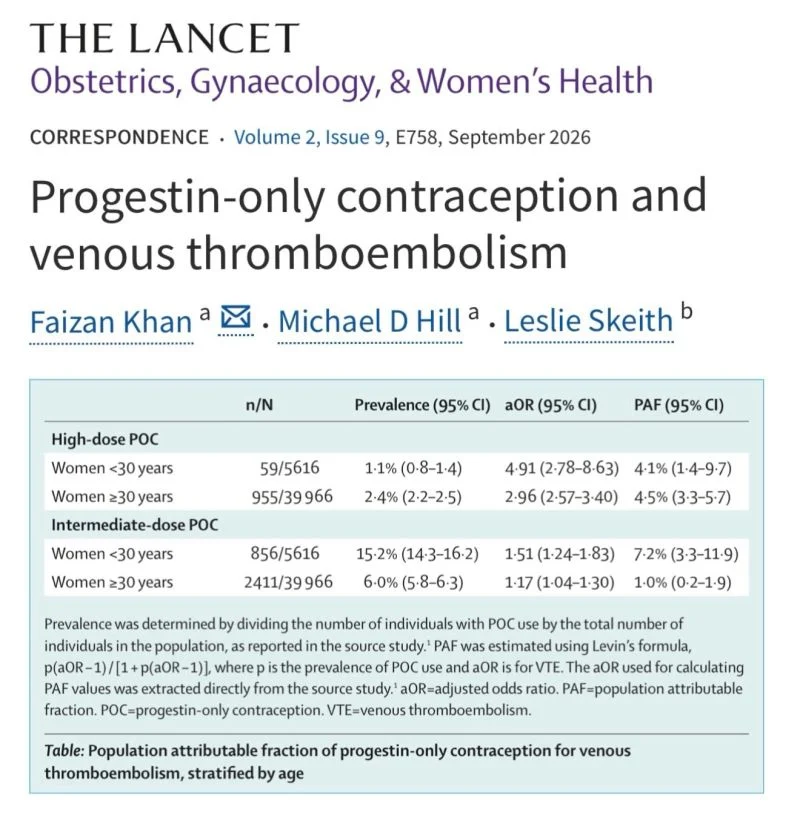
Here, Drs Michael Hill, Leslie Skeith and I use the example of hormonal contraceptive use and risk of Venous Thromboembolism to highlight an important epidemiological principle: the population-level impact of an exposure depends not only on the strength of its association with disease, but also on how common that exposure is in the population.
Common exposures, even with a relatively weak association with disease might contribute more to the overall disease burden than less common exposures with a stronger association with disease.”
Title: Progestin-only contraception and venous thromboembolism
Authors: Faizan Khan, Michael D Hill, Leslie Skeith
Stay updated with Hemostasis Today.
-
Oct 20, 2026, 01:43Oliver Weingärtner: Deprescribing of Lipid Lowering Drug after MI is Associated with Cardiovascular Events
-
Oct 19, 2026, 19:44Where You Live Should not Determine Whether You Receive Care – World Federation of Hemophilia
-
Oct 19, 2026, 19:42Belen Bianco: Prevention, Early Suspicion and an Interdisciplinary Approach Save Lives
-
Oct 19, 2026, 19:40Christina Chrysohoou: Catheter-Based LAAC vs OAC for Stroke Prevention in Atrial Fibrillation
-
Oct 19, 2026, 19:38Matthew Flick: A Two-Day Research Meeting on Fibrinogen, Hemostasis and Thrombosis
-
Oct 19, 2026, 19:37Hayat Saeed: Excited to Share Our Publication on the FGL1–Hepcidin Axis in Iron Homeostasis and Disease
-
Oct 19, 2026, 19:08IPAW 2026 Comes to a Close, but the Work Continues – PPTA
-
Oct 19, 2026, 17:44Paul Riley: Moderating a Webinar on Anticoagulation Monitoring
-
Oct 19, 2026, 16:36Christopher Pittman: Blood Clot Prevention Cannot End at Hospital Discharge