


Mohammad Salar Amoli: The Coagulation Laboratory Approach to Hemophilia A
Mohammad Salar Amoli, Medical Laboratory Technologist at High Institute for Research and Education in Transfusion Medicine, shared a post on LinkedIn:
“Hemophilia A from a coagulation lab perspective.
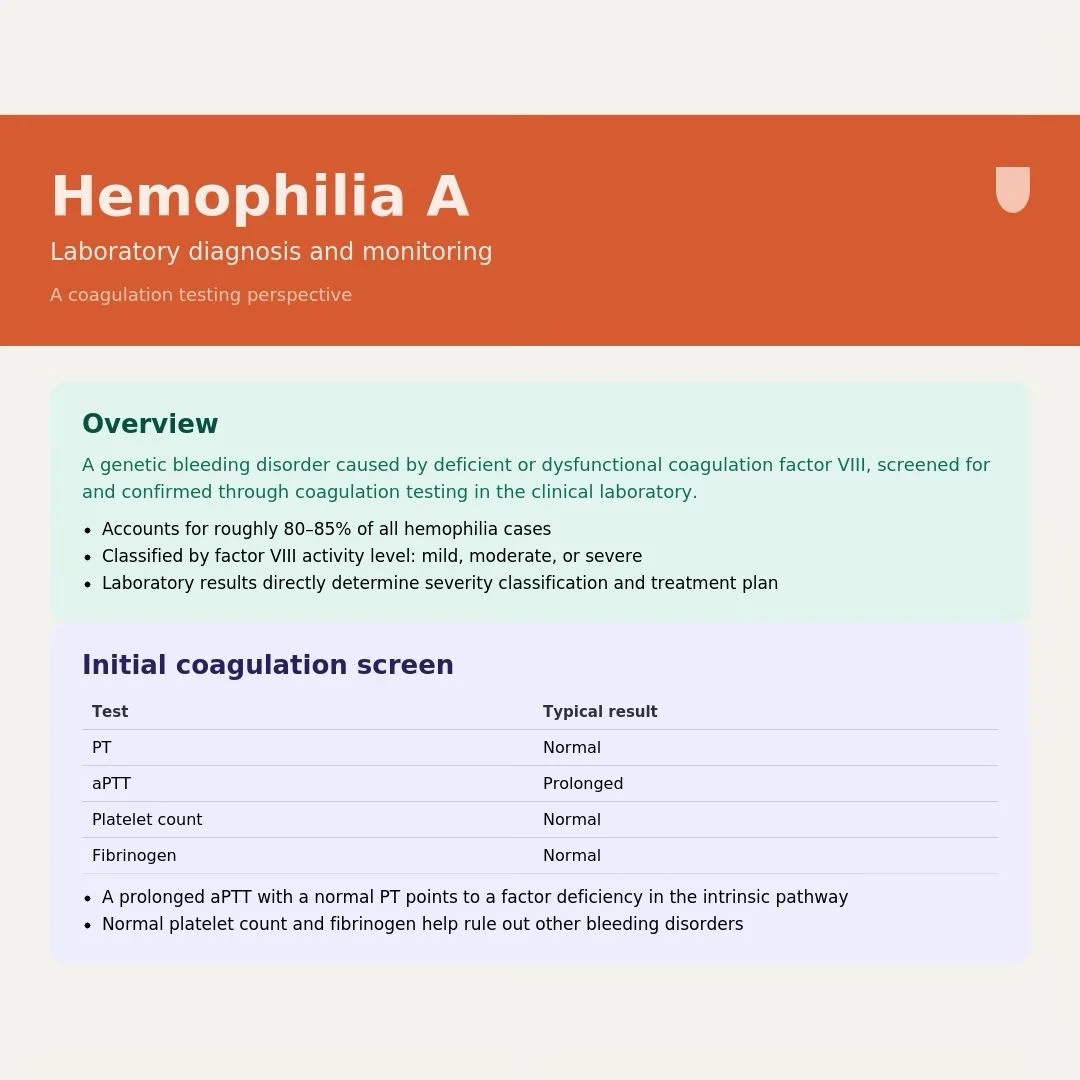
In the lab, hemophilia A usually first shows up as an isolated prolonged aPTT with a normal PT, normal platelet count, and normal fibrinogen.
That pattern points to the intrinsic pathway and prompts a factor VIII activity assay for confirmation.
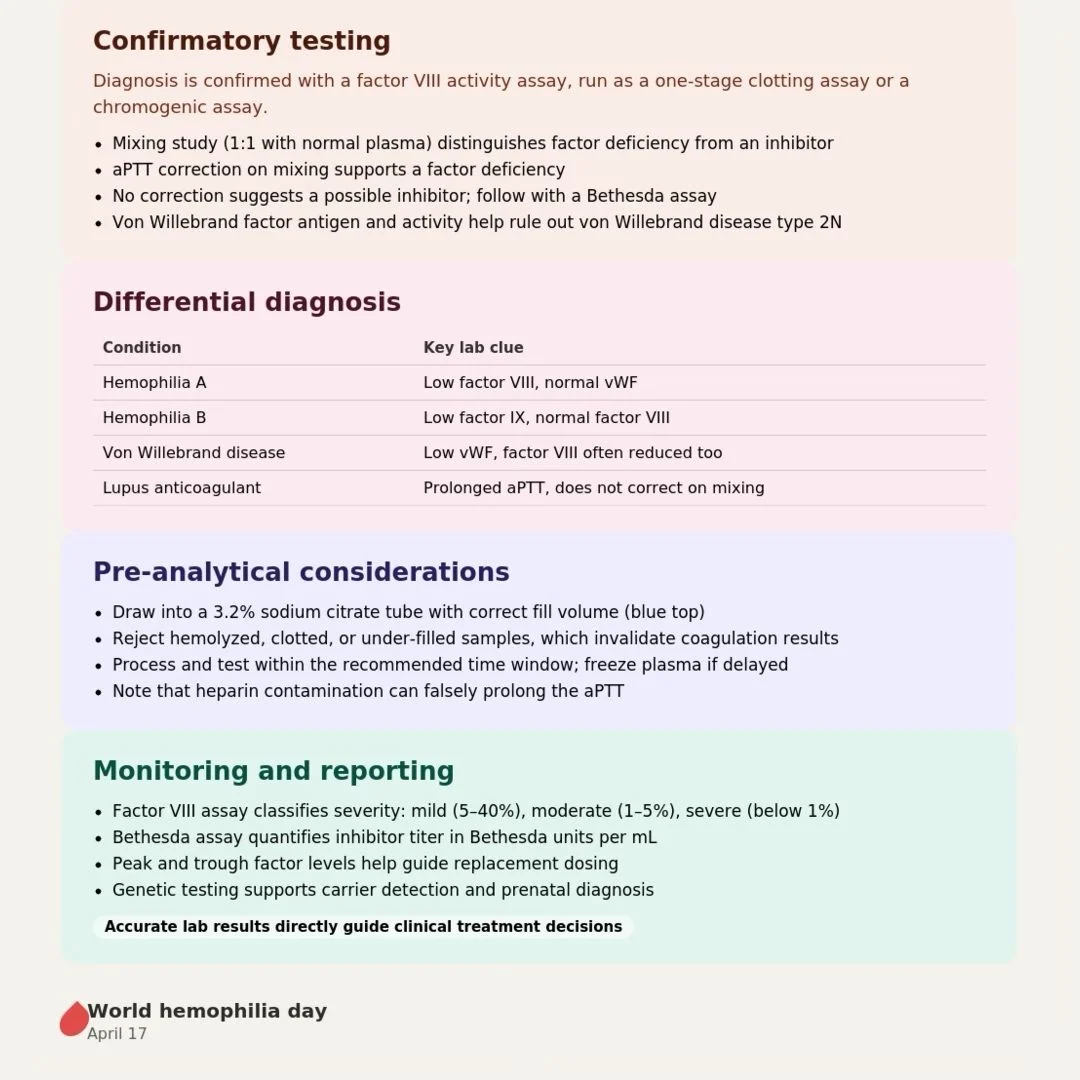
A mixing study is the key next step: if the aPTT corrects with normal plasma, we’re looking at a factor deficiency.
If it doesn’t correct, an inhibitor is likely present, and a Bethesda assay follows to quantify it.
A few things I always keep in mind when working these samples:
- Citrate tube fill volume matters, under-filled samples skew every downstream result
- Hemolyzed or clotted specimens get rejected, not ‘noted and reported anyway’
- Heparin contamination can falsely prolong the aPTT and lead to the wrong differential
- Von Willebrand disease and hemophilia B need to be ruled out before settling on hemophilia A
The factor VIII level itself then classifies severity (mild, moderate, severe) and directly shapes the clinical treatment plan, so accuracy at the bench really does carry through to patient care.
Sharing a short summary I put together covering the testing pathway, differential diagnosis, and pre-analytical pitfalls.”
Stay updated with Hemostasis Today.
-
Nov 8, 2026, 19:31Anna Kajaste-Rudnitski: Presenting AAV-Induced p53 Signalling in Human CNS Cells at ESGCT 26
-
Nov 8, 2026, 19:29David McIntosh: Cybersecurity Matters, but Blood Availability Remains the Bigger Challenge
-
Nov 8, 2026, 19:26Wenxue Ma: An Integrative Framework for Macrophage-Mediated Therapeutic Resistance in Cancer
-
Nov 8, 2026, 19:25Yildiz Yigit: Presenting a Polycythemia Vera Case at the MPN Subcommittee Session
-
Nov 8, 2026, 18:56Denis Oduor: Strengthening the Regulation and Delivery of Blood Transfusion and Transplantation Services
-
Nov 8, 2026, 18:28Raghavendra Rao: A Narrative Review on Chronic Venous Disease during Pregnancy
-
Nov 8, 2026, 17:57Dhiren Patel: PLD1-Derived Phospholipids Regulate NAD Kinase and ROS Production in Neutrophils
-
Nov 8, 2026, 17:48Andra T.: What Causes Antiphospholipid Syndrome? – Four Steps, not One Cause
-
Nov 8, 2026, 17:38Nasrin Samadi: Can a Normal Clotting Test Be Misleading?