


Christina Pierre: A Life-Course Approach to Thrombosis Risk in Women
Christina Pierre, Assistant Professor of Pathology and Laboratory Medicine at University of Pennsylvania Perelman School of Medicine, Director of Douglas B. Cines MD Special Coagulation Laboratory at Penn Medicine, University of Pennsylvania Health System, shared a post on LinkedIn:
“As the Director of the Douglas B. Cines MD Special Coagulation Laboratory at the Hospital of the University of Pennsylvania, I oversee the analysis of samples from patients with thrombosis every day.
On a more personal level, I’ve experienced the loss of a dear colleague due to thrombosis.
Today, on World Thrombosis Day, here’s what I want women to know:
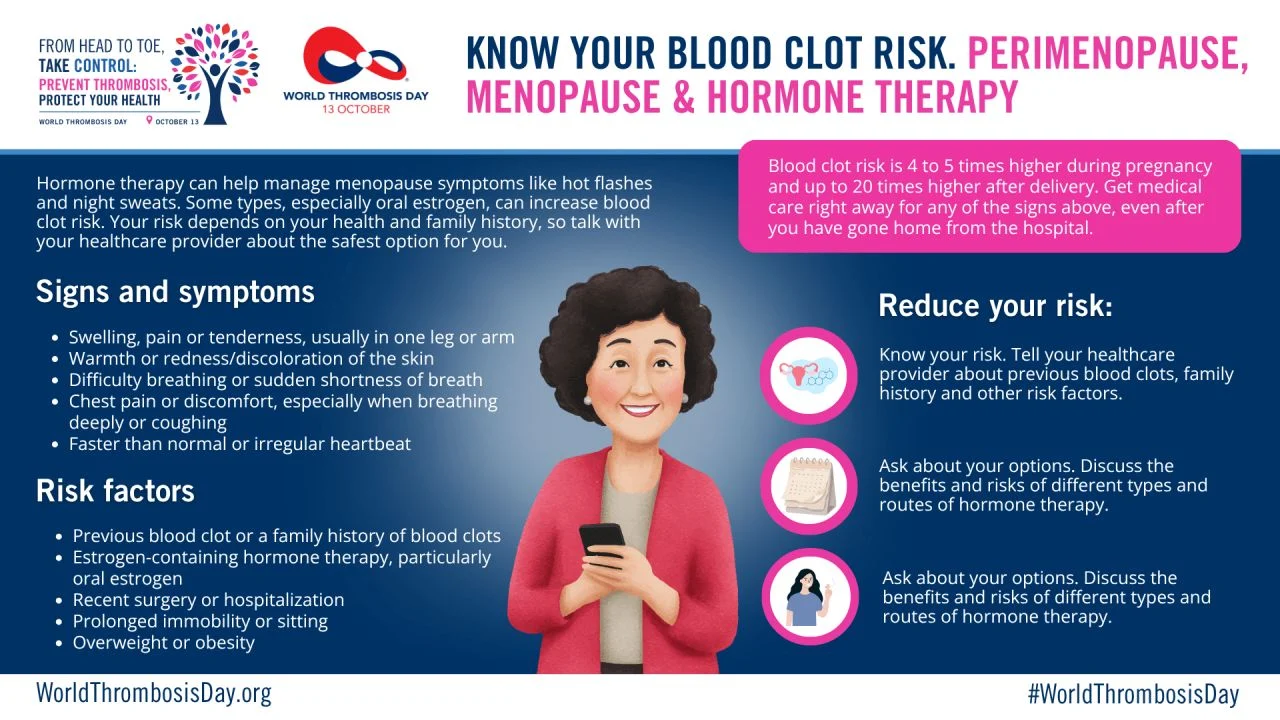
Clot risk isn’t constant.
It shifts across life stages.
- Hormonal contraception and menopausal hormone therapy can increase risk, especially oral estrogen-containing forms
- Pregnancy and the first approximately 6 weeks postpartum are associated with a markedly increased risk
- Surgery, long travel, and immobility add to pre-existing risk
Know the warning signs: one-sided leg swelling, pain, or warmth (deep vein thrombosis), and sudden shortness of breath or chest pain (pulmonary embolism).
Both are emergencies. Seek care immediately.
From the lab’s perspective, testing can help clarify risk, but it isn’t a substitute for history.
Inherited conditions like factor V Leiden or prothrombin gene mutation, and acquired ones like antiphospholipid syndrome, can raise clot risk, yet a family history of clots often tells us more than any single result.
Testing is most useful when it’s targeted, and timing matters: some assays are unreliable during acute clotting, pregnancy, or while on anticoagulants or hormones.
Before starting hormonal medication or planning a pregnancy, tell your clinician about any personal or family history of clots.
Most clots are preventable and treatable when caught early.
Please share this with a woman in your life.”
Stay updated with Hemostasis Today.
-
Oct 14, 2026, 16:50Peter Kouides: The Role of Multidisciplinary Networks in Women’s Hematologic Care
-
Oct 14, 2026, 16:35Thaís Leonel: Analytical Consistency as a Foundation for Evidence-Based Thrombosis Management
-
Oct 14, 2026, 16:28Christina Yiangou: Presenting the HemaFAIR Project at ASCAT 2026 in London
-
Oct 14, 2026, 16:27ITP Research and the Importance of Patient Involvement – ITP Australia and New Zealand
-
Oct 14, 2026, 16:19Ganesh Mohan: Complexities of Thrombosis Care Across Diverse Patient Populations
-
Oct 14, 2026, 16:17Louise St. Germain Bannon: Every Conversation Matters Beyond World Thrombosis Day
-
Oct 14, 2026, 16:06Belinda Minnaar: Recognizing Leadership in VTE Prevention on World Thrombosis Day
-
Oct 14, 2026, 14:17Abdul Muqtadir Abbasi: PNH Treatment – Simplified for Medical Students
-
Oct 14, 2026, 14:07Barbara Adams Krolak: Highlighting Women’s Unique Risks for Blood Clots