

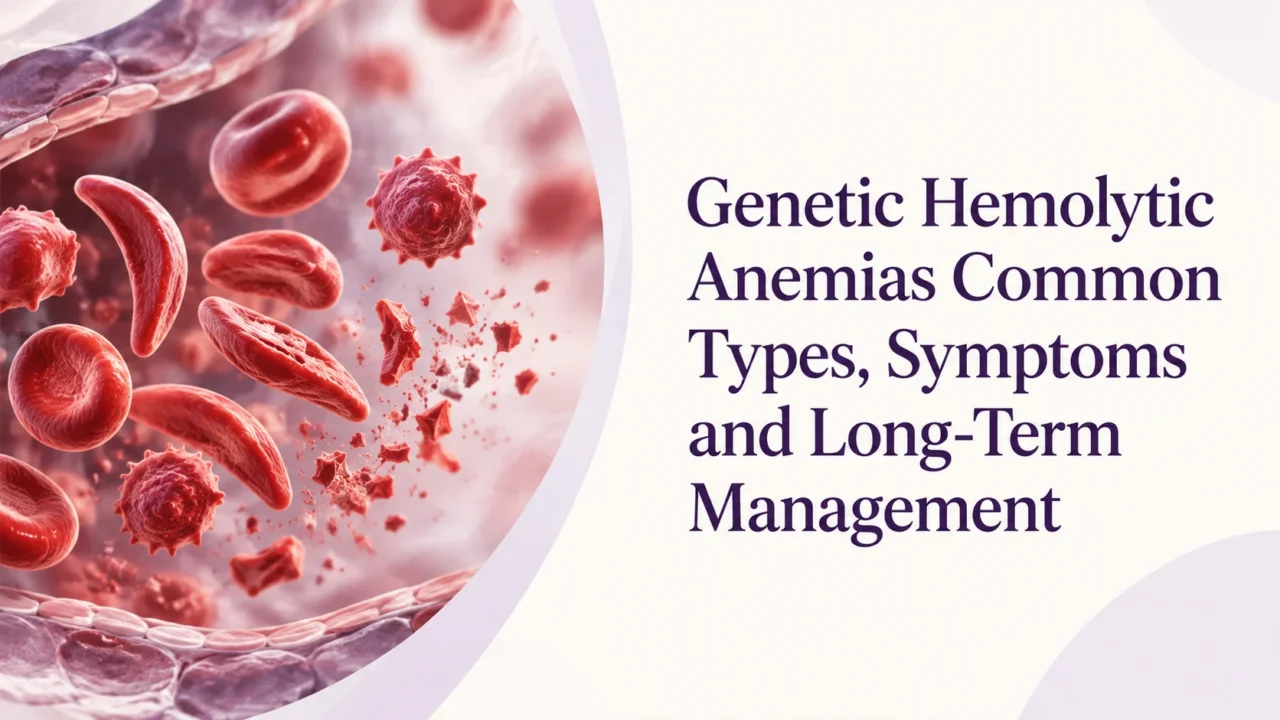
AI Generated
Oct 26, 2026, 10:17
Pankaj K.: Genetic Hemolytic Anemias Common Types, Symptoms and Long-Term Management
Pankaj K., Chief Executive Officer at umPhysicianAdvisors LL, shared a post on LinkedIn:
“Some types of hemolytic anemia are genetic, meaning they are present from birth.
Common examples include:
Sickle Cell Disease
Thalassemia
Hereditary spherocytosis
In these conditions:
Red blood cells are abnormally shaped
They break easily
Chronic anemia develops over time
Symptoms often start in childhood and may include:
Fatigue
Recurrent pain
Delayed growth
Frequent infections
These conditions require lifelong monitoring, but early care greatly improves quality of life.”
Proceed to the video attached to the post.
Stay updated with Hemostasis Today.
-
Oct 26, 2026, 10:09Christopher Robinson: Anemia and Postpartum Transfusion Rates at Different Blood Loss Thresholds After Vaginal Delivery
-
Oct 26, 2026, 09:54Hussnain Javaid: IV Iron During Active Bacterial Infection Reassessing the Risks and Benefits
-
Oct 26, 2026, 09:37Fathima Zulfa Mohamed Sattar: Systematic Investigation of Bleeding Disorders and Coagulation Abnormalities
-
Oct 26, 2026, 09:12Robert Major: GFAP as a Point-of-Care Biomarker in Intracerebral Hemorrhage
-
Oct 26, 2026, 08:55Abdulla A. Damluji: LATE-MT Reveals Benefits and Risks of Late Thrombectomy
-
Oct 26, 2026, 05:28Anirban Sen Gupta: Celebrating 20 Years of Research and Innovation
-
Oct 26, 2026, 05:13Shamee Shastry: ScholarGPS Recognises a Highly Ranked Blood Transfusion Scholar
-
Oct 26, 2026, 03:43Shazmah Shaikh: How Laser Atherectomy Helps Clear Blocked Arteries
-
Oct 26, 2026, 03:28Priya Prasad: Protecting Donors and Recipients Through Blood Safety