

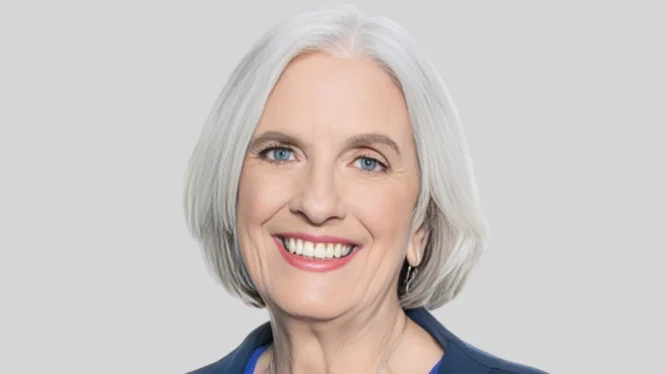
Cynthia Dunbar: Retiring From NIH After 39 Years to Advance Advocacy and Research in Hematology
Cynthia Dunbar, President-Elect at American Society of Hematology shared a post on LinkedIn:
“As of last week, I am no longer an NIH employee, having retired and changed to Emeritus Scientist status after 39 years at the NIH.
This change was planned long in advance to facilitate transitioning my group’s trainees and staff to new positions, knowing that my role as President-Elect (2026) and President (2027) of the American Society of Hematology (ASH) was impossible to fulfill while remaining a government employee, given prohibitions on advocacy, fundraising and public positions on issues central to both ASH and HHS/NIH.
The past 14 months as an NIH scientist and clinician have made this transition both more of a relief and guilt-inducing in terms of leaving a ship under siege.
However, I am very energized and committed to working with the fantastic ASH staff, leaders and membership to do all we can to advocate for research funding and fact-based science, maintain the investigator workforce pipeline, and fill in current gaps in research support for health outcomes and sickle cell disease research, to name just a few areas of critical need.
Fight for Hematology is ASH’s amazing set of initiatives, with 20 million in extra funding already allocated, new advocacy and communication efforts, and a big jump in pipeline programs.
Hematologists, patients, scientists, support us in any way you can!
I am incredibly grateful to my many mentors and sponsors at NIH, ASH and in the international hematology community, my almost 200 direct mentees who are 100% responsible for anything I have accomplished, unwavering support from NHLBI intramural leadership, and my family and friends for putting up with my often crazy schedule, deadlines and travel.
I have been truly lucky so far in my career.
Moving forward, I am not interested in any full-time academic or private sector positions, at least for the next two years, but I am very willing and able to consider other types of positions and service, including consulting, mentoring, speaking and teaching.
Reach out anytime!”
Stay updated with Hemostasis Today.
-
Jul 28, 2026, 13:46Manal Rayyan: Efanesoctocog Alfa Shows Excellent Real-World Performance
-
Jul 28, 2026, 13:22Raelene Kambli: Advocating for Safer Blood Access
-
Jul 28, 2026, 13:07Connie Montgomery: Conversations That Change Hemophilia Care
-
Jul 28, 2026, 09:06Payal Desai: Highlights from the NASCC 2026 Sickle Cell Workshop
-
Jul 28, 2026, 08:43Flora Peyvandi։ Acquired Hemophilia A – An Illustrated Review Based on French Guidelines
-
Jul 28, 2026, 08:28Ujjal Didar Singh Sekhon: Exploring SynthoPlate Under P2Y12 Blockade
-
Jul 28, 2026, 08:27Sujeet Katiyar: You Share Patient Data with Your TPA. Where Is the Contract?
-
Jul 28, 2026, 07:50Mihail Celeski: Personalizing Anticoagulant Therapy for Frail Patients With Atrial Fibrillation
-
Jul 28, 2026, 07:36Ifeanyichukwu Ifechidere: What If the Test We’ve Trusted for Decades Has Been Telling Us Half the Story?