


Ney Carter: Key Advances in the 2026 ACC/AHA Guideline on the Management of Dyslipidemia
Ney Carter Borges, Member Cardiologist of Global Physician Association at Cleveland Clinic Florida, shared a post on LinkedIn:
”Key Advances in the 2026 ACC/AHA Guideline on the Management of Dyslipidemia
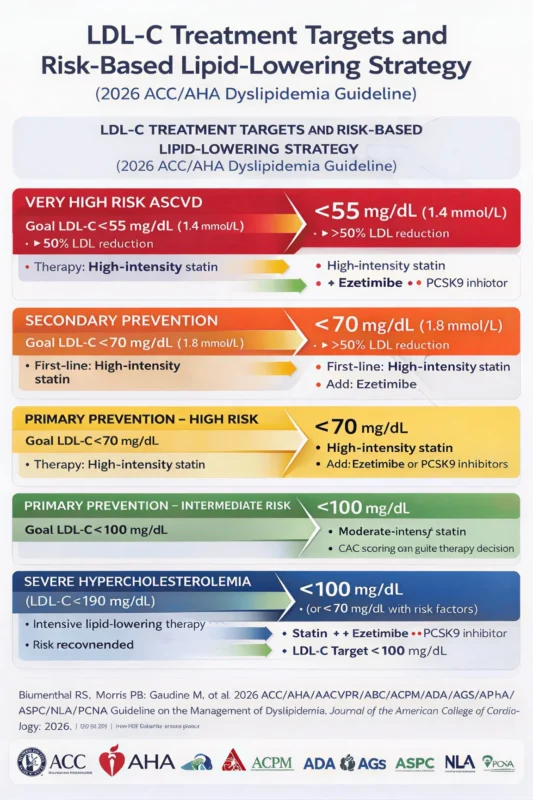
The 2026 ACC/AHA Guideline on the Management of Dyslipidemia represents a major update in cardiovascular prevention strategies, emphasizing earlier intervention, refined risk assessment, and more aggressive lipid-lowering targets to reduce atherosclerotic cardiovascular disease (ASCVD). The guideline expands the concept of dyslipidemia beyond LDL cholesterol alone, incorporating triglycerides, remnant lipoproteins, and lipoprotein(a) [Lp(a)] as important contributors to residual cardiovascular risk.
One of the most significant updates is the introduction of the PREVENT-ASCVD risk equations, which replace the older pooled cohort equations for estimating cardiovascular risk in adults aged 30–79 years. These equations allow clinicians to categorize individuals into low (<3%), borderline (3–<5%), intermediate (5–<10%), or high (≥10%) 10-year risk, supporting a more personalized discussion regarding preventive therapy.
Another important change is the return of explicit LDL-C treatment targets, which complement percentage reduction goals. For secondary prevention in very-high-risk ASCVD, the recommended target is LDL-C <55 mg/dL, reflecting growing evidence that intensive lipid lowering significantly reduces recurrent cardiovascular events. For other ASCVD patients, the recommended target is <70 mg/dL, while in primary prevention, the targets vary depending on risk category.
The guideline also emphasizes earlier detection of atherogenic risk factors. Measurement of Lp(a) is now recommended at least once in all adults, as elevated levels are associated with substantially increased ASCVD risk and may guide intensification of lipid-lowering therapy. Similarly, apolipoprotein B (apoB) measurement can be useful for refining risk assessment, particularly in patients with diabetes, hypertriglyceridemia, or discordant lipid profiles.
Therapeutically, statins remain the foundation of lipid-lowering therapy, but the guideline expands the role of non-statin agents. When LDL targets are not achieved with maximally tolerated statins, clinicians may add ezetimibe, PCSK9 monoclonal antibodies, bempedoic acid, or inclisiran, depending on the clinical context and the degree of additional LDL reduction required.
Imaging strategies are also emphasized. Coronary artery calcium (CAC) scoring is recommended to refine risk stratification when treatment decisions are uncertain, particularly in individuals with borderline or intermediate risk. The extent of CAC can guide both the initiation and the intensity of lipid-lowering therapy.
Overall, the 2026 guideline promotes earlier screening, precision risk assessment, aggressive LDL reduction, and broader use of emerging therapies, aiming to substantially reduce the lifetime burden of ASCVD through proactive lipid management.”
Stay updated with Hemostasis Today.
-
Sep 6, 2026, 18:17Aryabhatta Sadhu: Irradiation of Blood Components – From Clinical Indication to Laboratory Release
-
Sep 6, 2026, 18:15Ashenafi Tazebew Amare: A Year of Progress, Transformation and Renewed Commitment
-
Sep 6, 2026, 18:13Emilio Osorio: Can Anticoagulation Be Safely Discontinued After Surgical Left Atrial Appendage Occlusion?
-
Sep 6, 2026, 18:11Razan Alolyani: Our Research on Anticoagulation After Acute Ischemic Stroke Receives 2nd Place
-
Sep 6, 2026, 18:10Chayakrit Krittanawong: Have You Heard of Blood Clots in the Legs?
-
Sep 6, 2026, 18:08Trilok Chand: Microplastics Found in Human Testes and Blood Clots
-
Sep 6, 2026, 18:07Sarah Moharem Elgamal: Cardiovascular Imaging Beyond Anatomy Toward Earlier Risk Prediction
-
Sep 6, 2026, 16:41Christina P.: APS – How it Happens in Your Blood, the Warning Signs, and What to Do about It
-
Sep 6, 2026, 16:33Jose Angel Nicolas Avila: How Tissue Mitochondrial Activity Dictates Macrophage Pool Size