


Nicola Ammirabile: New Evidence in Structural Heart Interventions at PCR London Valves 2026
Nicola Ammirabile, Interventional Cardiologist at Ospedale Gravina E S. Pietro, shared a post on LinkedIn:
“Three meta-analyses of randomised trials presented at PCR London Valves 2026, addressing relevant questions in structural heart interventions:
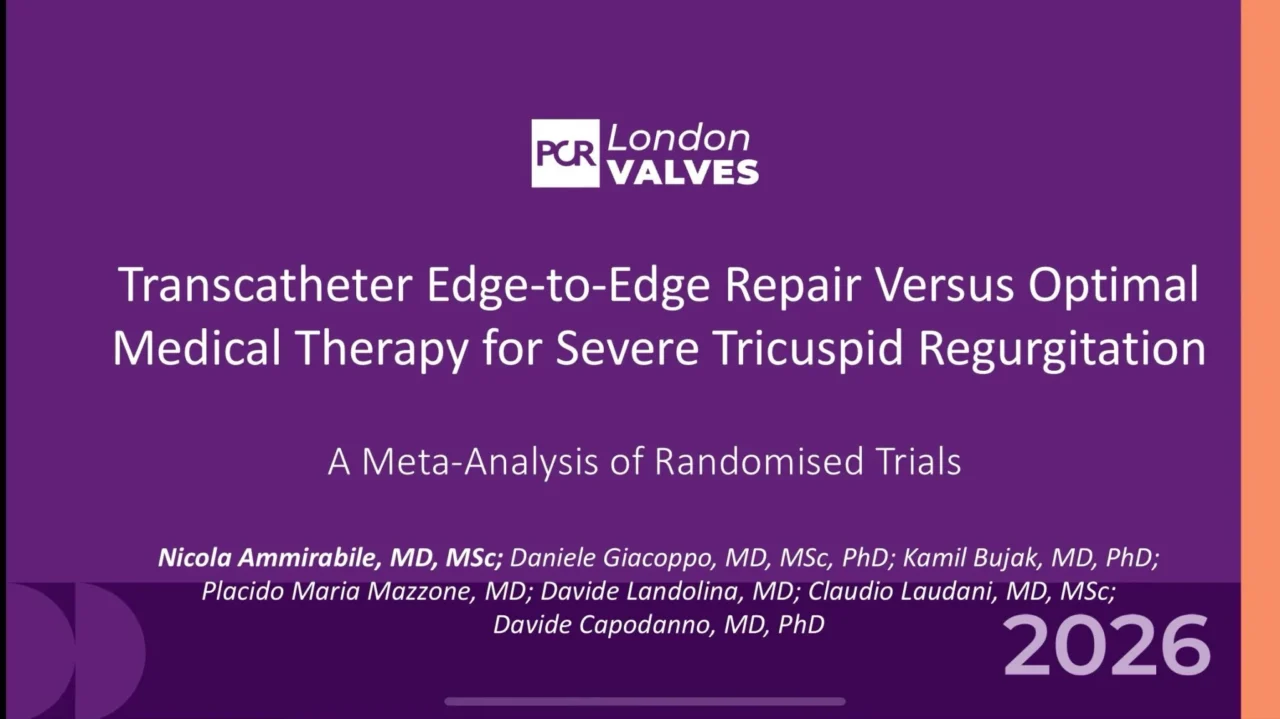
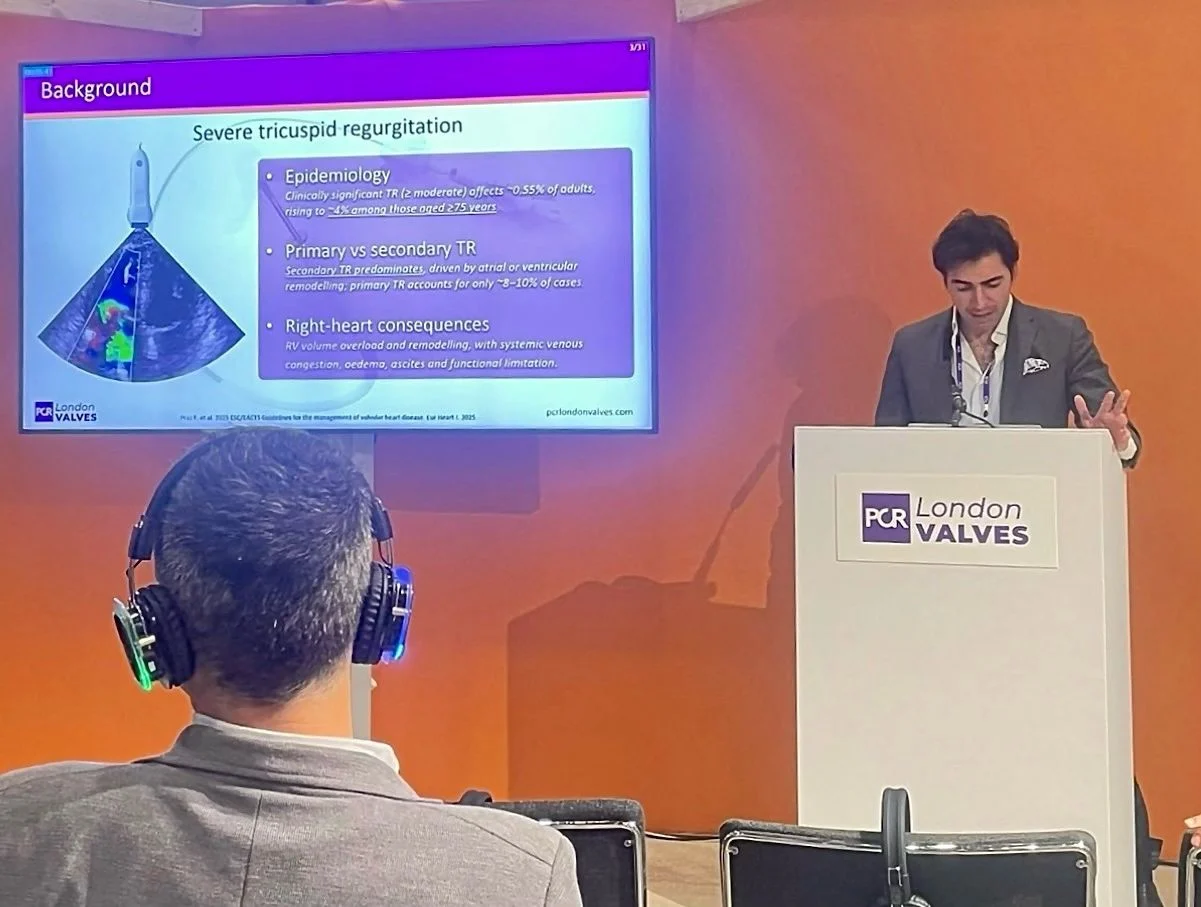
- Transcatheter tricuspid edge-to-edge repair vs optimal medical therapy
Four trials (TRILUMINATE Pivotal, Tri.Fr, TRIC-I-HF and CLASP II TR) randomised 1,682 patients, with 1,674 included in the primary analysis.
T-TEER significantly improved tricuspid regurgitation severity, NYHA class and quality of life at 12 months, with an approximately 11-point greater improvement in KCCQ scores (P<.001).
Heart failure hospitalisation incidence was numerically lower at the longest follow-up (IRR 0.71; P=.089), but not statistically significant, with substantial heterogeneity. No significant difference in mortality was observed.
These findings confirm symptomatic and functional benefits of T-TEER. Baseline heart failure risk and patient selection may influence outcomes, while individual trials have shown encouraging HF hospitalisation results at longer follow-up.
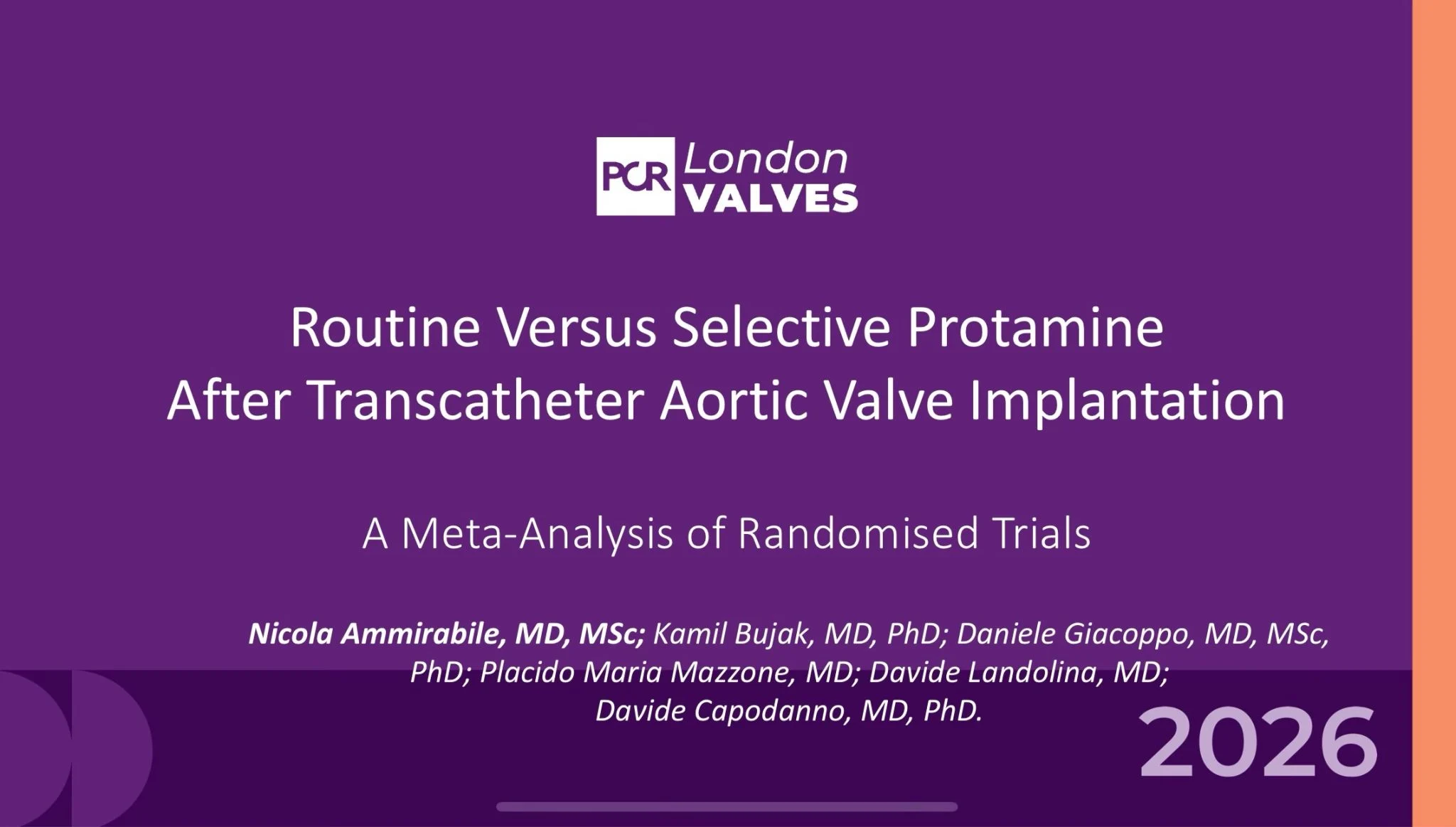
- Routine vs selective protamine after TAVI
Three trials (PS-TAVI, ACE-PROTAVI and POPular ACE TAVI) randomised 1,510 patients, with 1,461 contributing to the primary analysis.
Routine protamine reduced overall bleeding by 36% (RR 0.64; P<.001), mainly through fewer minor bleeding events (RR 0.60; P<.001).
No significant differences were observed in major bleeding, thromboembolic events or mortality, although estimates remained imprecise.
Six cases of anaphylaxis were reported with routine administration in POPular ACE TAVI, compared with none in the selective group.
Whether the reduction in minor bleeding justifies routine protamine reversal remains uncertain, given the anaphylaxis signal and lack of significant reduction in major bleeding. Its net clinical benefit over selective reversal remains to be established.
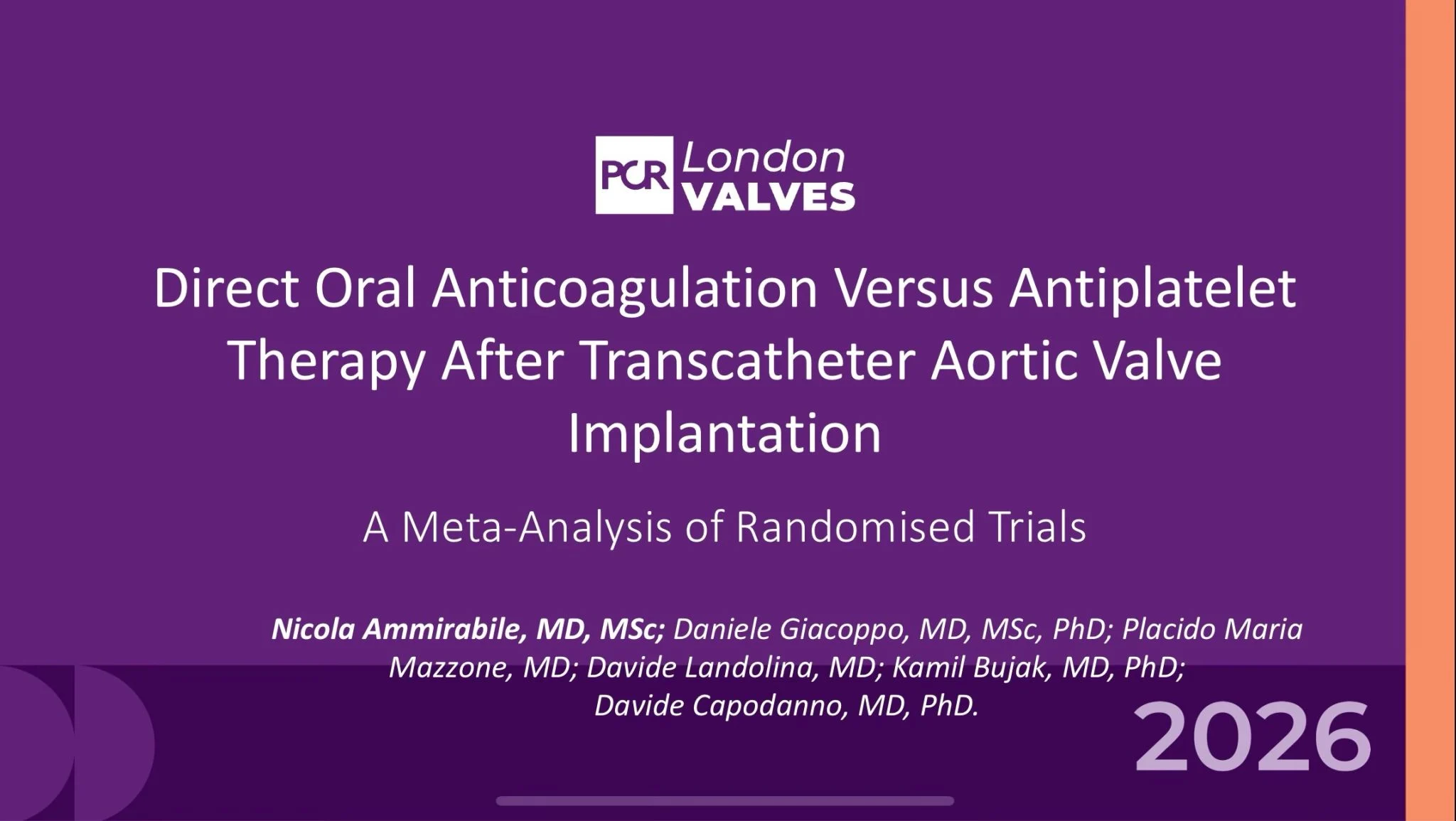
- Direct oral anticoagulation vs antiplatelet therapy after TAVI
Five trials (GALILEO, ADAPT-TAVR, ATLANTIS, ACASA-TAVI and NOTION-4), including 3,640 patients without an established indication for anticoagulation, were included.
DOAC-based strategies reduced hypoattenuated leaflet thickening (HALT) by 52% (RR 0.48; P<.001), with consistent results across sensitivity analyses. Markedly reduced leaflet motion was also 79% lower (P<.001).
However, these imaging benefits did not translate into demonstrated clinical improvements at 12 months. No significant differences were observed in bleeding or mortality, although estimates remain imprecise and do not establish equivalent safety.
Current evidence does not support routine anticoagulation solely to prevent subclinical leaflet thrombosis after TAVI, given the lack of demonstrated clinical benefit and limited data on valve function and long-term durability.
Further research should determine whether selected patient populations may benefit.
Thanks to all co-authors for the teamwork.
Daniele Giacoppo, Kamil Bujak, Placido Maria Mazzone, Davide Landolina, Claudio Laudani, Davide Capodanno.”
Stay updated with Hemostasis Today.
-
Nov 25, 2026, 05:58Paris Margaritis: Are LSECs the Panacea for FVIII Gene Therapy?
-
Nov 25, 2026, 05:53Rahul Kaushik: Challenging the “One-and-Done” Rule in AAV Gene Therapy
-
Nov 25, 2026, 05:45Michela Milani: WFH New Technology and Gene Therapy Workshop 2026
-
Nov 25, 2026, 05:37Ross Baker: How a WA Health Innovation is Changing Women’s Blood Health
-
Nov 25, 2026, 02:17Ahmad G. Alzahrani: Why Iron Is Low Despite High Ferritin in Inflammatory Anemia?
-
Nov 24, 2026, 15:57100 Years of von Willebrand Disease – From VWF Structure to Clinical Management and Future Directions – Seminars in Thrombosis and Hemostasis
-
Nov 24, 2026, 15:46Matthew Hazell: Rare Blood – Connecting Science with the Patient Experience
-
Nov 24, 2026, 15:23Cold Agglutinin Disease: Beyond Hemolysis Toward Complement-Directed Treatment
-
Nov 24, 2026, 15:19Essama Telli: Recognizing Retiform Purpura as a Sign of Vascular Injury and Thrombosis