


Pall T. Onundarson: White vs Red Thrombi – Where Do FXIa Inhibitors Fit
Pall T. Onundarson, Professor Emeritus of Hematology at University of Iceland, shared a post on LinkedIn:
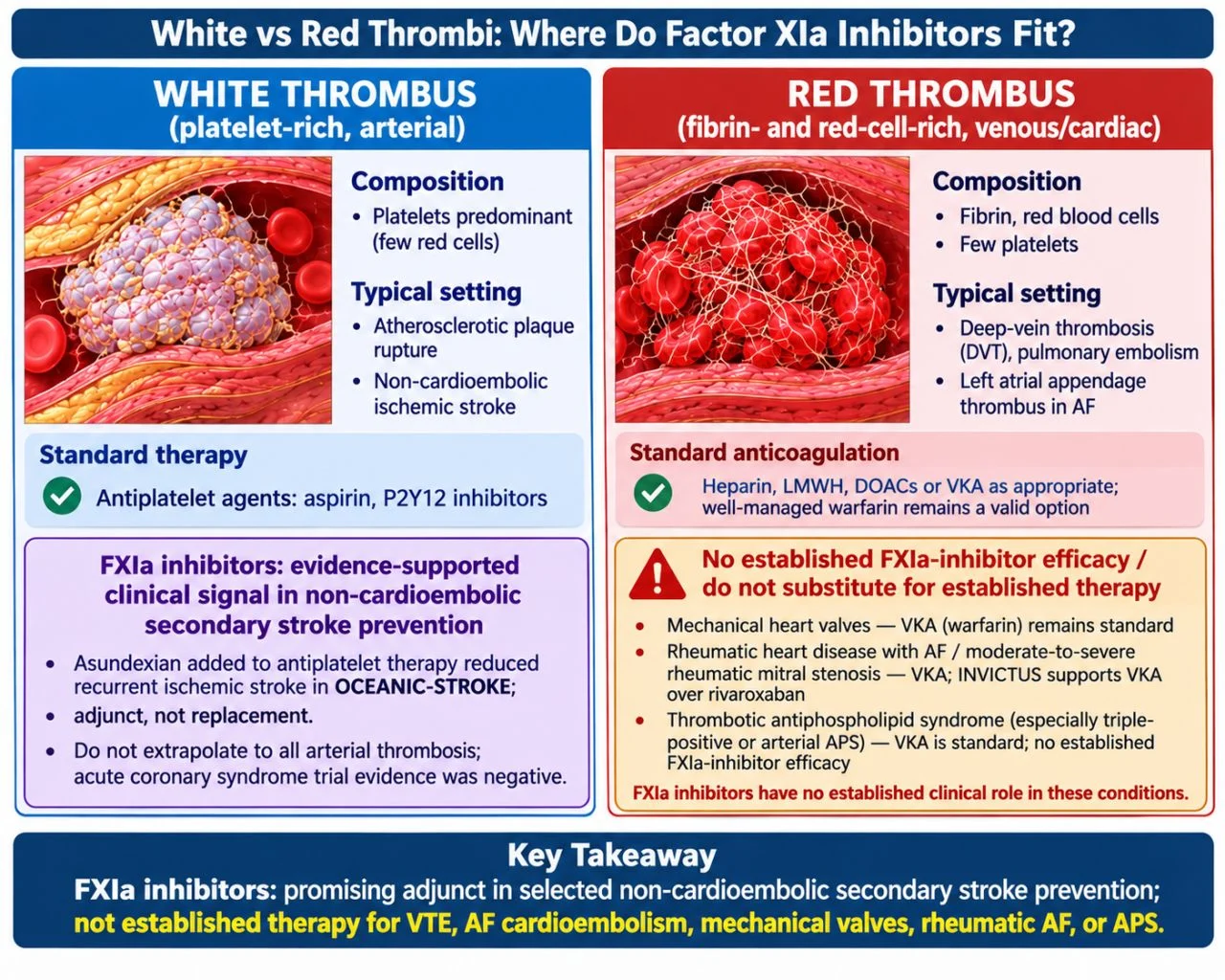
“Thrombosis can be broadly classified into two types:
1. White thrombi (platelet-rich)
Predominate in arterial thrombosis after atherosclerotic plaque rupture. Platelet activation and aggregation drive these events (eg, acute coronary syndromes, non-cardioembolic ischemic stroke). Treatment centers on antiplatelet agents such as aspirin and P2Y12 inhibitors.
2. Red thrombi (fibrin- and red-cell-rich)
Predominate in venous thrombosis and cardiac thrombi from stasis (eg, DVT, PE, AF-related thrombi). These require anticoagulation with heparin, DOACs, or VKAs. Well-managed warfarin (TTR at least 70%) remains a valid option; DOACs are not automatically superior. VKAs remain preferred for mechanical valves, rheumatic heart disease with AF/significant mitral stenosis, and triple-positive antiphospholipid syndrome.
Factor XIa inhibitors: where do they fit? These agents reduce thrombin generation via the contact pathway without blocking TF-initiated coagulation.
OCEANIC-STROKE showed reduced recurrent ischemic stroke when asundexian was added to antiplatelet therapy, suggesting promise for secondary prevention of non-cardioembolic stroke, but this should not be generalized to all arterial disease.
LIBREXIA-ACS (milvexian) did not show benefit in ACS. In OCEANIC-AF, FXIa inhibition was simply ineffective compared to apixaban and the trial was stopped. Currently there is no established evidence supporting FXIa inhibitors for VTE treatment or AF-related cardioembolic prevention.
So here is my take: Antiplatelets target platelet-driven arterial wall thrombosis; anticoagulants target coagulation-driven thrombosis. FXIa inhibitors are a promising, indication-specific addition to antithrombotic therapy (mainly to treat some white platelet rich thrombi).
Despite the promise of causing little bleeding, currently they cannot replace established anticoagulants that are used to treat red thrombi.”
Other posts featuring Pall T. Onundarson on Hemostatis Today.
-
Nov 26, 2026, 15:16Junedh M Amrute: Decoding the Cellular and Molecular Basis of Coronary Artery Disease
-
Nov 26, 2026, 15:02Antiplatelets May Offer Advantages Over Anticoagulants in Cancer-Associated Stroke – International Journal of Stroke
-
Nov 26, 2026, 14:52Toby Richards: The Hidden Burden of Iron Deficiency Anemia in Women
-
Nov 26, 2026, 14:49Andrew Choong: Could a Painful, Swollen Leg Be a Blood Clot?
-
Nov 26, 2026, 14:24Ilenia Calcaterra: Inferior Thyroid Artery Abnormalities as a Potential Marker of Cardiovascular Risk
-
Nov 26, 2026, 14:08Ana Pedrero Gil: Sex-Specific Anemia Criteria and RBC Transfusion Risk in Cardiac Surgery
-
Nov 26, 2026, 13:55Mary Cushman: VCCBH Monthly Conference Highlights and Audience Engagement
-
Nov 26, 2026, 13:49James P. Crowley: Diagnosing IgG4-Related Disease and the Importance of Early Detection
-
Nov 26, 2026, 13:38Holger Winkels: Olfr2 Inhibition Improves Cardiac Repair After Myocardial Infarction