


Sally Mandour: A Positive Test, a Misleading Name – Decoding Lupus Anticoagulant
Sally Mandour, Associate Professor, Head of Hematology Unit at Clinical Pathology Department of National Liver Institute, Monofeya University, shared a post on LinkedIn:
“Lupus Anticoagulant Understanding
‘A positive test for a negative name’:
One of the most counterintuitive concepts in coagulation: a “lupus anticoagulant” doesn’t cause bleeding in vivo — it’s associated with thrombosis. The name comes purely from its behaviour in vitro, where it prolongs phospholipid-dependent clotting tests.
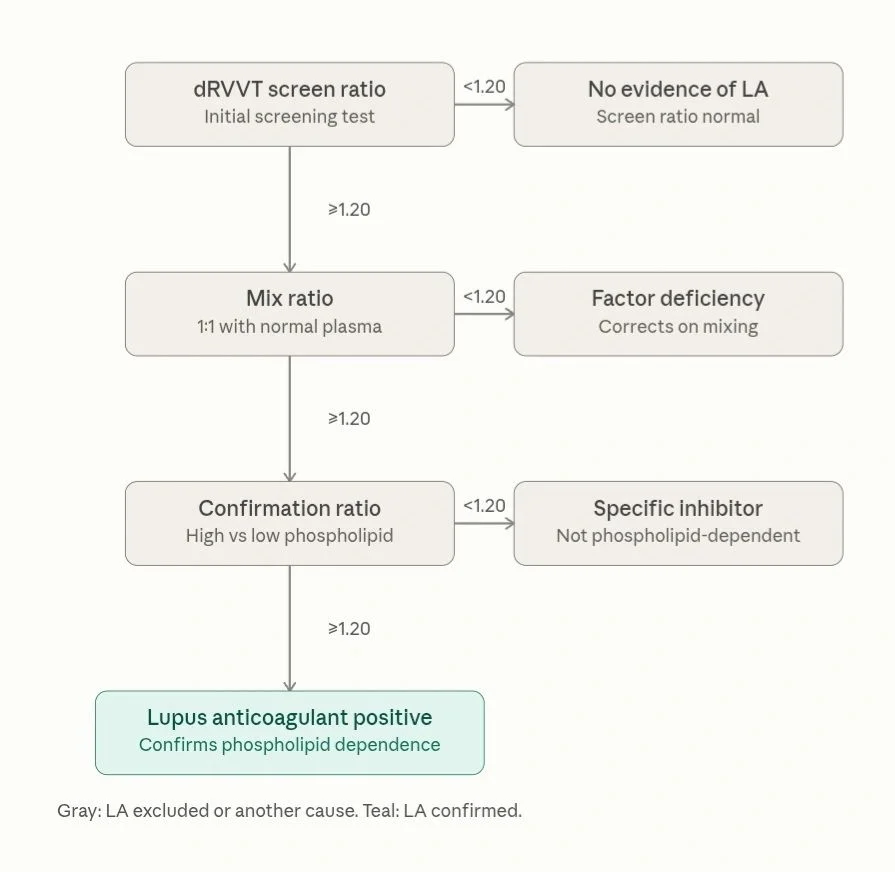
The ISTH minimum diagnostic criteria require proving three conditions:
- An abnormality in phospholipid-dependent coagulation (a prolonged APTT or PT)
- That the abnormality is caused by an inhibitor, not a factor deficiency
- That the inhibitor is phospholipid-dependent, not a specific factor inhibitor
How each criterion gets tested:
- Criterion 1: A phospholipid-based clotting assay (APTT, PT, dRVVT, KCT, or PTT-LA)
- Criterion 2: A 1:1 mixing study with normal plasma. If the clotting time corrects, it indicates a factor deficiency. If it stays prolonged, an inhibitor is present. (A second tube is incubated 1 to 2 hours to also exclude a specific-factor inhibitor.)
- Criterion 3: Repeating the test with varying phospholipid concentrations. If adding more phospholipid shortens the clotting time, the inhibitor is phospholipid-directed — consistent with LA.
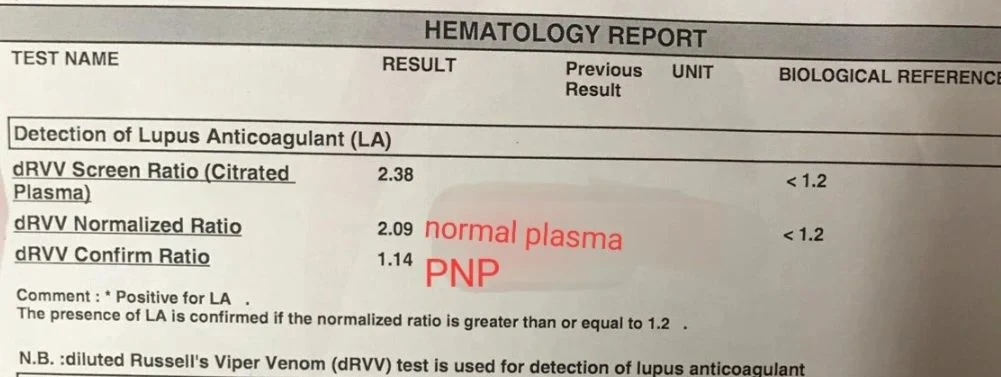
The workhorse test: dRVVT
Russell’s viper venom directly activates Factor X, bypassing the intrinsic pathway’s earlier steps.
The result is reported as
- a screen ratio,
- a mix ratio (patient and normal plasma, 1:1), and
- a confirmation ratio (high vs low phospholipid concentration)
and the pattern across all three determines the interpretation, not any single number in isolation.
Common traps:
- Residual platelets in frozen plasma – false negatives (hence double centrifugation before freezing)
- Anticoagulants (heparin, warfarin, DOACs) – false positives
- dRVVT alone cannot distinguish LA from a Factor V or VIII inhibitor
- LA must be confirmed as persistent (at least 12 weeks apart) before diagnosing antiphospholipid syndrome.”
Other posts featuring Sally Mandour on Hemostatis Today.
-
Nov 26, 2026, 15:02Antiplatelets May Offer Advantages Over Anticoagulants in Cancer-Associated Stroke – International Journal of Stroke
-
Nov 26, 2026, 14:52Toby Richards: The Hidden Burden of Iron Deficiency Anemia in Women
-
Nov 26, 2026, 14:49Andrew Choong: Could a Painful, Swollen Leg Be a Blood Clot?
-
Nov 26, 2026, 14:24Ilenia Calcaterra: Inferior Thyroid Artery Abnormalities as a Potential Marker of Cardiovascular Risk
-
Nov 26, 2026, 14:08Ana Pedrero Gil: Sex-Specific Anemia Criteria and RBC Transfusion Risk in Cardiac Surgery
-
Nov 26, 2026, 13:55Mary Cushman: VCCBH Monthly Conference Highlights and Audience Engagement
-
Nov 26, 2026, 13:49James P. Crowley: Diagnosing IgG4-Related Disease and the Importance of Early Detection
-
Nov 26, 2026, 13:38Holger Winkels: Olfr2 Inhibition Improves Cardiac Repair After Myocardial Infarction
-
Nov 26, 2026, 13:15Abdul Mannan: When Is Thrombophilia Testing Worthwhile?