


Sneha Singh: Why Can Haemophilic Arthropathy Progress even When Obvious Joint Bleeds are Prevented by Modern Prophylaxis?
Sneha Singh, Senior Researcher at Uniklinikum Bonn, Institute for Experimental Hematology and Transfusion Medicine, shared on LinkedIn:
“Why can haemophilic arthropathy progress even when obvious joint bleeds are prevented by modern prophylaxis?
Over the past six months in translational hematology (specificially in Hemophillic arthropathy) understanding patient responses upon treatment, we’ve been focusing on this question and our review article is now out in RPTH.
Highlights from our synthesis:
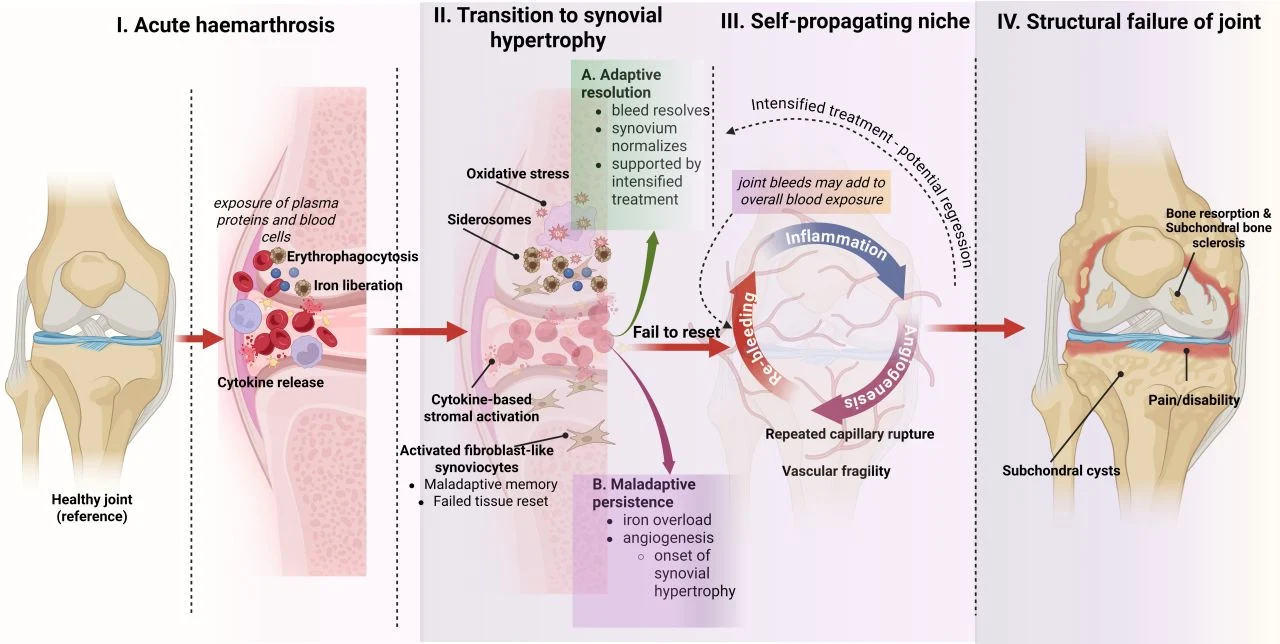
From bleed to tissue memory: Erythrocyte clearance, iron deposition (ferritin/haemosiderin), and cytokine shifts can turn an acute bleed response into persistent synovial remodeling.
A self-amplifying synovial niche: Hypertrophic synovium and fragile neovessels may permit ongoing subclinical blood extravasation and drive osteochondral injury.
Earlier detection and sustained care: Ultrasound/MRI can catch clinically silent synovial hypertrophy, raising key questions around sustaining intensified haemostatic cover until inflammation resolves.
Huge thanks to Johannes Oldenburg.”
Stay updated with Hemostasis Today.
-
Nov 28, 2026, 05:37Higher Cerebral Small Vessel Disease Burden Predicts Poorer Thrombectomy Recovery, Though Not Eligibility – International Journal of Stroke
-
Nov 28, 2026, 05:33Cecilia Precious Teko: A Closer Look at Blood
-
Nov 28, 2026, 05:12Eileen Cher: Every Donation Makes a Difference
-
Nov 28, 2026, 04:39Rasiqh Wadud: PIEZO1 and Phosphatidylserine Exposure
-
Nov 28, 2026, 04:23Satayesh Malekzadeh: A Closer Look at Reticulocytes
-
Nov 28, 2026, 04:12Muhammet Özbilen: The Unseen Gap in Iron Deficiency Diagnosis in Women
-
Nov 28, 2026, 02:28Christian Ruff: Is Your Health System Ready for Factor XI/XIa Inhibitors?
-
Nov 28, 2026, 02:23Roberto Pola: Proud and Honored to Kick off the European Expert PE Conference 2026 in Rome
-
Nov 28, 2026, 02:16Alberico Catapano: Familial Hypercholesterolaemia in Children and Adolescents – Early Action Matters!