


Sumyea Kabir: Pre-Analytical Quality in Phlebotomy – Preventing In Vitro Hemolysis
Sumyea Kabir, Assistant Professor at Zainul haque Sikder Women’s Medical college and Hospital, shared a post on LinkedIn:
“Red Flags in a Red Cell!
When blood collection goes wrong, even the most sophisticated analyzer cannot undo the damage.
Blood collected. Analyzer ready. Clinician waiting.
But wait… Have the red cells survived the journey?
Welcome to In Vitro Hemolysis-a pre-analytical challenge that can turn a routine blood sample into a laboratory headache!
Who’s the Culprit?
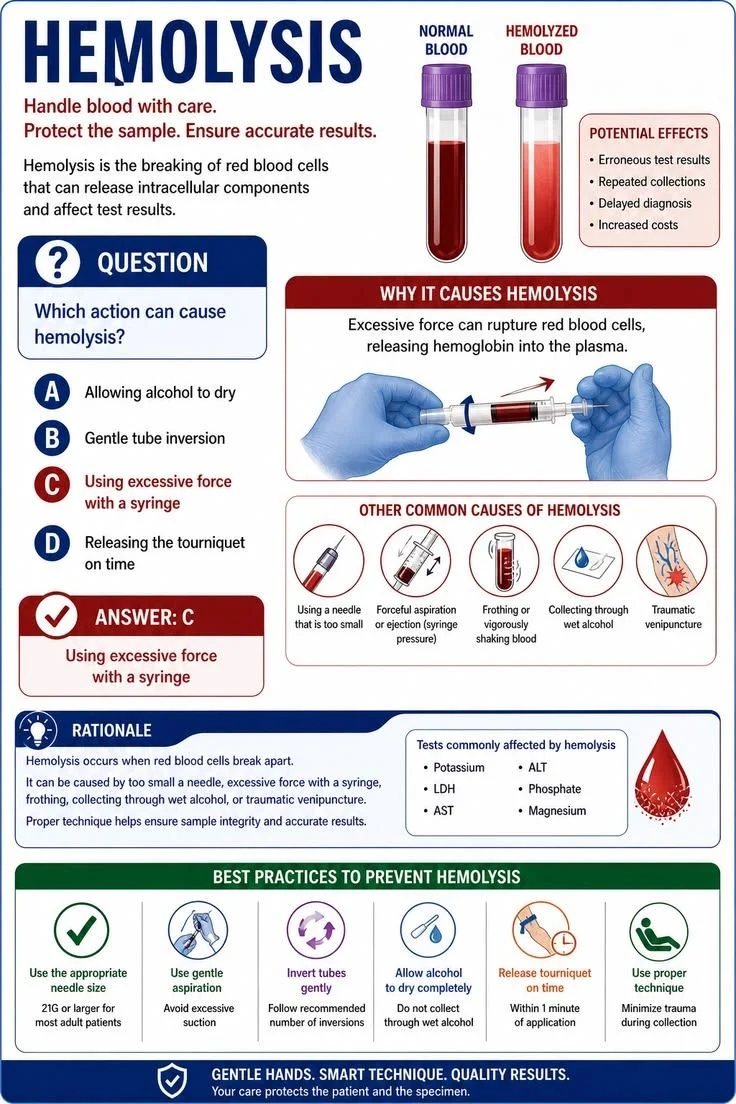
- The Overenthusiastic Aspirator: Excessive syringe suction may contribute to cell damage. Blood collection is not a race!
- The Difficult Venipuncture: Repeated probing and traumatic attempts can compromise specimen quality. A vein is not a target-practice zone!
- The Forceful Transfer: Never forcefully inject blood into collection tubes. Gentle, recommended transfer procedures matter!
- The Equipment Mismatch: Choose an appropriate needle and collection device for the procedure.
- The Rough Journey: Improper handling, transport, and processing can also contribute to hemolysis.
How Do We Protect Our Red Cells?
- Use appropriate collection equipment.
- Aspirate gently and steadily.
- Minimize traumatic venipuncture.
- Follow recommended transfer procedures.
- Maintain appropriate specimen handling and transport.
- Investigate recurrent hemolysis systematically-don’t blame just one step!
The Science Behind the Drama
Hemolysis releases intracellular components, including potassium, LDH, and hemoglobin, into plasma or serum.
The resulting interference may compromise laboratory results and clinical interpretation.
Hemolysis is multifactorial. Assess specimen suitability according to the analyte, analytical method, and laboratory policy-not every hemolyzed specimen requires automatic rejection.
The Take-Home Message
Better collection – Better specimen integrity – More reliable results – Better clinical decisions.
Keep the red cells intact.
Let the analyzer handle the data-not the destruction of the sample!
Quality doesn’t begin at the analyzer.
It begins at the patient’s bedside.
References
- WHO. WHO Guidelines on Drawing Blood: Best Practices in Phlebotomy. 2010.
- CLSI. PRE02-Collection of Diagnostic Venous Blood Specimens.
- Lippi G, et al. Preanalytical quality improvement: from dream to reality. CCLM.
Respect the specimen.
Protect the result.
Put patient safety first.”
Stay updated with Hemostasis Today.
-
Oct 20, 2026, 02:37M. Sekip Altunkan: Can Anticoagulation Be Safely Stopped After AF Ablation?
-
Oct 20, 2026, 02:26Ahmed Ammar: Managing VT Recurrence Post-Ablation
-
Oct 20, 2026, 01:43Oliver Weingärtner: Deprescribing of Lipid Lowering Drug after MI is Associated with Cardiovascular Events
-
Oct 19, 2026, 19:44Where You Live Should not Determine Whether You Receive Care – World Federation of Hemophilia
-
Oct 19, 2026, 19:42Belen Bianco: Prevention, Early Suspicion and an Interdisciplinary Approach Save Lives
-
Oct 19, 2026, 19:40Christina Chrysohoou: Catheter-Based LAAC vs OAC for Stroke Prevention in Atrial Fibrillation
-
Oct 19, 2026, 19:38Matthew Flick: A Two-Day Research Meeting on Fibrinogen, Hemostasis and Thrombosis
-
Oct 19, 2026, 19:37Hayat Saeed: Excited to Share Our Publication on the FGL1–Hepcidin Axis in Iron Homeostasis and Disease
-
Oct 19, 2026, 19:08IPAW 2026 Comes to a Close, but the Work Continues – PPTA