


Tareq Abadl: When Good Samples Give Bad Numbers – Spotting EDTA Contamination in the Lab
Tareq Abadl, Medical Lab Specialist, shared a post on LinkedIn:
“The sample looks perfect… but the results are screaming!
Imagine receiving a properly collected and labeled sample, yet the analyzer reports:
- Potassium: 8.2 mEq/L
- Calcium: 2.1 mg/dL
The test is repeated, and the same results appear. Before reporting a critical value, stop and ask:
Could this be EDTA contamination?
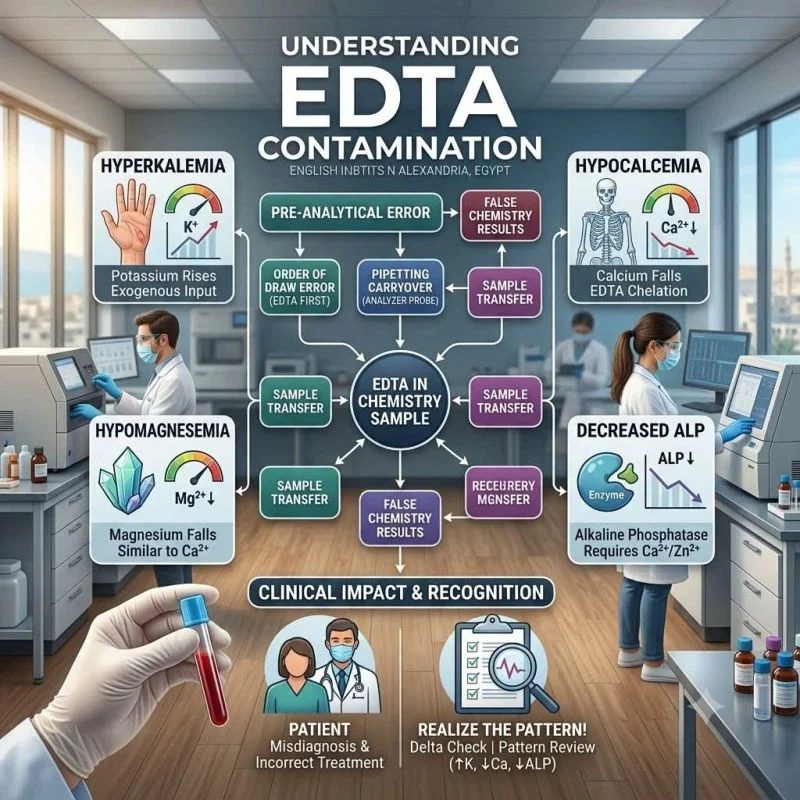
EDTA contamination can occur during the pre-analytical phase when potassium-EDTA from a CBC tube contaminates a serum or heparin sample.
The characteristic pattern is:
High Potassium – pseudohyperkalemia
Low Calcium – EDTA binds calcium
Low Magnesium – chelation effect
Low ALP – EDTA interferes by chelating essential metal ions
High K and Low Ca and maybe Low Mg and unexpectedly low ALP means Think EDTA contamination!
Before releasing such results:
- Check the Delta Check and previous patient results.
- Look for the characteristic biochemical pattern.
- Review possible collection or handling errors, including improper order of draw or contamination during collection/processing.
- Reject the affected specimen and request a new sample when contamination is suspected.
A functioning analyzer and acceptable QC do not guarantee that every patient result is clinically valid.
True laboratory expertise is not just producing numbers… it is recognizing when a number does not make sense and protecting the patient from a potentially misleading clinical decision.”
Other posts featuring Tareq Abadl on Hemostasis Today.
-
Sep 13, 2026, 11:22Amanda Unsworth: Gratitude and Next Steps as Leadership Transitions at The Platelet Society
-
Sep 13, 2026, 11:18Mary Cushman: Covering Associations of Antiphospholipid Antibodies with Stroke
-
Sep 13, 2026, 11:13Mavis Agnes Kisakye: How Community Partnerships Are Driving Opportunity for Youths with Bleeding Disorders
-
Sep 13, 2026, 11:07Dianne E. van der Wal: Transforming Science into Art – The Launch of The Life, Function and Death of Platelets
-
Sep 13, 2026, 10:18Daniel Victor Ortigoza: Understanding Stroke, Risk Factors and Prevention
-
Sep 13, 2026, 08:13Selina Olwanda Ogweno: Expanding Access to Sickle Cell Care for Children and Young People
-
Sep 13, 2026, 08:02Alexandra Rickard: One Donation Can Make All the Difference
-
Sep 13, 2026, 07:41Global Study Defines ISTH BAT Reference Ranges in Children and Adolescents – JTH
-
Sep 13, 2026, 07:1010 Posts Not to Miss This Week