


10 Posts Not to Miss This Week
This week’s top posts spotlight critical developments in thrombosis and hemostasis, from advances in pulmonary embolism management and anticoagulation research to persistent challenges in preventing bleeding complications.
Patient advocacy takes center stage, with initiatives across India and East Africa pushing for stronger policies, equitable access to treatment and better support for people living with haemophilia and haemoglobinopathies.
On the research front, new findings examine real-world recovery after pulmonary embolism, the potential of machine learning to identify differences in anticoagulation response, and the clinical factors associated with post-ERCP bleeding.
A closer examination of tranexamic acid in trauma and adrenal haemorrhage in antiphospholipid syndrome further exposes the complexities of balancing haemorrhagic and thrombotic risk.
Beyond clinical research, the posts examine the mechanisms behind vascular obstruction, emphasize the changing risks of thrombosis across women’s lives, and question how current diagnostic approaches can better distinguish different patterns of fibrinolytic dysfunction.
These perspectives underscore the importance of translating scientific insights into more accurate risk assessment, informed treatment decisions and improved patient care.
Explore this week’s 10 top posts for more insights into the research, clinical challenges and developments shaping thrombosis and hemostasis.
Habib Bennaceur, Senior Vice President of Rare Disease Unit at Novo Nordisk:
“During my recent visit to New Delhi, members of our Novo Nordisk Haemophilia and Haemoglobinopathies Foundation (NNHF) team and I, in my role as part of the NNHF Council, had the opportunity to meet with patient communities, healthcare professionals and partners across haemophilia, sickle cell disease and thalassaemia.
At the offices of Hemophilia Federation (India) (HFI), hosted by President Prem Roop Alva, we heard first-hand from people living with haemophilia about their experiences, challenges and hopes for the future.
I was particularly impressed by the commitment of the patient organisations and the resilience of people living with these conditions. Their voices are essential in shaping how we understand the reality on the ground and how we work together to strengthen care.
Our discussions with HFI also reflected on the many years of NNHF-supported work in haemophilia, including continued advocacy with the Ministry of Health and state National Health Missions, as well as the integrated pilot project for haemophilia and haemoglobinopathies and the haemophilia point-of-care kit project.
At AIIMS Delhi, an NNHF partner hospital and the centre of our NNHF Council Member Dr Tulika Seth, conversations with clinicians added another important perspective on the challenges, opportunities and progress across all three conditions.
We ended our time together with people living with these conditions, caregivers and medical representatives from haemophilia, sickle cell disease and thalassaemia, sharing experiences across communities and reflecting on both their distinct needs and the areas where collaboration can create greater impact.
For me, these encounters reinforced the value of bringing lived experience, clinical expertise and organisational knowledge together. Thank you to everyone who welcomed us and shared so openly.
At NNHF, we remain committed to standing alongside our partners and communities and look forward to continuing this work together.”

Jean-Jacques Kiladjian, Head of Clinical Research Department of Inserm, Professor of Medicine at the University of Paris Cité, President of the FIM:
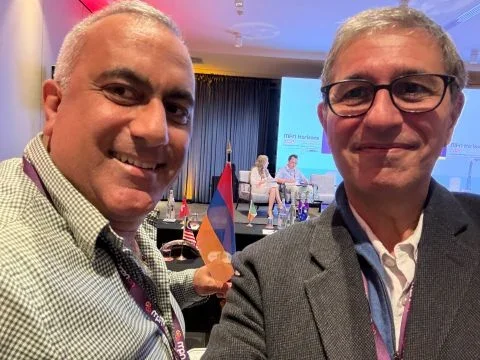
“Happy and grateful for the invitation to join the MPN Horizons 2026 conference, where advocates and doctors come together!
A beautiful room fully booked with patients and doctors from all around the world (including Armenia !) discussing together how to improve the care of patients with myeloproliferative neoplasms MPN, starting from patients’ needs.
My task today: what is in the pipeline for polycythemia vera?“
Richa Sharma, Associate Professor of Neurology at Yale School of Medicine:
“Excited to share our article.
We apply a causal random forest machine learning model to the CASPR registry of patients with cryptogenic stroke to evaluate heterogeneity in anticoagulation treatment effect.“
Tristan Siokos, Founder/CEO of Recalibrate, Co-Founder/CTO of PolicyBridge:
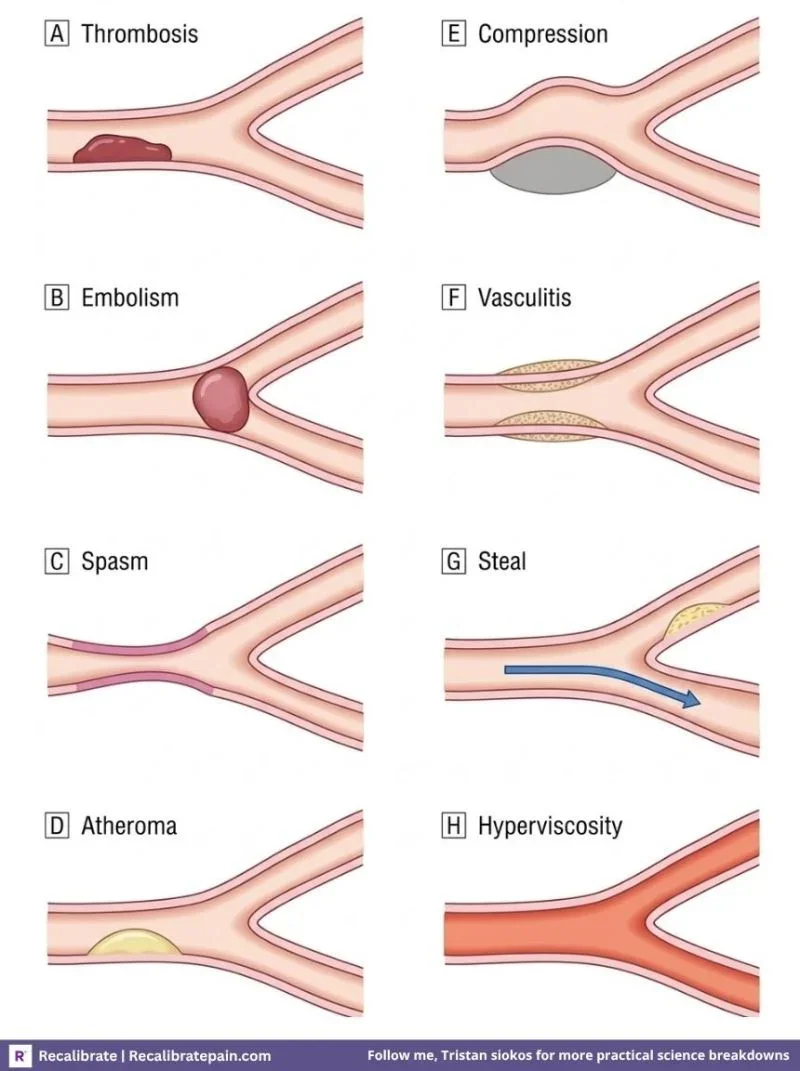
“A blood vessel can stop delivering blood in eight completely different ways, let’s explore the science.
Thrombosis and embolism get confused constantly, but they are not the same event.
Thrombosis is a clot that forms right there in the vessel, usually building up slowly where the wall is already damaged.
Embolism is a clot or fragment that formed somewhere else entirely and traveled through the bloodstream until it hit a narrowing it could not pass. Same end result, completely different crime scene.
Atheroma is the slow one.
Fatty deposits build up inside the vessel wall over years, narrowing the channel bit by bit until flow is already compromised long before anyone notices a symptom.
Compression and vasculitis sit on opposite sides of the same idea.
Compression is something from outside the vessel, a mass or swelling, physically pressing the channel shut.
Vasculitis is the vessel’s own wall being attacked by inflammation from within, no outside force required.
Spasm might be the strangest one on this list because nothing is blocking anything.
The vessel wall is mostly smooth muscle, and that muscle can simply contract hard enough to choke off its own flow with zero clot, plaque or mass anywhere in sight.
Then there is steal, which barely makes sense the first time you hear it.
Blood actually gets rerouted away from where it is needed toward a lower resistance path elsewhere in the system.
Subclavian steal syndrome is the classic case, where using your arm can pull blood away from your own brain and trigger dizziness on the spot.
Hyperviscosity does not touch the vessel at all.
The vessel stays completely open.
The blood itself is just too thick to move through it properly.
At very high concentrations, blood can become roughly ten times as viscous as water, and that alone is enough to starve tissue of flow.
Eight mechanisms, one shared outcome: blood stops arriving where it is needed.
Which is exactly why guessing the cause instead of identifying it is how treatment goes wrong.“
Shruthi Narayan, President at Penumbra:
“It has been an incredible October for PE research starting with the PERT Consortium Annual Symposium in Boston and continuing at the VIVA and VEINS conferences in Las Vegas. In Las Vegas we presented new findings from both the STORM-PE RCT and the STRIKE-PE study that help advance our understanding of what meaningful recovery looks like for PE patients.
STORM-PE became the FIRST RCT in PE to incorporate consumer wearable-derived data, demonstrating a significant correlation between clinically assessed exercise capacity and real-world activity captured during patients’ daily lives. These findings support the feasibility and clinical utility of wearables as a complementary measure of functional recovery after PE.
These findings build upon previously reported STORM-PE results, which showed that patients treated with CAVT plus anticoagulation experienced greater improvement in right ventricular recovery and functional outcomes compared with anticoagulation alone.
Meanwhile, the latest STRIKE-PE analysis adds important scale to the evidence base. With 1,000 prospective patients, it represents one of the largest prospective evaluations of functional recovery and quality of life following PE treatment. The results showed that exercise capacity, shortness of breath, and quality-of-life measures among patients treated with CAVT improved significantly in the first 90 days and either continued to improve or were sustained through one year.
Together, these studies provide a more complete picture of recovery after CAVT. They also show that innovation in PE care isn’t only about new technologies. It’s also about developing better ways to understand recovery and the outcomes that matter most to patients.
Thank you to the investigators and patients who made this research possible.“
Neoklis Mparis, Doctor, National Emergency Aid Centre (EKAB), Ministry of Health at Operational Centre of the Ministry of Health and National Emergency Aid Centre:
“I’m pleased to share our recently published article in Clinical Rheumatology:
In this case based review, we describe a rare presentation of unilateral adrenal haemorrhage in a patient with high risk primary antiphospholipid syndrome during peri procedural bridging anticoagulation.
The case highlights the complex balance between thrombotic and haemorrhagic risk in APS, particularly during periods of anticoagulation modification, and reviews the previously reported unilateral APS associated cases.
Many thanks to my co authors for their valuable contribution.”
Violeta Jardin, General Manager at Haemoview Diagnostics:
“This paper looks, at first, like a win for TXA in fibrinolytic shutdown. But it deserves a closer read.
Survival benefit of prehospital TXA in fibrinolytic shutdown: Insights from two prospective trauma trials; Kenny and colleagues pooled two prehospital TXA trials and classified patients using admission TEG LY30. The headline result was a significant TXA-by-shutdown interaction.
That is not the same as demonstrating a direct, statistically significant TXA-versus-placebo benefit within shutdown patients. Overall, there was no significant difference in 30-day mortality between the treatment groups.
There is another complication: fibrinolysis was measured after prehospital TXA or placebo had already been given. Treatment may therefore have influenced the phenotype used in the analysis.
The study was also post hoc, with no prior power calculation for the interactions examined.
So, I would not read this paper as evidence to change TXA practice. What it does highlight is something more useful: A low LY30 may not represent one biological state.
Some patients may be genuinely resistant to fibrinolysis. Others may show little spontaneous lysis because their endogenous fibrinolytic mediators have been depleted, while their clot remains responsive to added tPA.
Those patients can look very similar on a conventional trace. Before we use the label ‘fibrinolytic shutdown’ to guide treatment, we need to understand the biology sitting behind it.
That is why tPA-activated testing matters.
The ClotPro TPA-test points directly to the measurement gap that a tPA challenge is designed to explore: not simply whether a clot is lysing, but how it responds when fibrinolysis is actively challenged.
This study is hypothesis-generating. Its real value may be the case it makes for prospective studies using pretreatment sampling, repeat measurements and tPA-challenge assays.
Sometimes the next step is not a new treatment. It is a better test.”
Mavis Agnes Kisakye, Executive Director of Haemophilia Foundation of Uganda, Health Officer, EVD Response at Uganda Red Cross Society:
“I am proud to share that a petition advocating for improved care for individuals living with haemophilia and other bleeding disorders was presented on the floor of the East African Legislative Assembly (EALA) parliament!
This significant step is part of the NNHF East African Integrated Project, which continues to drive sustainable healthcare improvements, awareness, and better management of haemophilia and other blood disorders across our region.
A massive thank you to the Novo Nordisk Haemophilia and Haemoglobinopathies Foundation (NNHF), the dedicated team from Kenya, and representatives from every member state for their relentless efforts and collaborative spirit.
Together, we are laying the groundwork for stronger healthcare policies and better quality of life for patients.”
Christina Pierre, Assistant Professor of Pathology and Laboratory Medicine at University of Pennsylvania Perelman School of Medicine, Director of Douglas B. Cines MD Special Coagulation Laboratory at Penn Medicine, University of Pennsylvania Health System:
“As the Director of the Douglas B. Cines MD Special Coagulation Laboratory at the Hospital of the University of Pennsylvania, I oversee the analysis of samples from patients with thrombosis every day.
On a more personal level, I’ve experienced the loss of a dear colleague due to thrombosis.
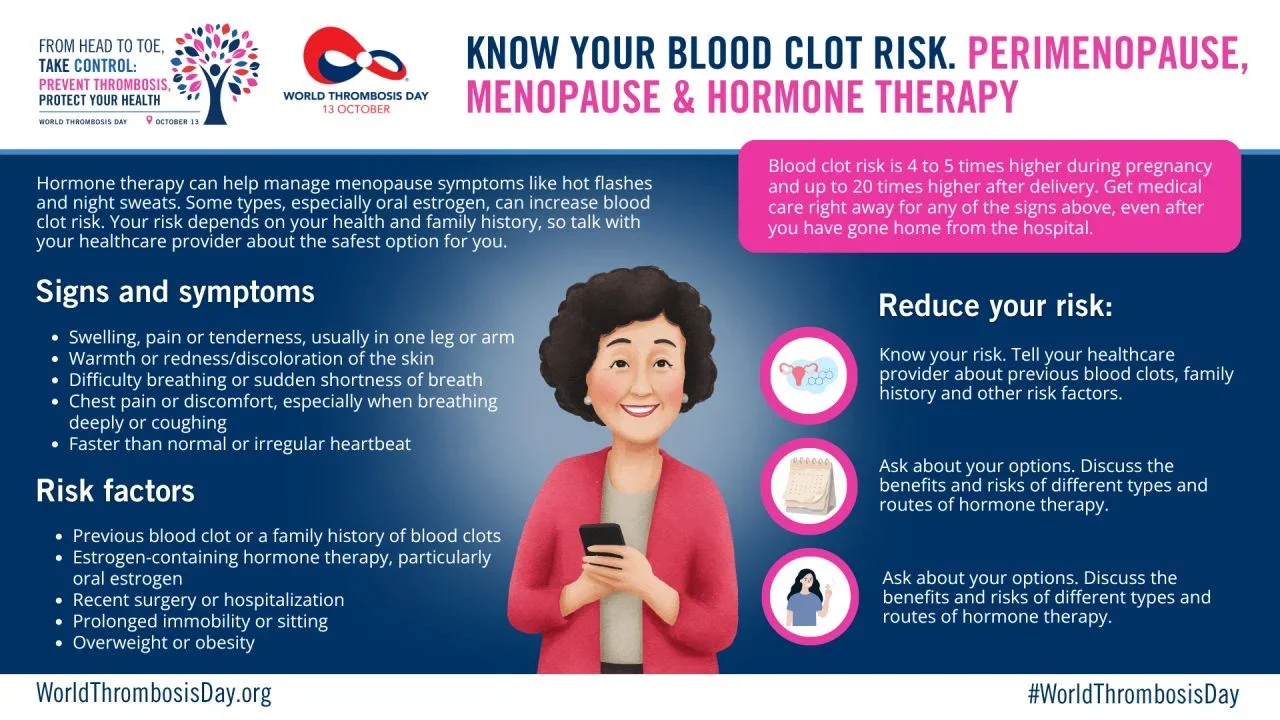
Today, on World Thrombosis Day, here’s what I want women to know:
Clot risk isn’t constant.
It shifts across life stages.
- Hormonal contraception and menopausal hormone therapy can increase risk, especially oral estrogen-containing forms
- Pregnancy and the first approximately 6 weeks postpartum are associated with a markedly increased risk
- Surgery, long travel, and immobility add to pre-existing risk
Know the warning signs: one-sided leg swelling, pain, or warmth (deep vein thrombosis), and sudden shortness of breath or chest pain (pulmonary embolism).
Both are emergencies. Seek care immediately.
From the lab’s perspective, testing can help clarify risk, but it isn’t a substitute for history.
Inherited conditions like factor V Leiden or prothrombin gene mutation, and acquired ones like antiphospholipid syndrome, can raise clot risk, yet a family history of clots often tells us more than any single result.
Testing is most useful when it’s targeted, and timing matters: some assays are unreliable during acute clotting, pregnancy, or while on anticoagulants or hormones.
Before starting hormonal medication or planning a pregnancy, tell your clinician about any personal or family history of clots.
Most clots are preventable and treatable when caught early.
Please share this with a woman in your life.“
Aamir Saeed, GI Fellow at UTHSC Memphis:
“Thank you GIE Journal for highlighting our paper on predictors and risk factors of post ERCP bleeding, anticoagulation therapy, cirrhosis, hemodialysis, coagulation disorder, EST, precut sphincterotomy, and male gender are associated with increased odds of post-ERCP bleeding.“
Stay updated with Hemostasis Today.
-
Oct 18, 2026, 12:58Pierpaolo Di Micco: DOACs vs Vitamin K Antagonists in Long-Term Anticoagulation
-
Oct 18, 2026, 12:51Arianne Missimer: Understanding Ferritin Levels Beyond the Normal Range
-
Oct 18, 2026, 12:37Roberto C. Iglesias: Colon Cancer Prevention Beyond Supplements and Vitamins
-
Oct 18, 2026, 12:27Rafael Alejandro Camero Del Vecchio: Paroxysmal Nocturnal Hemoglobinuria Advancing Complement Inhibition with Ravulizumab
-
Oct 18, 2026, 12:26Abdul Mannan: When INR Misleads – Rethinking Bleeding Risk in Cirrhosis
-
Oct 18, 2026, 12:14Stéphane Laurent: The People and Technology Behind Safe Blood Transfusion
-
Oct 18, 2026, 12:14Abhi Kapuria: When VTE Prophylaxis Breaks Down in the ICU
-
Oct 18, 2026, 11:37Lee Anne Sorto: Beyond Compliance – Making Audits Count in Transfusion Safety
-
Oct 18, 2026, 11:26Valentina Ajello: Does ANH Benefit Women in Cardiac Surgery?