

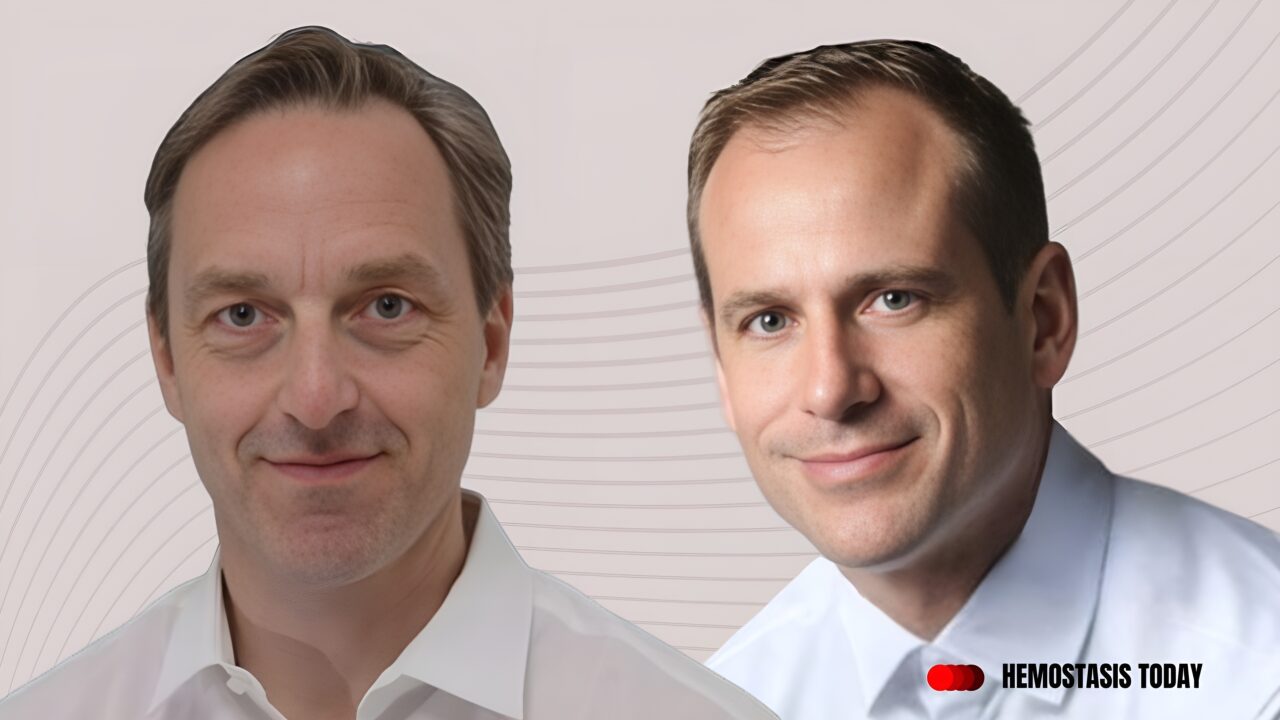
Niclas Högberg and William ‘Obi’ Greenman on Evolving Strategies in Massive Bleeding Management
Niclas Högberg, Sales Director at Cerus, reposted from William “Obi” Greenman on LinkedIn:
”MASSIVE BLEEDING – ARE WE DRIFTING APART IN STRATEGY?
In the U.S., 5-day Pathogen-Reduced Cryoprecipitated Fibrinogen Complex (PRCFC) is beginning to reshape massive transfusion practice.
As the study included concluded:
- “PRCFC is ready to dispense and provides an immediate source of fibrinogen in critically bleeding patients with significant reductions in TAT. There is an added benefit of reduced wastage.”
This evolution enables clinicians to act within minutes — moving beyond ratio-driven MTPs toward targeted, function-based hemostatic resuscitation.
Across Europe and the Nordics, focus has instead shifted toward Whole Blood (WB) for trauma and pre-hospital use.
While physiologically balanced, WB reintroduces challenges with traceability, shelf life, and pathogen safety — factors that SoHO and IVDR will soon regulate more tightly.
As Europe strengthens its blood preparedness and resilience, the key question is:
- Are we innovating forward — or reinventing the past for convenience?”
William “Obi” Greenman, Chairman and Chief Executive Officer at Cerus, shared on LinkedIn:
”The expansion of INTERCEPT Fibrinogen Complex use in large U.S. hospitals is really encouraging given the meaningful impact on immediate fibrinogen delivery in critically bleeding patients.
With >50% improvements in delivery time and reduced wastage, the efficiencies gained are real and the hospital transfusion service teams love the product and can focus their valuable time on other critical activities.”
Read the full article here.
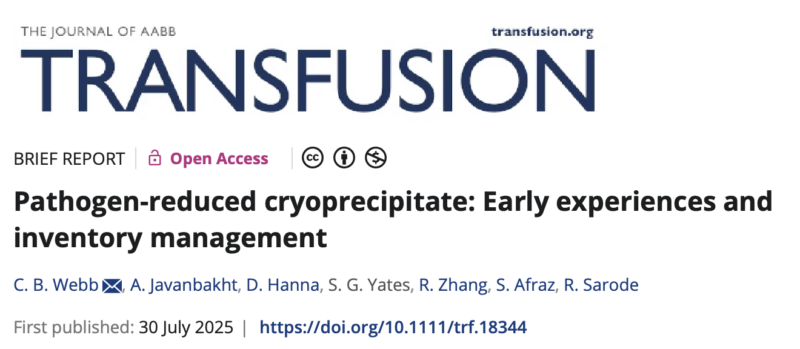
Article: Pathogen-reduced cryoprecipitate: Early experiences and inventory management
Authors: C. B. Webb, A. Javanbakht, D. Hanna, S. G. Yates, R. Zhang, S. Afraz, R. Sarode
Stay updated on all scientific advances with Hemostasis Today.
-
Oct 4, 2026, 02:46Arman Qamar: Drug-Coated Balloons in Coronary Bifurcation PCI
-
Oct 4, 2026, 01:13Francesc Formiga: Updated Evidence on LAA Closure Versus Oral Anticoagulation in AF
-
Oct 4, 2026, 01:11Alicja Urbaniak: Targeting CD148 to Develop New Antithrombotic Therapies
-
Oct 4, 2026, 01:03Susan Mou: Presenting Long-Term Clinical Outcomes in SCD and TDT
-
Oct 4, 2026, 01:00Mark Johnson: Elevating Patient and Warrior Voices During Sickle Cell Awareness Month
-
Oct 4, 2026, 00:55Pier Maria Fornasari: Possible New Target for SCD and Beta Thalassemia Treatment
-
Oct 4, 2026, 00:48Sthanu Subramanian: Mechanisms, Clinical Phenotypes, Imaging, and Treatment of CVT
-
Oct 4, 2026, 00:33Ashish Pemawat: Can We Protect the Brain while We Restore Blood Flow?
-
Oct 4, 2026, 00:32Marta Nowakowska-Kotas: Could a Small Rise in Creatinine after Thrombectomy in Stroke Patients Be an Early Warning Sign?