

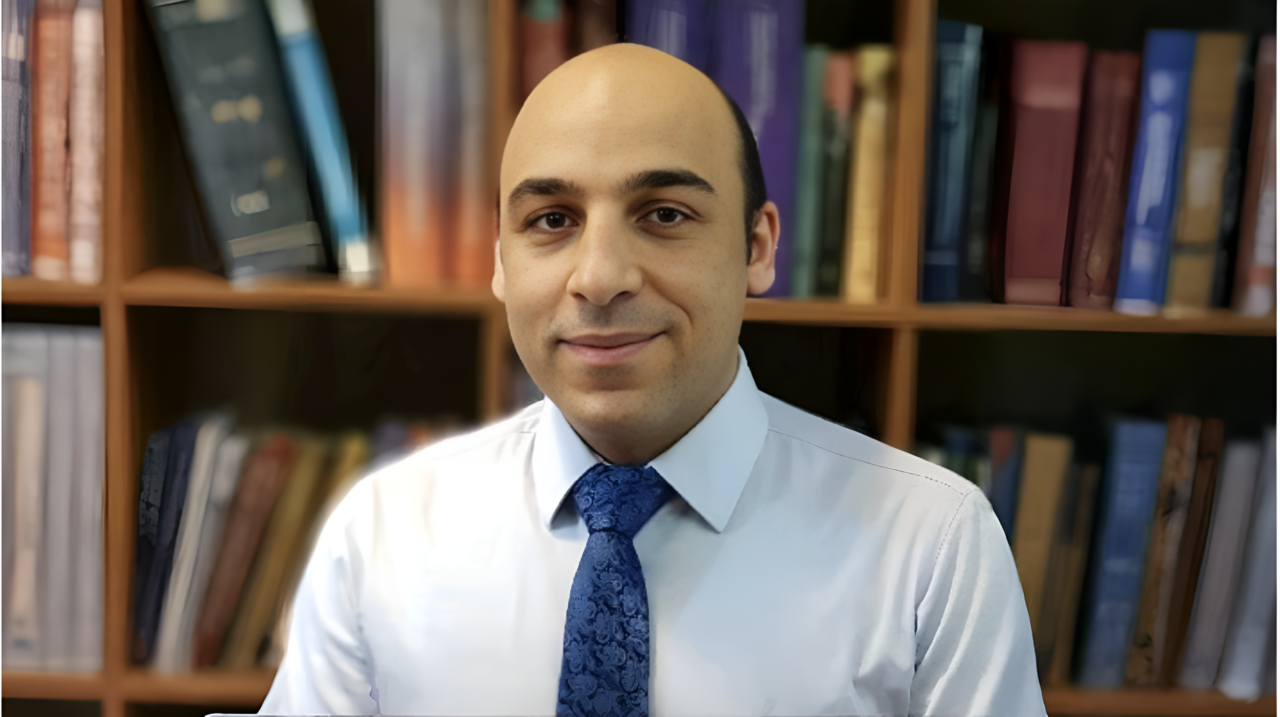
Alireza Pishgahi on Attenuation of Memory Impairment After Ischemia
Alireza Pishgahi, President at Novagena, shared on LinkedIn:
”I am proud to announce that our valuable study on Stroke Regeneration have been published.
Looking forward to bring it from bench to bedside.”
Stroke is the second leading cause of death globally, placing a heavy burden on both public health and economies.
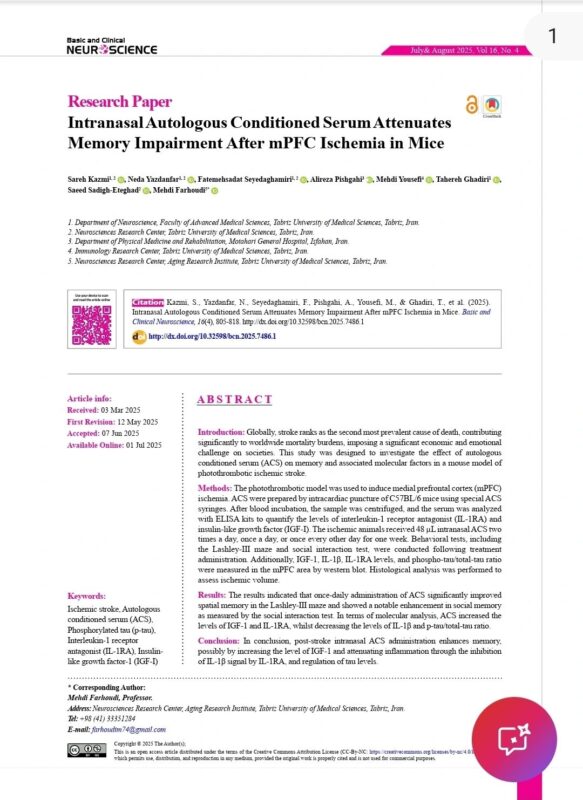
This study explored the impact of autologous conditioned serum (ACS) on memory and related molecular factors in a mouse model of ischemic stroke.
The findings suggest that intranasal ACS treatment after stroke improves memory, likely by elevating IGF-1 levels, reducing inflammation via IL-1β inhibition, and regulating tau protein levels.
Read the full article here.
Article: Intranasal Autologous Conditioned Serum Attenuates Memory Impairment After mPFC Ischemia in Mice
Authors: Sareh Kazmi, Neda Yazdanfar, Fatemehsadat Seyedaghamiri, Alireza Pishgahi, Mehdi Yousefi, Tahereh Ghadiri, Saeed Sadigh-Eteghad, Mehdi Farhoudi
Stay updated on all scientific advances with Hemostasis Today.
-
Sep 30, 2026, 15:58Bernhard Merget: New Frontiers in Thrombosis and Stroke Research
-
Sep 30, 2026, 15:39Ifeanyichukwu Ifechidere: The Molecular Orchestra of Primary Hemostasis
-
Sep 30, 2026, 15:28Reassessing the Benefit–Risk Balance of Extended Anticoagulation in Cancer Patients – ESC Working Group on Cardiovascular Pharmacotherapy
-
Sep 30, 2026, 15:07Chiranjeev Sharma: Targeting Factor XIa with the Synthetic Inhibitor SB-01
-
Sep 30, 2026, 14:41Bruna Gigante: Balancing Thrombosis and Bleeding in Cardiovascular Care
-
Sep 30, 2026, 14:13Ashok Choudhury: Portal Vein Thrombosis and Outcomes in Cirrhosis
-
Sep 30, 2026, 13:57Leslye Conde Bazán: When Conventional Imaging Is Not Enough – The Role of IVUS
-
Sep 30, 2026, 13:41Huda Salah Eldin: The Challenge of Balancing Antithrombotic Therapy After PCI
-
Sep 30, 2026, 13:29Abdus Salam: What Can CT Venography Reveal About the Veins?