

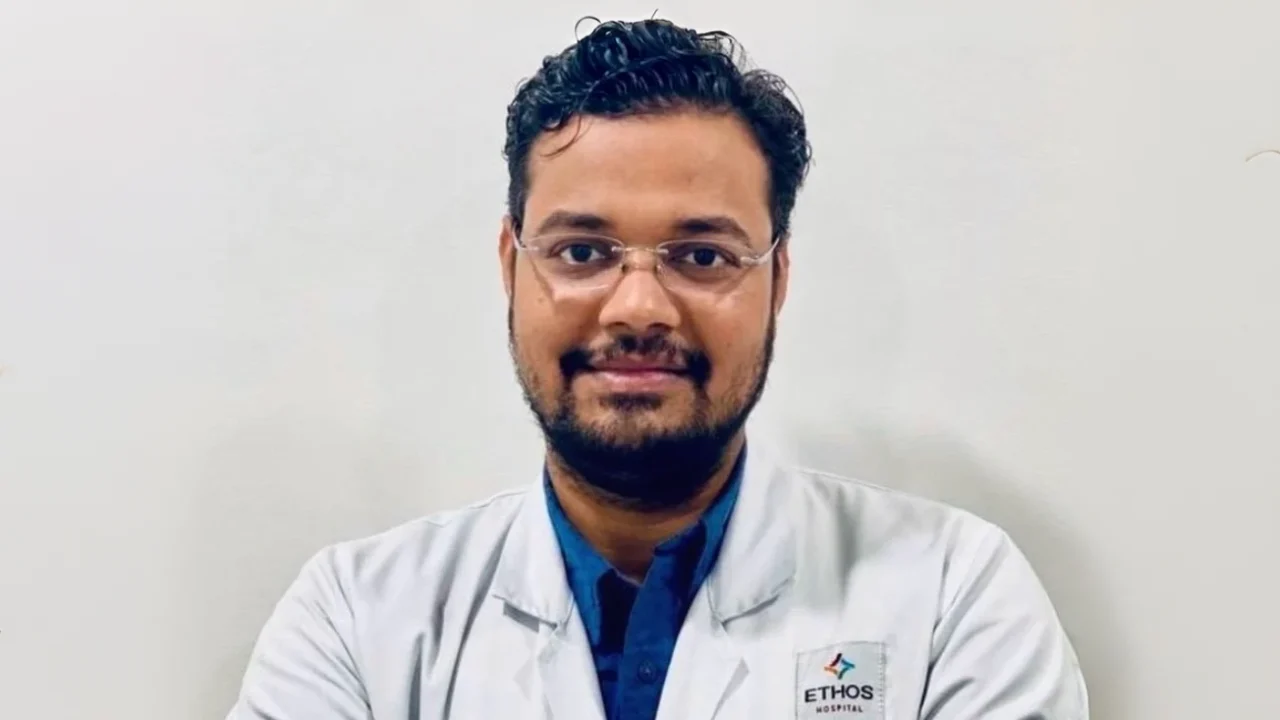
Ashish Pemawat: Is the 4.5-Hour Thrombolysis Window Becoming Less Relevant?
Ashish Pemawat, Associate Director of Institute of Neurosciences, shared on LinkedIn about a recent article by Ahmet Günkan et al, published in Stroke, adding:
”Is the 4.5-hour thrombolysis window becoming less relevant?
A recent meta-analysis published in Stroke (2025) pooled data from 8 randomized controlled trials involving 1,742 patients with acute ischemic stroke treated beyond the conventional 4.5-hour window.
Intravenous thrombolysis increased the odds of:
- Excellent functional outcome (mRS 0–1): OR 1.43
- Functional independence (mRS 0–2): OR 1.36
Additional benefits included higher rates of recanalization, reperfusion, and early neurological improvement.
As expected, symptomatic intracerebral hemorrhage was more frequent (OR 4.25), but importantly, there was no statistically significant increase in 90-day mortality.
The key message is clear: patient selection matters more than the clock.
Advanced imaging techniques—particularly perfusion imaging and DWI-FLAIR mismatch—can identify salvageable brain tissue and safely expand access to thrombolysis for selected patients presenting well beyond 4.5 hours or with wake-up stroke.
As stroke care continues to evolve, the paradigm is increasingly shifting from a rigid time-window approach toward a tissue-window approach, allowing more patients to benefit from reperfusion therapy.”
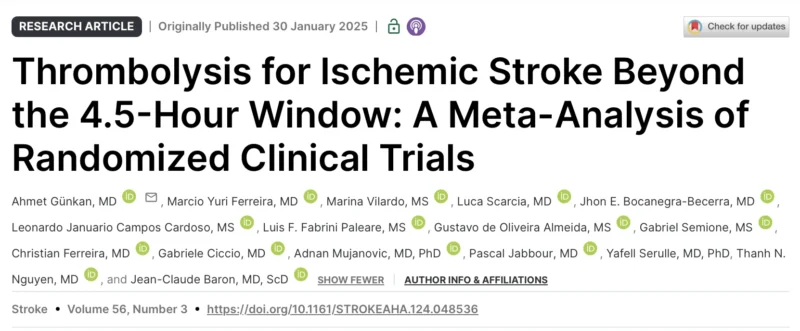
Title: Thrombolysis for Ischemic Stroke Beyond the 4.5-Hour Window: A Meta-Analysis of Randomized Clinical Trials
Authors: Ahmet Günkan, Marcio Yuri Ferreira, Marina Vilardo, Luca Scarcia, Jhon E. Bocanegra-Becerra, Leonardo Januario Campos Cardoso, Luis F. Fabrini Paleare, Gustavo de Oliveira Almeida, Gabriel Semione, Christian Ferreira, Gabriele Ciccio, Adnan Mujanovic, Pascal Jabbour, Yafell Serulle, Thanh N. Nguyen, Jean-Claude Baron
Stay updated on all scientific advances with Hemostasis Today.
-
Oct 26, 2026, 15:13Heghine Khachatryan: Approaching Thrombocytopenia Through Mechanism and Clinical Context
-
Oct 26, 2026, 15:03Quentin Eichbaum։ AABB 2026 Annual Meeting Personal Highlights
-
Oct 26, 2026, 14:57A Father’s Marathon Journey Inspired by His Son – National Bleeding Disorders Foundation
-
Oct 26, 2026, 14:48Fran Huelsmeyer: The Clinical Importance of Blood Donation in Maternal Care
-
Oct 26, 2026, 14:45Maria Elisa Mancuso: Shaping the Future of Hemophilia Care with Patients
-
Oct 26, 2026, 14:35Choosing the Right VTE Risk Assessment Model for Clinical Practice
-
Oct 26, 2026, 14:29Ilenia Calcaterra: HEMOPLATE Explores Biological Factors Behind Bleeding Variability in Haemophilia A
-
Oct 26, 2026, 14:28Giovanni Solimeno: An Advanced Thrombin Injection Technique for Complex Femoral Pseudoaneurysms
-
Oct 26, 2026, 14:20Abdul Mannan: Are We Teaching Doctors to Think or Just Trust AI?