

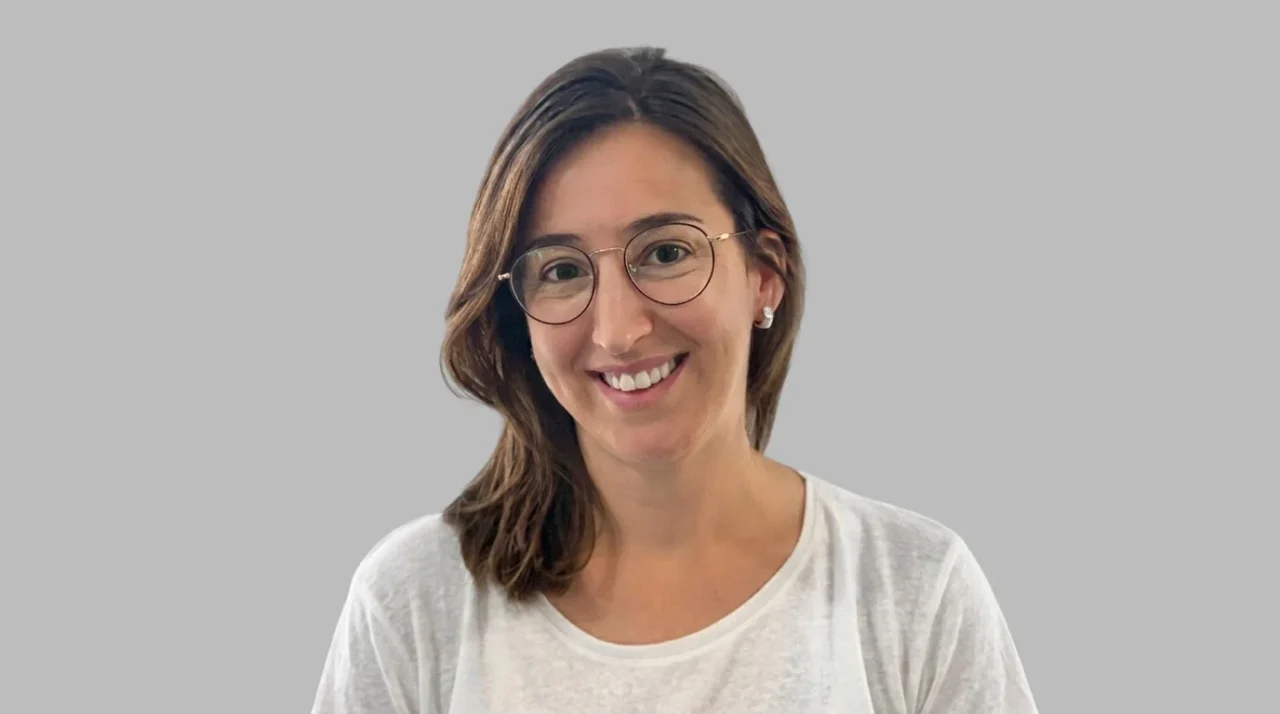
Esther Méndez Arias: Why a Lower First Dose of 4F-PCC Works Better After Cardiac Surgery
Esther Méndez Arias, President of the Transfusion Committe at Bellvitge University Hospital, Coordinator of the Working Group on Digital Transformation and Innovation, Spanish Society of Anaesthesiology at SEDAR, shared Journal Cardiothoracic Vascular Anesthesia‘s post on LinkedIn:
“At our centre, we usually administer 10–15 IU/kg of four-factor prothrombin complex concentrate for bleeding after cardiac surgery, once residual heparin, hypofibrinogenaemia and platelet abnormalities have been corrected.
We then reassess both bleeding and ROTEM findings, and administer a second dose only if microvascular bleeding and coagulopathy consistent with coagulation factor deficiency persist.
For this reason, the median dose of 3,000 IU —approximately 36 IU/kg— used in the retrospective study by Vander Zwaag et al. seems excessive to us as an initial strategy.
We favour a stepwise approach: a low initial dose, early reassessment and redosing only when necessary, without attempting to normalise an isolated EXTEM-CT value.
This is in line with the European consensus by Erdoes et al., developed within the EACTA, which suggests considering an initial dose of 12.5 IU/kg in patients at high thromboembolic risk, such as those undergoing cardiac surgery.”
Journal Cardiothoracic Vascular Anesthesia shared a post on LinkedIn about recent article by Daniel Bolliger et al, published in JCVA, adding:
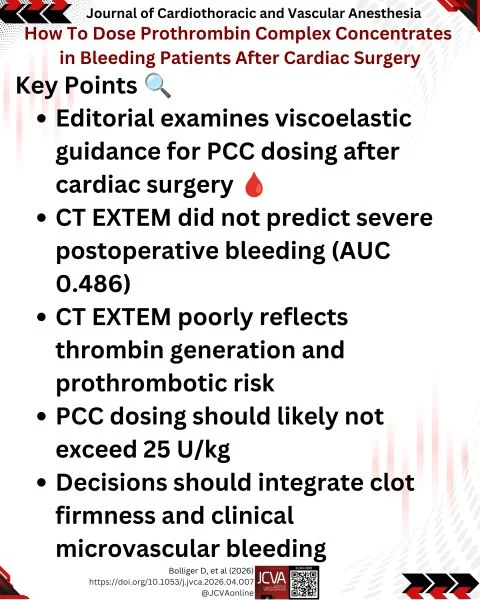
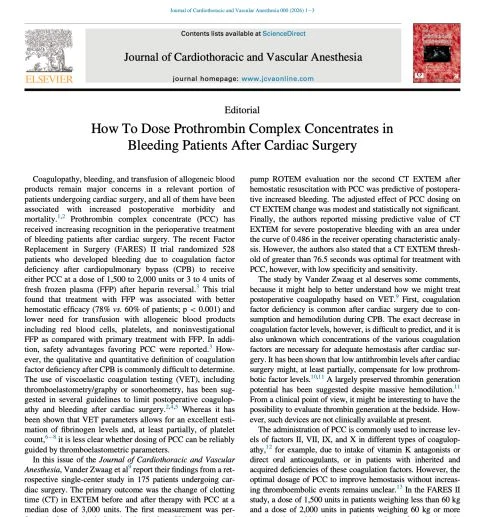
“How To Dose Prothrombin Complex Concentrates in Bleeding Patients After Cardiac Surgery
How should we dose prothrombin complex concentrate in bleeding cardiac surgery patients?
This editorial argues that ROTEM clotting time poorly reflects thrombin generation, cautioning against high doses and purely viscoelastic-guided dosing.”
Title: How To Dose Prothrombin Complex Concentrates in Bleeding Patients After Cardiac Surgery
Authors: Daniel Bollige, Eckhard Mauermann, Kenichi A. Tanaka

Stay updated on all scientific advances with Hemostasis Today.
-
Sep 20, 2026, 06:46Neeraj Songara: From Donated Blood to Engineered Therapeutics
-
Sep 20, 2026, 06:24Louise St. Germain Bannon: Improving Awareness and Care for Women Across the Lifespan
-
Sep 20, 2026, 05:17Maxime Dely: When ABO Compatibility Isn’t Enough for Safe Transfusion
-
Sep 20, 2026, 04:54William Aird: What Does a Complete History and Physical Really Mean?
-
Sep 20, 2026, 04:34Hons Saurabh Kaushik: Why Uncontrolled LDL Can Be Harmful
-
Sep 20, 2026, 03:58Salih Ehsan: The Complexities of HbF and HbA2
-
Sep 20, 2026, 03:22The Voices of People Living With Bleeding Disorders – EHC
-
Sep 20, 2026, 01:18Sebastian Mafeld: Has 2026 Changed How We Treat Pulmonary Embolism?
-
Sep 20, 2026, 01:16Pall T. Onundarson: DOACs – Monitoring, Tailoring Dose and Identifying Problems