

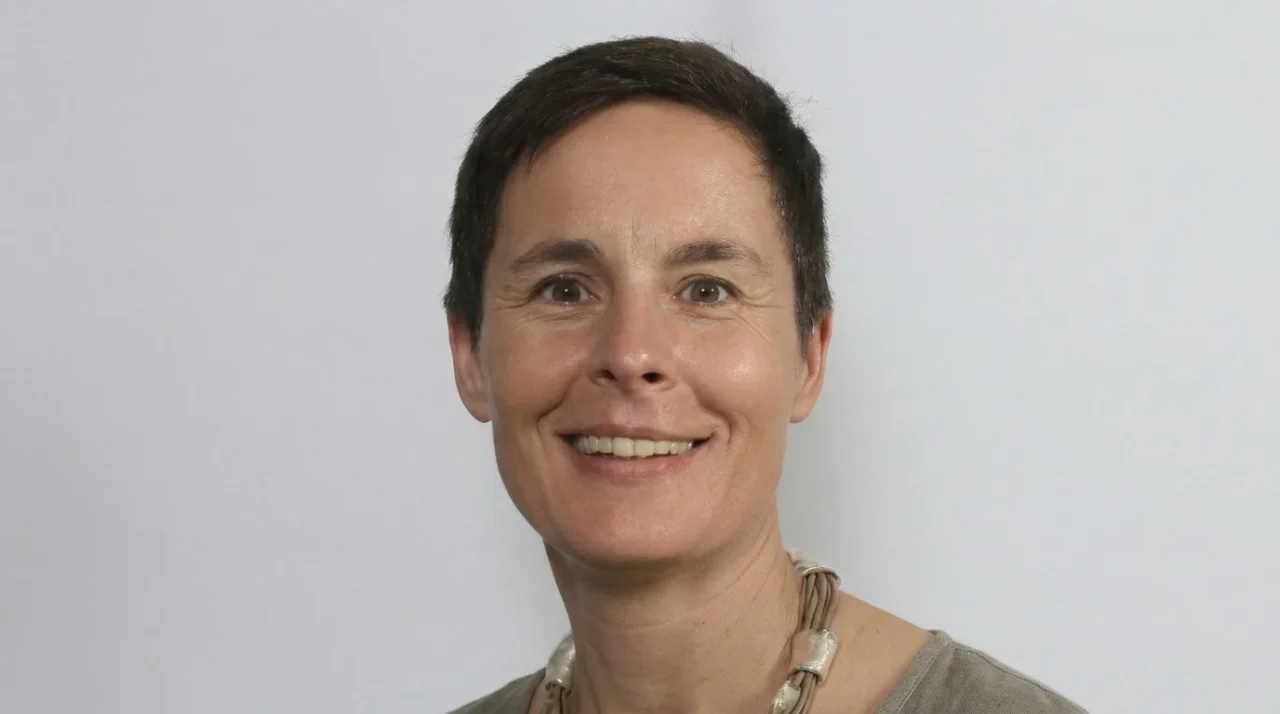
Gemma Figtree: Using Ultra-Low Troponin Levels to Guide Coronary CT Scans
Gemma Figtree, Professor and Cardiologist at University of Sydney and Royal North Shore Hospital, shared a post on LinkedIn about a recent article she and her colleagues co-authored, published in Nature Cardiovascular Research, adding:
“We use troponin to diagnose heart attacks. Sina Fathieh and our team Michael Patrick Gray Stuart Grieve Louise Cullen Stephen Nicholls asked whether it could help us prevent them.
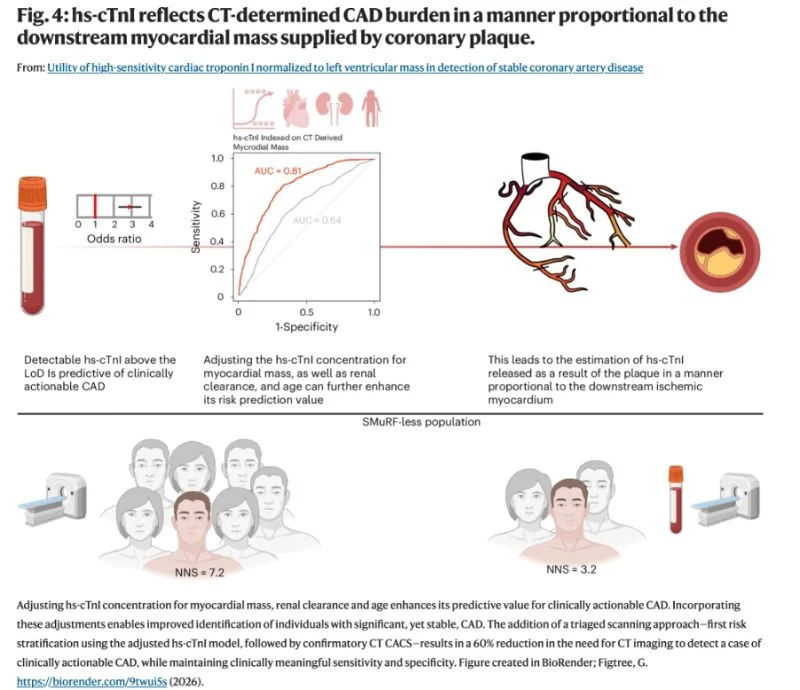
Sina’s paper is out today in Nature Cardiovascular Research. In 1,613 BioHEART participants, a high-sensitivity troponin I of just 2.3 ng/L — about a twelfth of the level we use to call an infarct — flagged people carrying clinically actionable coronary disease on CT.
Two results I didn’t expect Nicholas Mills Roxana Mehran Deepak L. Bhatt, Mike Ryan
It worked best in the people our risk calculators miss. In those with none of the four standard modifiable risk factors, a troponin above 2.3 carried roughly four-fold odds of actionable disease.
And Sina’s insight to normalise troponin to age and renal function plus or minus left ventricular mass lifted discrimination from 0.64 to 0.81 — with a mechanism attached.
The association was strongest for plaque in proximal segments, where more myocardium sits downstream. Consistent with micro-injury arising from the plaque itself.
Used as a triage step before imaging, it nearly halved the scans needed to find one actionable case, and cut them from 7.2 to 3 in the SMuRF-less group.
What I want to say about the person rather than the paper: Sina built the Bayesian error-in-variables framework that makes these numbers trustworthy at the very low troponin concentrations where assays get noisy.
That was his idea, and it is the reason a reviewer could not dismiss the finding as measurement artefact. It is careful, unglamorous, genuinely difficult work.
We also benefited from collaboration of a terrifically diverse team of clinicians, fundamental researchers, and omics experts, as well as industry partners.
Retrospective, and prospective testing has to come next. But this is what an early-career clinician researcher asking a good question looks like.
Assay consumables were supported by Abbott Diagnostics; declared in the paper.”
Title: Utility of high-sensitivity cardiac troponin I normalized to left ventricular mass in detection of stable coronary artery disease
Authors: Sina Fathieh, Michael P. Gray, Owen Tang, Katharine A. Bate, Stephen T. Vernon, Elijah Genetzakis, Soloman Saleh, Gillian Murtagh, Jean Y. Yang, Collin Tran, David R. Sullivan, Paul Bonnitcha, David S. Celermajer, Louise Cullen, Ravinay Bhindi, Jamil Mayet, Stephen J. Nicholls, Stuart M. Grieve and Gemma A. Figtree
Stay updated with Hemostasis Today.
-
Sep 21, 2026, 11:03Shaurav Bhattacharyya: Honoring the 2026 Lasker Award Winners
-
Sep 21, 2026, 10:41Jamshid Ullah: Recognizing Blood Disorders Through Laboratory Findings
-
Sep 21, 2026, 10:18Mana Alshehri: A New Step Toward Hemophilia B Gene Therapy in Adolescents
-
Sep 21, 2026, 09:52Afreenish Tasadaq: Contributing to Awareness about Bleeding Disorders
-
Sep 21, 2026, 08:49Andrea Bridges: When Support Becomes a Commitment to Give Back
-
Sep 21, 2026, 08:21Managing Thrombotic Risk in Pregnancy
-
Sep 21, 2026, 04:06Allison Lewin: How Gender Shapes the Way We Receive Medical Care
-
Sep 21, 2026, 03:49Jessica Lee: Walking Together for a Stronger Bleeding Disorders Community
-
Sep 21, 2026, 03:36Syed Asif Ali Shah: From Pakistan to Australia – A Clinical Haematology Milestone