

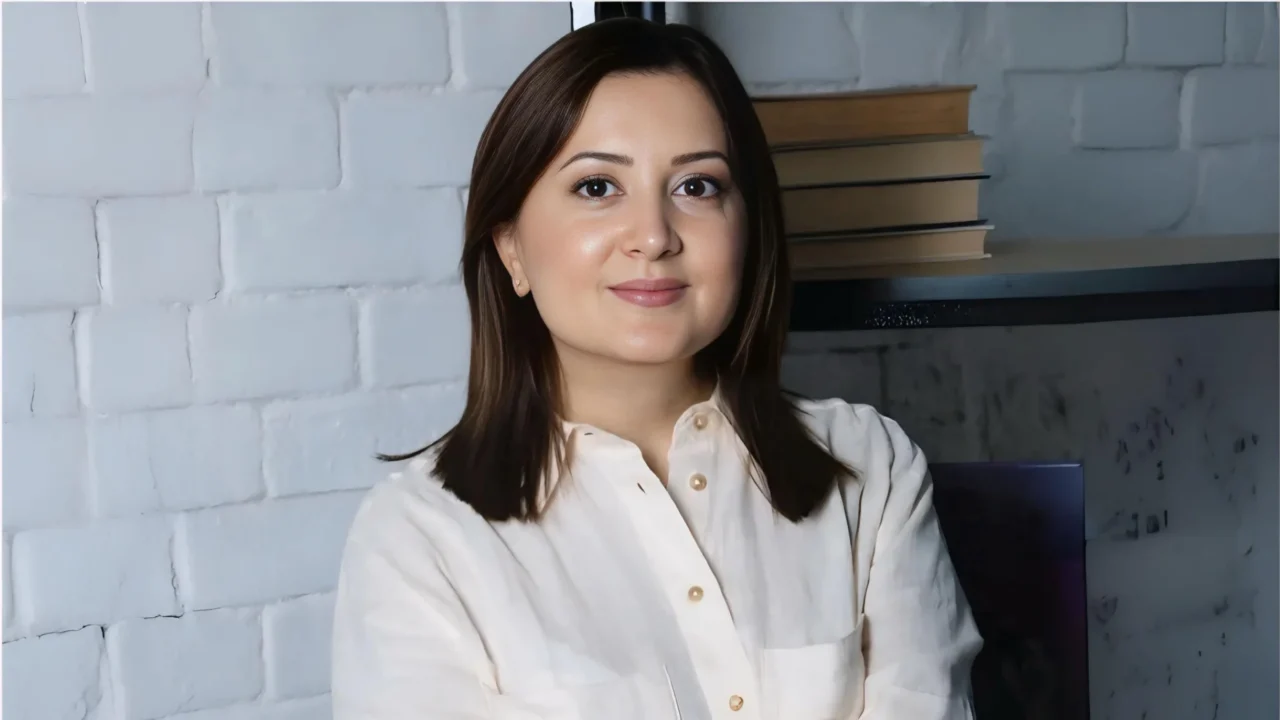
Heghine Khachatryan: Hemostasis at the Crossroads of Immunity and Inflammation
Heghine Khachatryan, Editor-in-Chief of Hemostasis Today, Head of Hemophilia and Thrombosis Center at Yeolyan Hematology and Oncology Center, shared NEJM Group’s post on LinkedIn:
“Hemostasis is far more than the prevention of bleeding – it is a finely regulated biological network that maintains vascular integrity while remaining in constant dialogue with inflammation and immunity.
When this balance is disrupted, the same mechanisms that protect life can become drivers of thrombosis, organ dysfunction, and chronic disease.
Modern evidence increasingly recognizes this bidirectional relationship as the foundation of thrombo-inflammation, a concept that is reshaping both research and clinical practice.
Every abnormal coagulation result deserves thoughtful interpretation rather than isolated treatment.
Understanding the interaction between endothelial cells, platelets, coagulation factors, inflammatory mediators, and fibrinolysis is essential for accurate diagnosis, individualized therapy, and improved patient outcomes.
Precision in hemostasis is not simply about preventing bleeding or thrombosis – it is about restoring biological equilibrium.
Advancing hemostasis means advancing precision medicine.”
NEJM Group shared a post on LinkedIn about a recent article by Paul Bastard et al., published in NEJM, adding:
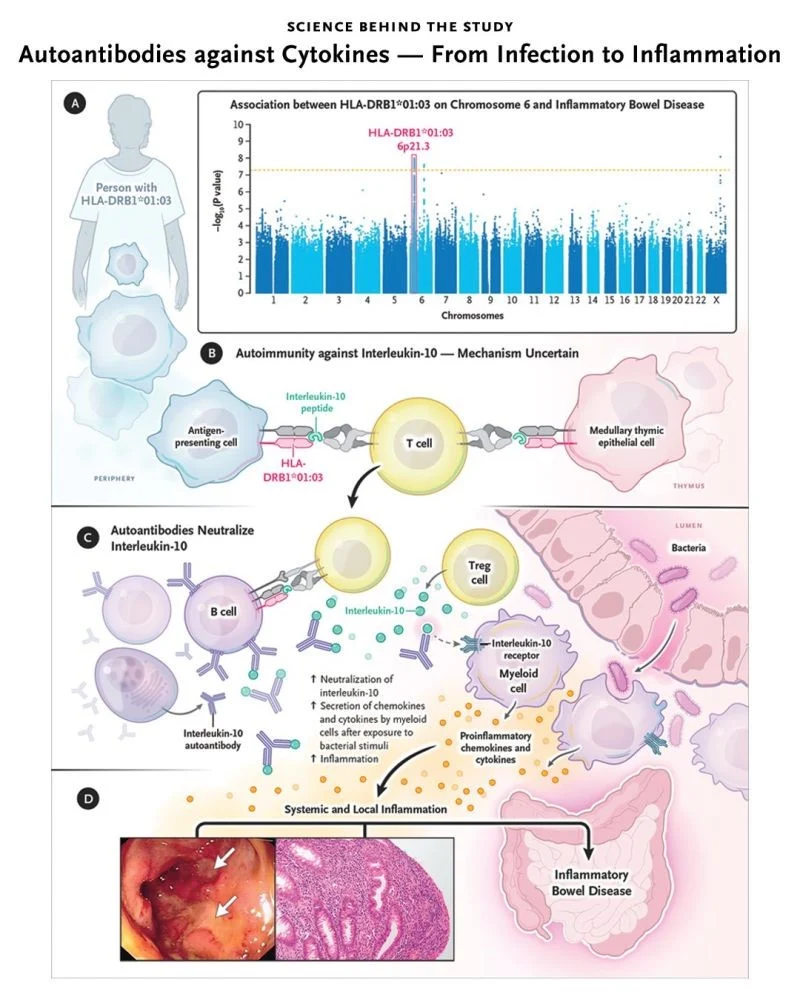
“Paul Bastard, MD, PhD, and Jean-Laurent Casanova, MD, PhD, describe the scientific foundations of a study implicating autoantibodies against interleukin-10 in persons with inflammatory bowel disease.
Autoantibodies neutralizing type I interferons (another family of cytokines) were first reported in 1984 in a patient with disseminated zoster.
The field lay dormant until 2004, when cases involving patients with atypical mycobacterial disease and autoantibodies neutralizing type II interferon were reported.
Remarkably, patients with autoantibodies neutralizing type II interferon had the same mycobacterial infections as patients with monogenic inborn errors of type II interferon or its receptor.
Specific infections that were subsequently identified in otherwise healthy patients with autoantibodies neutralizing interleukin-6 (2008, staphylococcus), interleukin-17A/F (2010, candida), granulocyte–macrophage colony-stimulating factor (2012, cryptococcus), type I interferons (2020, severe acute respiratory syndrome coronavirus 2), and interleukin-27 (2025, Epstein–Barr virus) were consistent with those in patients with the corresponding genetic disorders.
In this framework, the infectious disease is the consequence and not the cause of the autoantibodies, which are present before infection and explain susceptibility to it.
Most anticytokine autoantibodies are thought to be rare, but type I interferon autoantibodies are an exception: they are found in at least 0.4% of persons younger than 65 years of age and in 4% of those older than 70 years of age.
They are strong, common determinants of a growing number of life-threatening viral diseases worldwide.
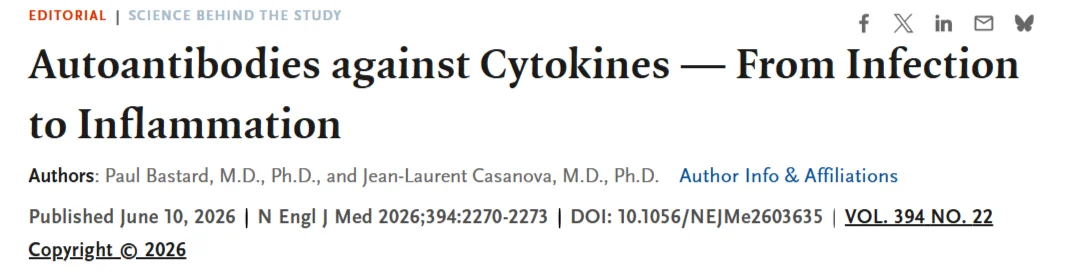
Learn more in the editorial ‘Autoantibodies against Cytokines — From Infection to Inflammation’.”
Title: Autoantibodies against Cytokines — From Infection to Inflammation
Authors: Paul Bastard, Jean-Laurent Casanova
Other posts featuring Heghine Khachatryan on Hemostasis Today.
-
Sep 20, 2026, 03:22The Voices of People Living With Bleeding Disorders – EHC
-
Sep 20, 2026, 01:18Sebastian Mafeld: Has 2026 Changed How We Treat Pulmonary Embolism?
-
Sep 20, 2026, 01:16Pall T. Onundarson: DOACs – Monitoring, Tailoring Dose and Identifying Problems
-
Sep 20, 2026, 01:15Thierry Fumeaux: From Efficacy to Effectiveness – The Value of Real-World Evidence
-
Sep 20, 2026, 01:14Said El Shamieh: VEGFA Genetic Variants and Bleeding Risk During Warfarin Therapy
-
Sep 20, 2026, 01:04Omar Danoun: Levetiracetam May Increase Thromboembolic Risk With DOACs
-
Sep 20, 2026, 01:02Mohamed Abo-Aly: Which Antiseizure Medication is Safest for Patients on DOACs?
-
Sep 20, 2026, 00:58Hamza Rafiq: How Does a Deep Vein Thrombosis Become a PE?
-
Sep 20, 2026, 00:50A Shared Platelet Factor 4–Targeted Immune Mechanism in Adenovirus Infection – NEJM