


Iyas Daghlas: DOACs Use, Genetic Reduction of Coagulation Factors and Risk of Cerebral Venous Thrombosis
Iyas Daghlas, Vascular Neurology Fellow and Stroke Researcher at the University of California, shared on LinkedIn about a recent article he and his colleagues co-authored, adding:
”Excited to share our new publication in Neurology: ‘Direct Oral Anticoagulant Protein Targets and Risk of Cerebral Venous Thrombosis: A Mendelian Randomization Study.’
Cerebral venous thrombosis (CVT) is a rare form of stroke treated with anticoagulation.
Despite widespread off-label direct oral anticoagulant (DOAC) use, no adequately powered RCT has demonstrated DOAC efficacy, and many patients continue to be treated with warfarin, which carries substantial major bleeding risk.
We addressed this evidence gap by examining effects of naturally randomized genetic variants perturbing the protein targets of established (F2+F10) and emerging (F11) DOACs.
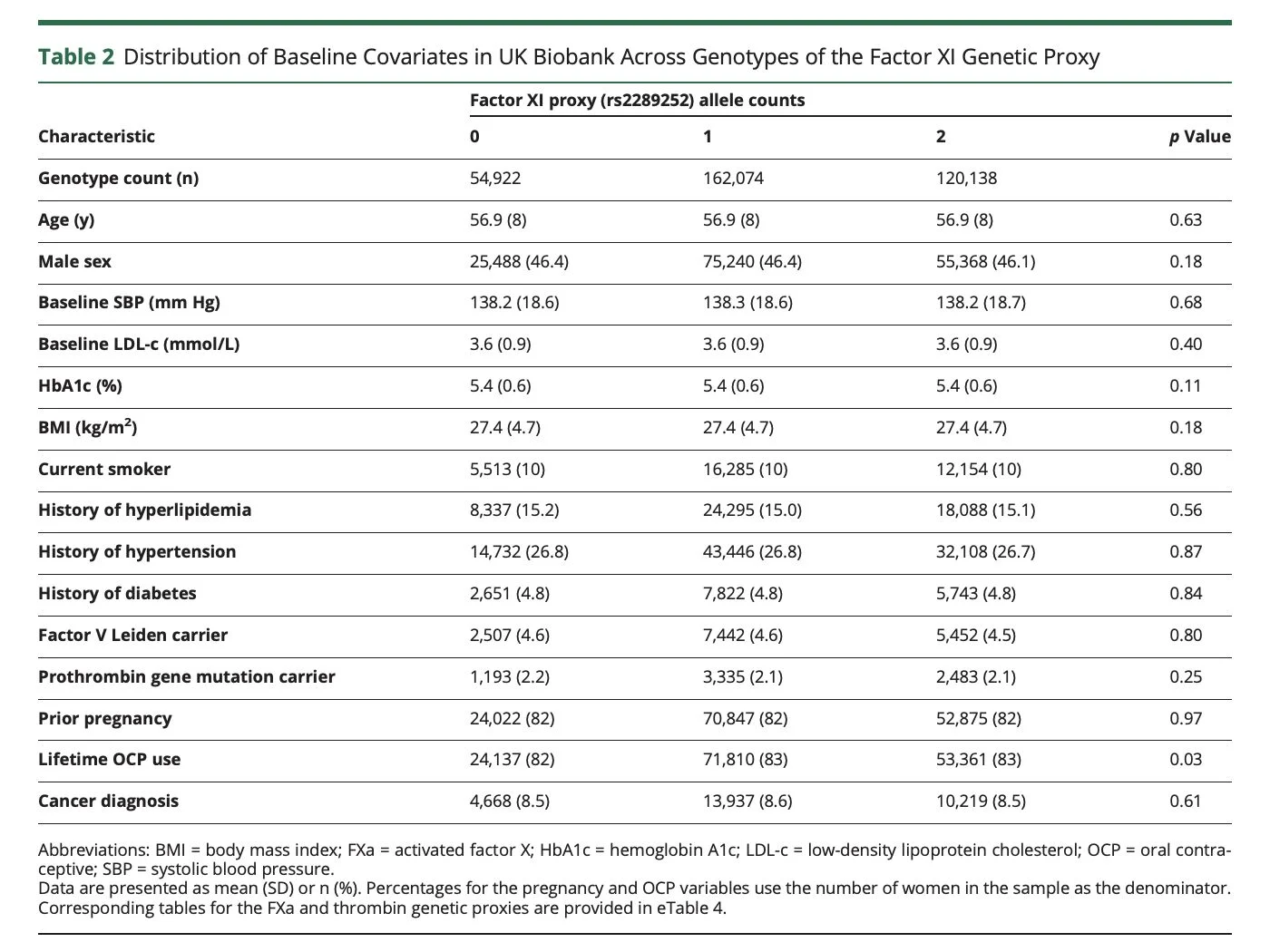
See Table 1 for a cool demonstration of the natural allocation of covariates/confounders across genotypes, mimicking an RCT ‘Table 1.’
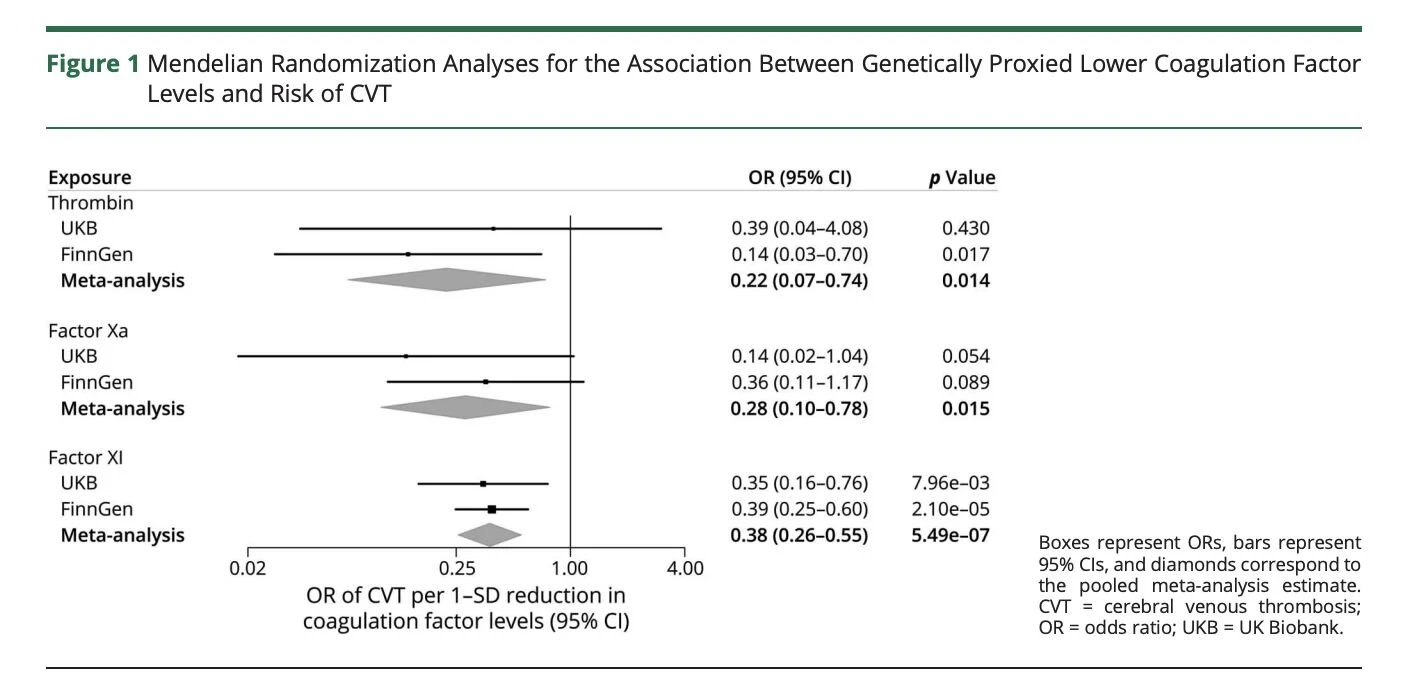
We found evidence that genetically reduced levels of thrombin, factor Xa, and factor XI are associated with reduced CVT risk – see forest plot!
What this means:
- FXI inhibitors (milvexian, asundexian, etc) are among the most actively investigated therapeutic targets in thrombosis today, with multiple Phase III trials underway. Our data provide the first human genetic evidence supporting repurposing potential for CVT, a new indication for this drug class.
- Human genetics supports efficacy for established DOAC protein targets (thrombin and factor Xa) in reducing CVT risk
- These data support the notion that, in general, therapeutics that are effective for venous thromboembolism will likely also work for CVT
Appreciate collaborators Marta Pérez Alcántara and Dipender Gill!”
Title: Direct Oral Anticoagulant Protein Targets and Risk of Cerebral Venous Thrombosis. A Mendelian Randomization Study
Authors: Iyas Daghlas, Marta Pérez Alcántara, Dipender Gill
Read the Full Article on Neurology
Stay updated on all scientific advances with Hemostasis Today.
-
Sep 11, 2026, 15:55Marwa Mostafa: The Paradox of Sideroblastic Anemia
-
Sep 11, 2026, 15:37Empowering Local Stakeholders to Advance Hemophilia Care in Côte d’Ivoire – World Federation of Hemophilia
-
Sep 11, 2026, 15:34Dhargam Aljebouri: A New Milestone for Transfusion Education in Iraq
-
Sep 11, 2026, 15:17Shadi Tabibian: Where Laboratory Precision Meets Clinical Care
-
Sep 11, 2026, 14:58Kevin Land: Connecting Donors to Patients Across the Spectrum of Care
-
Sep 11, 2026, 14:45Jorge Mascaro: The Growing Impact of the UK Aortic Society on Aortic Disease Care
-
Sep 11, 2026, 14:31Hany Ibrahim: Lp(a) Lowering Meets a Critical Test in the Lp(a)HORIZON Trial
-
Sep 11, 2026, 13:35How Non-Factor Therapies Are Changing Hemophilia Care – Seminars in Thrombosis and Hemostasis
-
Sep 11, 2026, 13:21Emmanuel J Favaloro: Rethinking Quality Control in VWD Testing