

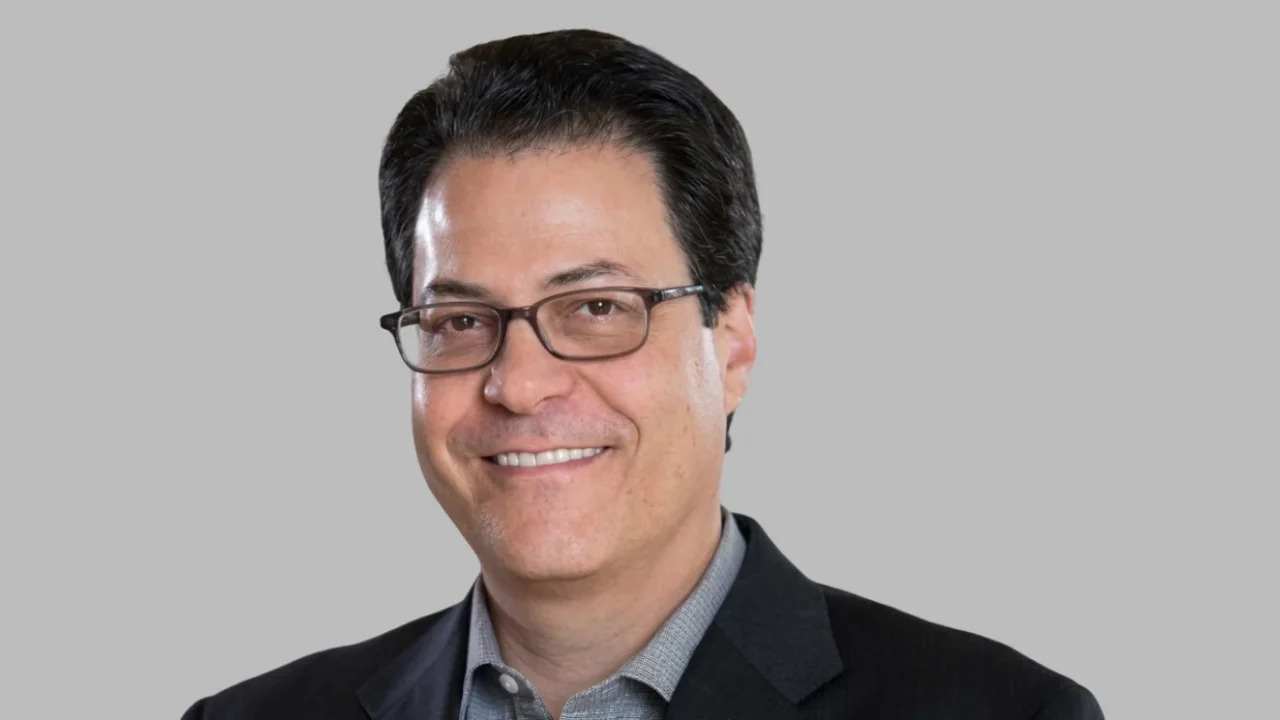
Mitchell Elkind: Uncovering Potential Benefits of Anticoagulation in Selected ESUS Patients
Mitchell Elkind, Chief Science Officer of Brain Health and Stroke at American Heart Association, Professor at Columbia University in the City of New York, shared a post on LinkedIn about a recent article he and his colleagues co-authored, published in The Lancet Neurology, adding:
“How to prevent recurrent ESUS (embolic stroke of undetermined source): a comprehensive look.
Is there solid evidence that anticoagulation beats aspirin after an embolic stroke of undetermined source (ESUS)? A new individual participant data meta-analysis gives a clear answer: no.
In a pooled analysis of 4 randomized trials of direct-acting oral anticoagulants versus aspirin, covering 13,970 patients:
- Recurrent stroke: 4.6 versus 4.8 events per 100 patient-years (adjusted HR 0.94, 95 percent CI 0.78–1.14), with no heterogeneity across trials.
- Major bleeding: 1.6 versus 1.1 events per 100 patient-years (adjusted HR 1.19, 95 percent CI 0.52–2.73)…not significantly different, but with notable heterogeneity across trials.
- One hypothesis-generating signal: patients with left atrial enlargement may benefit from anticoagulation. This signal has been seen before—but needs testing in future trials, and not ready for changes in practice today.
Why does this matter?
ESUS accounts for a large share (approximately 25 percent) of ischemic strokes, and stroke docs have long looked for a way to prevent the next one.
Pooling patient-level data across trials lets us test subgroups more rigorously than any single trial could, and it tells us where to focus next, whether in the field of ‘atrial cardiopathy,’ stroke in general, or in brain health.
We should also remember that many scientific breakthroughs didn’t make their way into clinical practice after the first trial testing the hypothesis.
Sometimes it takes a few attempts: coronary thrombolysis, thrombectomy for stroke, immune checkpoint inhibitors for cancer, the list goes on.
Answering ‘what doesn’t work’ and ‘who might benefit’ moves the field forward.”
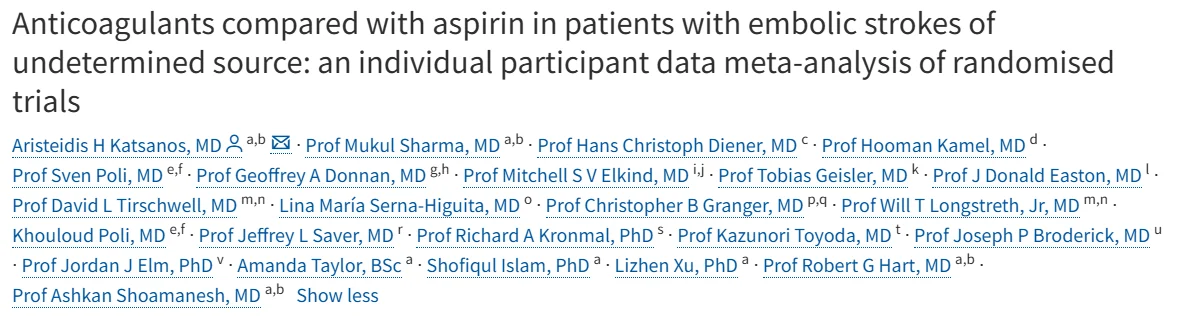
Title: Anticoagulants compared with aspirin in patients with embolic strokes of undetermined source: an individual participant data meta-analysis of randomised trials
Authors: Aristeidis H Katsanos, Mukul Sharma, Hans Christoph Diener, Hooman Kamel, Sven Poli, Geoffrey A Donnan, Mitchell S V Elkind, Tobias Geisler, J Donald Easton, David L Tirschwell, Lina María Serna-Higuita, Christopher B Granger, Will T Longstreth Jr, Khouloud Poli, Jeffrey L Saver, Richard A Kronmal, Kazunori Toyoda, Joseph P Broderick, Jordan J Elm, Amanda Taylor, Shofiqul Islam, Lizhen Xu, Robert G Hart, Ashkan Shoamanesh
Stay updated on all scientific advances with Hemostasis Today.
-
Nov 29, 2026, 10:23Simona Sacco: Finding the Right Time to Restart Anticoagulation After Hemorrhagic Transformation
-
Nov 29, 2026, 10:02Felice Gragnano: The Evolving Evidence for Antithrombotic Therapy After CABG
-
Nov 29, 2026, 09:39Tamer Elalfy: Safe Anticoagulant Interruption and Resumption in Surgical Patients
-
Nov 29, 2026, 09:15Anna Oleksiak: The Delicate Balance of Triple Antithrombotic Therapy After PCI
-
Nov 29, 2026, 06:30Ghufran Ahmad: When Drug Effects Outlast Their Half-Life
-
Nov 29, 2026, 05:54Ceri Rose: Building a Stronger Blood Donor Community
-
Nov 29, 2026, 05:34Seema Dawood: Duffy-Null Status and New Neutrophil Reference Ranges
-
Nov 29, 2026, 05:26Kathaleen Schnur: Empowering Women Through Advocacy in Bleeding Disorders
-
Nov 29, 2026, 05:19Obi Light Ogbonnia: Making Sickle Cell Research Matter to the Lives of Patients