

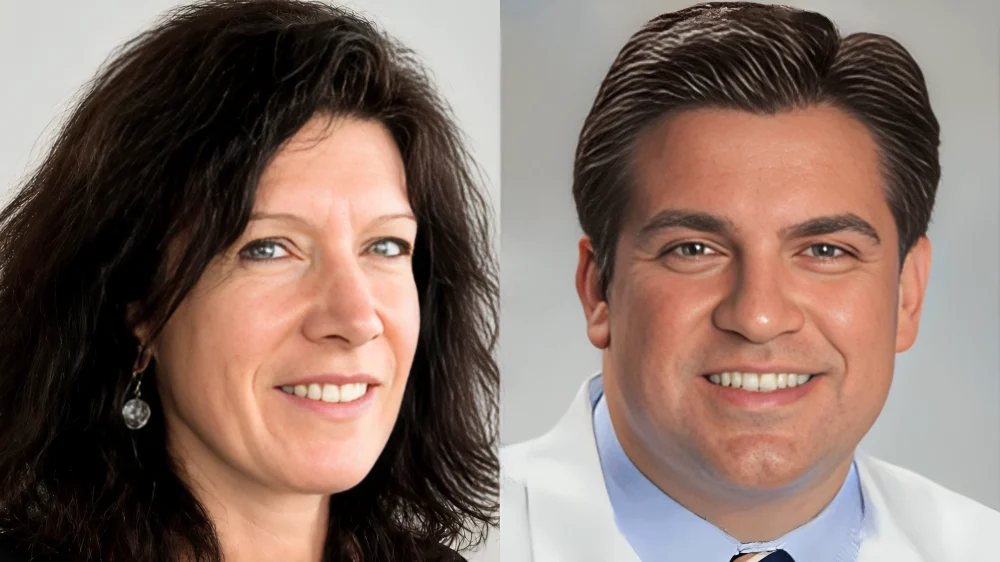
Nathan Connell: Tranexamic Acid – Small Intervention, Big Impact
Nathan Connell, Clinical Chief of Hematology at Brigham and Women’s Faulkner Hospital, shared a post on LinkedIn about a recent article by Brett L Houston et al., published in NEJM, adding:
“Sometimes the most important advances in medicine are not the newest, most expensive therapies.
A new trial published in the New England Journal of Medicine (NEJM Group) highlights the impact of tranexamic acid, or TXA, in major noncardiac surgery.
TXA is a low-cost medication that helps stabilize blood clots and reduce bleeding.
In more than 8,000 patients across 10 hospitals, a hospital-wide TXA policy reduced red blood cell transfusions from 9.8% to 7.4%, without an increased rate of venous thromboembolism at 90 days.
That matters, because it suggests that using TXA in this scenario is a practical, scalable intervention that leads to:
- Fewer transfusions
- Better stewardship of a limited blood supply
- Potential benefit in health systems with constrained resources
Blood transfusion is lifesaving, but blood is also precious.
Interventions like TXA remind us that improving outcomes does not always require high-cost technology.
Sometimes it requires using simple, evidence-based tools consistently and thoughtfully.
For patients, clinicians, hospitals, and global health systems, this is exactly the kind of high-value care we should pay attention to.”
Beverley Hunt, Professor of Thrombosis and Haemostasis at King’s Healthcare Partners, shared this post on LinkedIn, adding:
“Another excellent trial of TXA use in major non cardiac surgery showing a 25% reduction of blood transfusions and no increased rates of post operative VTE.
Editorial by Mike Murphy and Ian Robert’s points out we need to use TXA in surgery across the globe.”
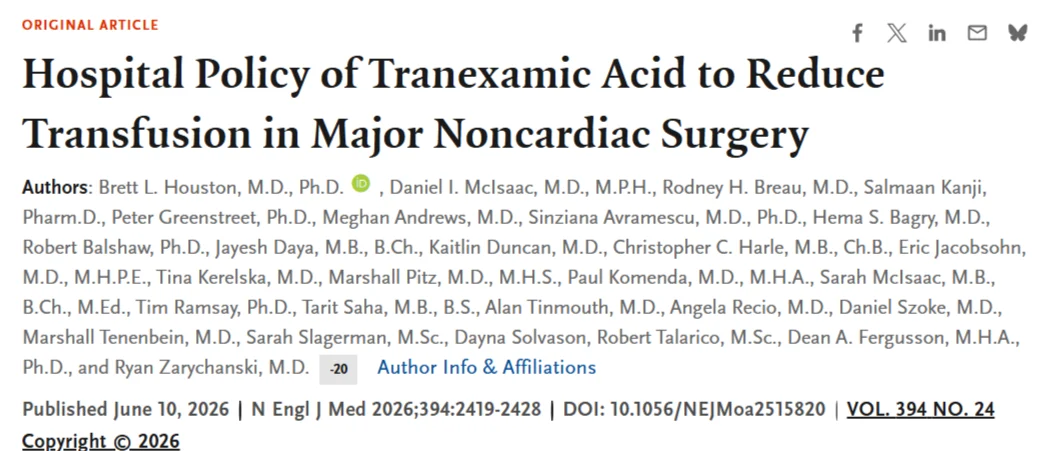
Title: Hospital Policy of Tranexamic Acid to Reduce Transfusion in Major Noncardiac Surgery
Authors: Brett L Houston, Daniel I McIsaac, Rodney H Breau, Salmaan Kanji, Peter Greenstreet, Meghan Andrews, Sinziana Avramescu, Hema S Bagry, Robert Balshaw, Jayesh Daya, Kaitlin Duncan, Christopher C Harle, Eric Jacobsohn, Tina Kerelska, Marshall Pitz, Paul Komenda, Sarah McIsaac, Tim Ramsay, Tarit Saha, Alan Tinmouth, Angela Recio, Daniel Szoke, Marshall Tenenbein, Sarah Slagerman, Dayna Solvason, Robert Talarico, Dean A Fergusson, Ryan Zarychanski
Other posts featuring Nathan Connell on Hemostasis Today.
-
Sep 30, 2026, 22:28Recent Mechanical Risk Factors and Young-Onset Cryptogenic Ischemic Stroke – American Heart Association International
-
Sep 30, 2026, 22:22Expert Consensus on Inferior Vena Cava Thrombosis – Thrombosis and Haemostasis Journal
-
Sep 30, 2026, 22:21Markus Abeln: How Platelets and Complement Shape Placental Blood Flow
-
Sep 30, 2026, 22:19Fatma Al Arbawi: Studying Blood Clot Mechanics to Understand Aspirin Resistance and Thrombosis
-
Sep 30, 2026, 22:17Sudhir Kumar: Stroke is a Medical Emergency – and Every Minute Matters
-
Sep 30, 2026, 22:15Luisa Medeiros Visentini: Our Research on Cognitive Impairment After CVT Cited in the International Journal of Stroke
-
Sep 30, 2026, 21:50Jagat Narula: Connecting Cardiovascular Health and Sickle Cell Disease on World Heart Day 2026
-
Sep 30, 2026, 21:38John Kastelein: Exploring the Biology of Cardiovascular Disease at BioCentury Grand Rounds Europe
-
Sep 30, 2026, 21:36Mark Murphy: Irish Heart Foundation Meets With Senator Teresa Costello on World Heart Day