


Nicole Juffermans: Comparing the Effect of Plasma Versus Clear Fluids on Intravascular Volume
Nicole Juffermans, Intensivist and Professor of Translational Intensive Care Medicine at Erasmus Medical Center, shared a post on LinkedIn about a recent article she and her colleagues co-authored, adding:
“It is often said that a decrease in Hb may be due to hemodilution of concomittantly infused volume.
We compared the effect of plasma versus clear fluids on the ability to expand circulating blood volume:
Clear fluids do not cause a drop in Hb level, probably because they are lost in the interstitium early.
In contrast, plasma does cause a drop in Hb, due to augmentation of cardiac output, translating into improved tissue perfusion.”
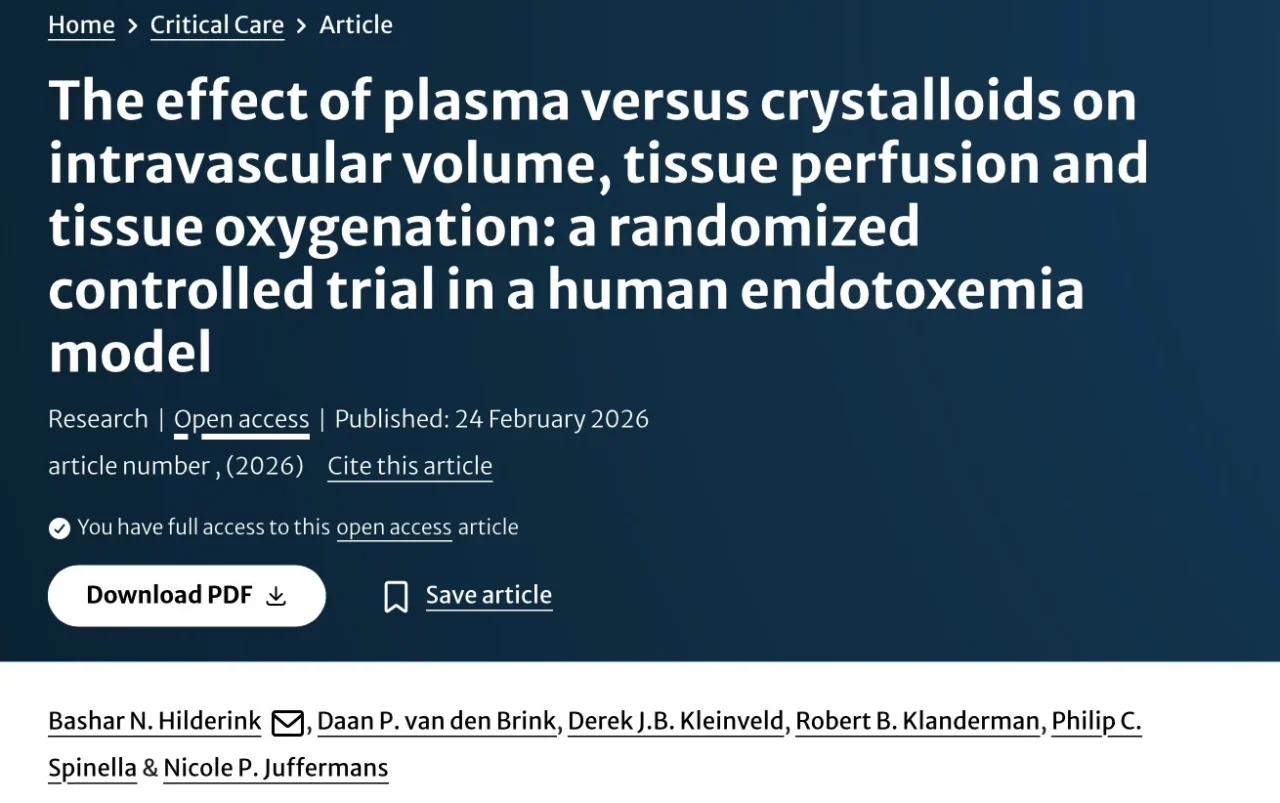
Title: The effect of plasma versus crystalloids on intravascular volume, tissue perfusion and tissue oxygenation: a randomized controlled trial in a human endotoxemia model
Authors: Bashar Hilderink, Daan van den Brink, Derek Kleinveld, Robert Klanderman, Philip Spinella, Nicole Juffermans
Read the Full Article on Critical Care.
Stay updated on all scientific advances with Hemostasis Today.
-
Sep 21, 2026, 15:44Levacetylleucine: A New Therapeutic Approach to Ataxia Telangiectasia
-
Sep 21, 2026, 15:40Andreas Tridimas: The Diagnostic Traps of Lipaemic Blood – Why a Normal Amylase Can Mislead You
-
Sep 21, 2026, 15:33Arsene Mekinian: Exploring Cardiac Involvement in Behçet’s Disease
-
Sep 21, 2026, 15:23Anis Mahjoubi: MRI Findings of Krukenberg Tumors
-
Sep 21, 2026, 15:08Fikreab Tesfaye Tefera: 10 Practical Take-Home Points for Diagnosing Iron Deficiency Anemia
-
Sep 21, 2026, 14:10Aswin K Mohan: Lessons from TRANSCON 2026 – Building Resilient Blood Supply Systems Before Crisis Hits
-
Sep 21, 2026, 14:00Vincent Lu: Beyond PT and aPTT – How Hemostasis Evolves Across a Lifetime
-
Sep 21, 2026, 13:56Alex Knapp: Emerging Technologies and Advances in Hemophilia Care
-
Sep 21, 2026, 13:51Abdalhakim Shubietah: pLAAO Fails Noninferiority to OAC in Landmark Meta-Analysis of 7 RCTs