


Sandeep De: Unraveling the Long-Term Impact of COVID-19 in Hemophilia
Sandeep De, Former Senior Manager at OpenText, shared on LinkedIn about a recent article by Chun Cao et al. published in BMC Infectious Diseases, adding:
“A multicenter study of 254 haemophilia patients in Southwest China finds that COVID-19 infection paradoxically curbed spontaneous bleeding while quietly stacking up mental health costs and long COVID symptoms over six months.
Researchers at hospitals across Chongqing tracked 254 people with haemophilia who contracted COVID-19, following them at 1, 2, 4, and 16 weeks and again at 6 months. The cohort spanned severe (167 patients), moderate (59), and mild (28) disease.
The team measured bleeding frequency, joint health scores, coagulation factor inhibitor formation, long COVID symptoms, and mental state throughout.
Spontaneous bleeding dropped significantly across nearly every body region during active COVID-19 infection, sparing only the gums. Bleeding rates then rose again after the infection cleared, a pattern consistent across all three severity groups.
Despite this fluctuation, joint function held steady over six months: Haemophilia Joint Health Scores measured 21.79 before infection versus 23.81 after, and HEAD-US ultrasound scores measured 20.33 versus 20.62, neither a statistically significant change.
Long COVID and mental health: Chronic cough affected 7.87% of patients and fatigue affected 5.12%, marking the most common lingering symptoms researchers classified as long COVID.
By the six-month mark, roughly 13.39% of patients showed anxiety, and the number reporting moderate or extremely severe depression rose significantly. One patient developed factor VIII inhibitors, a complication that can undermine standard clotting treatment, after the infection.
What it means:
The authors conclude COVID-19 does not appear to damage joint function in people with haemophilia, even as it temporarily suppresses bleeding episodes during active infection.
They call for closer monitoring of long COVID symptoms and mental health conditions in this patient population going forward. The study received no external funding and was published in BMC Infectious Diseases.”
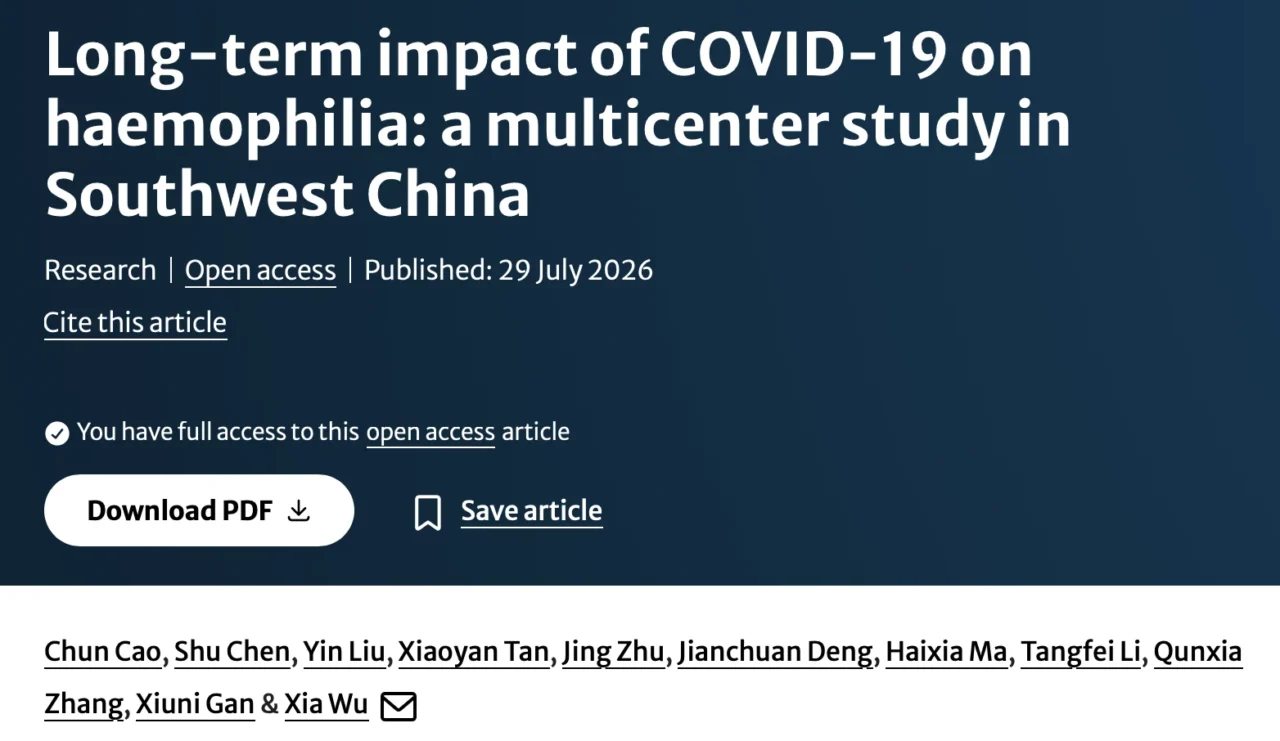
Title: Long-term impact of COVID-19 on haemophilia: a multicenter study in Southwest China
Authors: Chun Cao, Shu Chen, Yin Liu, Xiaoyan Tan, Jing Zhu, Jianchuan Deng, Haixia Ma, Tangfei Li, Qunxia Zhang, Xiuni Gan, Xia Wu
Stay updated on all scientific advances with Hemostasis Today.
-
Sep 21, 2026, 12:53Conan McIlwrath: Strengthening Haemophilia Care Through International Collaboration
-
Sep 21, 2026, 12:41Tinatin Muradashvili: Advancing Hemophilia Care Through Education and Collaboration
-
Sep 21, 2026, 12:15Kholoud Al Busaidi: Cold Agglutination and Its Impact on CBC and Blood Grouping Results
-
Sep 21, 2026, 11:03Shaurav Bhattacharyya: Honoring the 2026 Lasker Award Winners
-
Sep 21, 2026, 10:41Jamshid Ullah: Recognizing Blood Disorders Through Laboratory Findings
-
Sep 21, 2026, 10:18Mana Alshehri: A New Step Toward Hemophilia B Gene Therapy in Adolescents
-
Sep 21, 2026, 09:52Afreenish Tasadaq: Contributing to Awareness about Bleeding Disorders
-
Sep 21, 2026, 08:49Andrea Bridges: When Support Becomes a Commitment to Give Back
-
Sep 21, 2026, 08:21Managing Thrombotic Risk in Pregnancy