

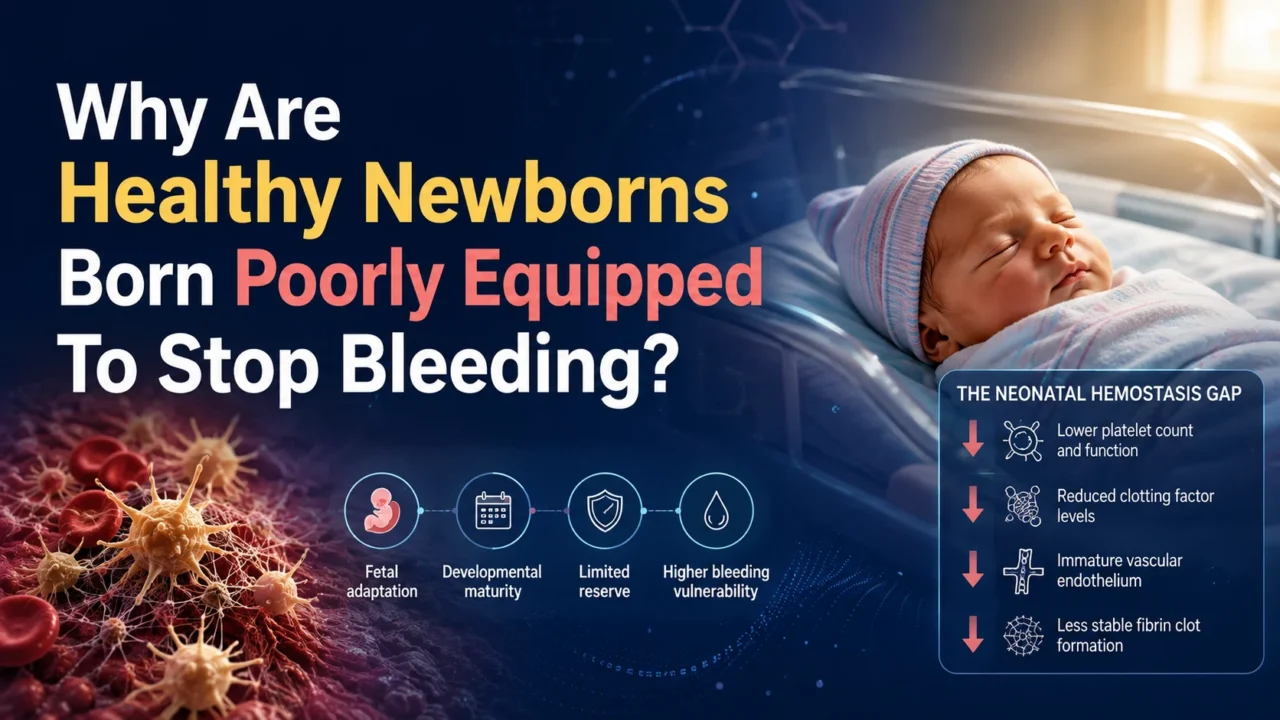
Steven Lubega: Why Are Healthy Newborns Born Poorly Equipped To Stop Bleeding?
Steven Lubega, Senior Clerk at Fort Portal Regional Referral (Buhinga) Hospital, shared a post on LinkedIn about a recent article by Eleni Simatou et al., published in JAMA Pediatrics, adding:
”Why Are Healthy Newborns Born Poorly Equipped To Stop Bleeding?
A baby can look completely healthy, yet still be vulnerable to serious bleeding.
The reason begins with vitamin K.
Vitamin K is essential for activating several clotting factors, yet newborns start life with very low stores. Relatively little crosses the placenta, breast milk contains only small amounts, and the newborn gut microbiome is still developing.
This creates a temporary vulnerability to Vitamin K Deficiency Bleeding (VKDB).
And here is the dangerous part: bleeding may be hidden.
VKDB can occur internally, including in the intestines or brain, where parents may not see it happening until the baby becomes seriously ill.
The stakes are high. The American Academy of Pediatrics (AAP) reports that without a vitamin K shot, babies are 81 times more likely to develop VKDB, and about 1 in 5 babies who develop it die.
So does the injection make a measurable difference?
A 2026 JAMA Pediatrics study followed 2,020,302 Swedish infants. Compared with those who received IM vitamin K, infants without a recorded injection had:
- About one and a half times the adjusted odds of a bleeding diagnosis by 6 months; and
- Nearly three times the adjusted odds of intracranial bleeding.
Nonreceipt remained uncommon, but rose from 0.66 percent in 2006 to 1.50 percent in 2021.
This was observational, so it shows association — not proof that every bleed was caused by vitamin K deficiency.
Still, the findings reinforce longstanding recommendations from the AAP, WHO and Uganda’s Ministry of Health for routine intramuscular vitamin K prophylaxis at birth.
The vitamin K shot is NOT a vaccine. It is preventive vitamin K prophylaxis.
Parents with concerns should discuss them with a qualified healthcare provider before declining prophylaxis.
Unexplained bleeding or concerning symptoms in a newborn require prompt medical assessment.
Sometimes preventive medicine works precisely because it acts before anything appears to be wrong.
Image Credit: Buntiam/Getty Images/iStockphoto”
Title: Vitamin K Prophylaxis in Newborns and Bleeding in Infancy
Authors: Eleni Simatou, Eleni Tsamantioti, Anna Hallström, Olof Stephansson, Neda Razaz, Martina Persson, Jenny Bolk
Stay updated on all scientific advances with Hemostasis Today.

-
Sep 29, 2026, 11:21Richard Davis: Rapid Rescue in Massive Pulmonary Embolism
-
Sep 29, 2026, 11:14Nissan Brown: Every Step Counts for the Hemophilia Community
-
Sep 29, 2026, 11:03Zain Khalpey: SINGLE AF Adds New Evidence to the Anticoagulation Debate
-
Sep 29, 2026, 10:54How Does Haemophilia Affect Motor Development in Infants? – EAHAD
-
Sep 29, 2026, 10:49Alison Davey: The Vital Role of Community Support in Bleeding Disorders
-
Sep 29, 2026, 10:36Abdul Muqtadir Abbasi: 5 Questions to Ask When the CBC Is Abnormal
-
Sep 29, 2026, 10:28Manu Morales Sánchez: DOACs in Intermediate Risk Atrial Fibrillation
-
Sep 29, 2026, 09:59William Sauer: Ablation in Patients With LAAO Devices
-
Sep 29, 2026, 03:53Nahrwan Masaoodi: Iron Deficiency Can Exist Without Anemia