


Violeta Jardin: Understanding Fibrinolytic Shutdown Beyond Conventional TEG
Violeta Jardin, General Manager at Haemoview Diagnostics, shared a post on LinkedIn about a recent article James E. Kenny et al., published in Journal of Trauma and Acute Care Surgery, adding:
“This paper looks, at first, like a win for TXA in fibrinolytic shutdown. But it deserves a closer read.
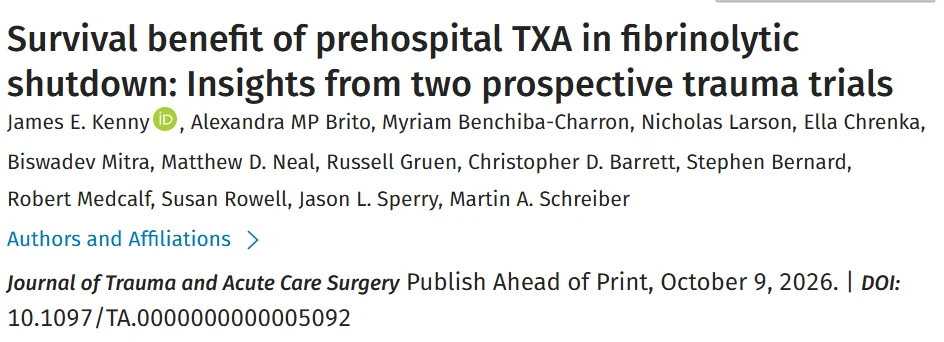
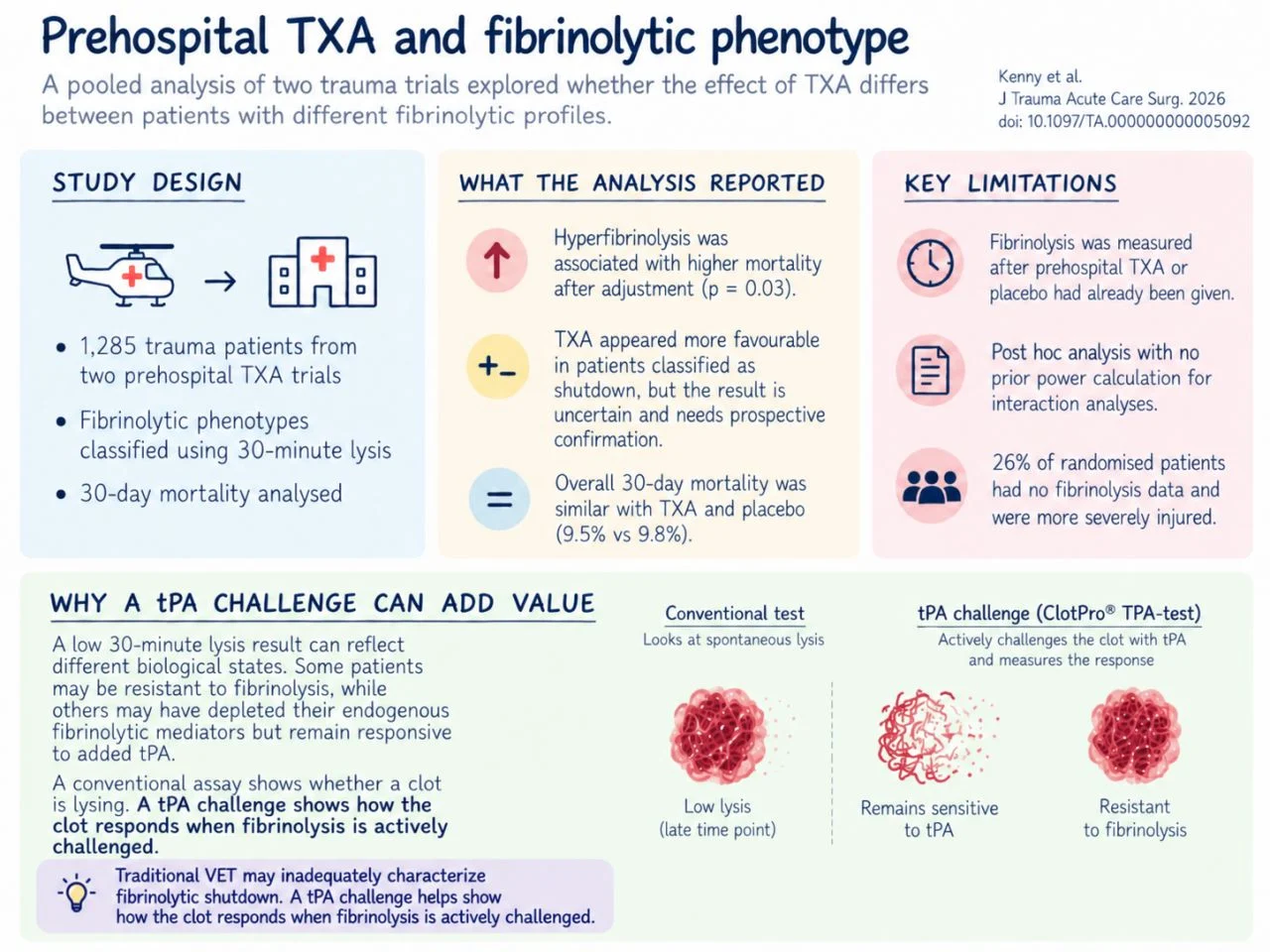
Survival benefit of prehospital TXA in fibrinolytic shutdown: Insights from two prospective trauma trials; Kenny and colleagues pooled two prehospital TXA trials and classified patients using admission TEG LY30. The headline result was a significant TXA-by-shutdown interaction.
That is not the same as demonstrating a direct, statistically significant TXA-versus-placebo benefit within shutdown patients. Overall, there was no significant difference in 30-day mortality between the treatment groups.
There is another complication: fibrinolysis was measured after prehospital TXA or placebo had already been given. Treatment may therefore have influenced the phenotype used in the analysis.
The study was also post hoc, with no prior power calculation for the interactions examined.
So, I would not read this paper as evidence to change TXA practice. What it does highlight is something more useful: A low LY30 may not represent one biological state.
Some patients may be genuinely resistant to fibrinolysis. Others may show little spontaneous lysis because their endogenous fibrinolytic mediators have been depleted, while their clot remains responsive to added tPA.
Those patients can look very similar on a conventional trace. Before we use the label ‘fibrinolytic shutdown’ to guide treatment, we need to understand the biology sitting behind it.
That is why tPA-activated testing matters.
The ClotPro TPA-test points directly to the measurement gap that a tPA challenge is designed to explore: not simply whether a clot is lysing, but how it responds when fibrinolysis is actively challenged.
This study is hypothesis-generating. Its real value may be the case it makes for prospective studies using pretreatment sampling, repeat measurements and tPA-challenge assays.
Sometimes the next step is not a new treatment. It is a better test.”
Title: Survival benefit of prehospital TXA in fibrinolytic shutdown: Insights from two prospective trauma trialsSurvival benefit of prehospital TXA in fibrinolytic shutdown: Insights from two prospective trauma trials
Authors: James E. Kenny, Alexandra MP Brito, Myriam Benchiba-Charron, Nicholas Larson, Ella Chrenka, Biswadev Mitra, Matthew D. Neal, Russell Gruen, Christopher D. Barrett, Stephen Bernard, Robert Medcalf, Susan Rowell, Jason L. Sperry, Martin A. Schreiber
Stay updated with Hemostasis Today.
-
Oct 15, 2026, 11:28Iliana Chatzifragkou: How Does Haemophilia Affect Early Motor Development?
-
Oct 15, 2026, 11:14Sunil Bajaj: DVT Pumps Explained – Uses, Types, and Key Features
-
Oct 15, 2026, 10:57Surya Sundaravel: A New Review Explores the Diagnosis and Management of DVT
-
Oct 15, 2026, 10:39Dariush Mozaffarian: TMAO and Cardiovascular Risk Beyond Coronary Calcification
-
Oct 15, 2026, 10:19Frank Bidar: Why Do CRRT Filters Clot Despite Adequate Citrate Anticoagulation?
-
Oct 15, 2026, 09:57Theodosios Tsinas: Cerebral Venous Thrombosis – A Less Recognized Cause of Stroke
-
Oct 15, 2026, 09:29Michele Brenner: A Personal Tragedy That Highlights the Urgency of DVT Awareness
-
Oct 15, 2026, 07:39Sian James: Welsh Blood Service Research Showcases Innovation and International Collaboration in Transfusion Medicine
-
Oct 15, 2026, 07:16Ruhi Mehra: Advancing Modern Transfusion Medicine Through Collaboration and Continuing Medical Education