

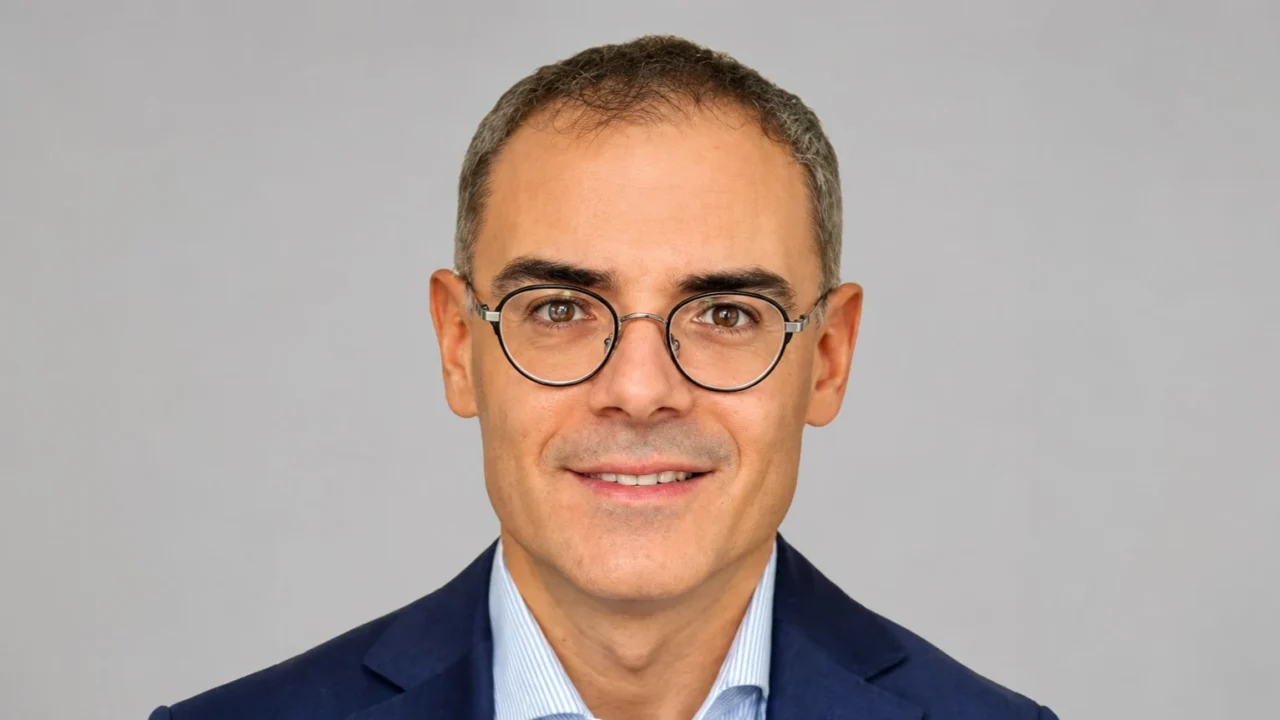
Yaariv Khaykin: Does Reducing AF Burden After Ablation Change the Need for Anticoagulation?
Yaariv Khaykin, Associate Professor at University of Toronto, shared on LinkedIn about a recent article by Giuseppe Boriani et al, published in Europace, adding:
“One of the questions I get most often from patients isn’t about the ablation itself. It’s ‘will I have to keep taking my blood thinner afterwards?’
It’s a fair question, and a recent pro and contra piece in Europace lays out just how genuinely unsettled the answer is.
Here’s the honest version I give in clinic. Catheter ablation treats symptoms and reduces how much AF you have. It doesn’t erase the reasons your stroke risk was elevated in the first place: age, blood pressure, diabetes, prior stroke, the condition of your left atrium.
Anticoagulation isn’t a reward for having AF episodes; it’s protection against the consequences of the underlying atrial disease.
The counterargument, which is real, is that these medications carry bleeding risk, including the kind we most fear. And if ablation genuinely drops AF burden close to zero, continuing a drug with real risk in someone at modest stroke risk starts to look questionable. This is supported by findings of studies su h as ALONE and OCEAN AF.
Where does that leave us?
For now, I treat this as a shared decision rather than a rule. We look at the individual’s stroke risk score, their bleeding history, how much AF we can actually document afterwards with monitoring, and what matters to them.
For some patients at lower risk with a quiet atrium on long-term monitoring, stopping is a reasonable discussion. For others, it isn’t.
What I ask patients to avoid is the assumption that a successful ablation automatically means the blood thinner goes away. That decision deserves its own conversation.”
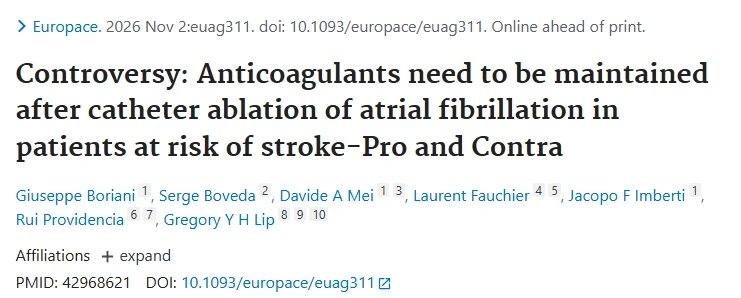
Title: Controversy: Anticoagulants need to be maintained after catheter ablation of atrial fibrillation in patients at risk of stroke-Pro and Contra
Authors: Giuseppe Boriani, Serge Boveda, Davide A. Mei, Laurent Fauchier, Jacopo F. Imberti, Rui Providencia, Gregory Y. H. Lip
Stay updated on all scientific advances with Hemostasis Today.
-
Nov 17, 2026, 23:45Cajetan Reichardt: LAAO vs. OAC in AF – Balancing Nonprocedural Bleeding and Ischemic Stroke Risk
-
Nov 17, 2026, 23:42Brian Tegtmeyer: Expanding Pre-Hospital Administration of Low-Titer O Positive Whole Blood
-
Nov 17, 2026, 23:41Mansi Kala: Advancing Hematology – From Evidence to Clinical Excellence
-
Nov 17, 2026, 23:40Nathan Connell: Registered for the WFH Comprehensive Care Summit 2027 in Prague
-
Nov 17, 2026, 23:38Amos Gitonga Mbaabu: Strengthening Care and Advocacy for Haemophilia and SCD across Southern Africa
-
Nov 17, 2026, 23:35Muhammad Sameed Altaf: A Decade of Working Together for Thalassemia Awareness and Patient Support
-
Nov 17, 2026, 23:34Ahmed Bennis: Is Aspirin Therapy Enough for VTE Prevention After Arthroplasty?
-
Nov 17, 2026, 23:33Remi Remakanth: The Role of Transfusion Medicine in HLA Antibody Testing and Transplant Desensitization
-
Nov 17, 2026, 15:26Hereditary Hemorrhagic Telangiectasia: The Molecular Connection Between Vascular Malformations and Bleeding