


Marilena Vrana: The Road to European Plasma Independence
Marilena Vrana, Vice President at the Plasma Protein Therapeutics Association (PPTA) Europe, shared a post on LinkedIn:
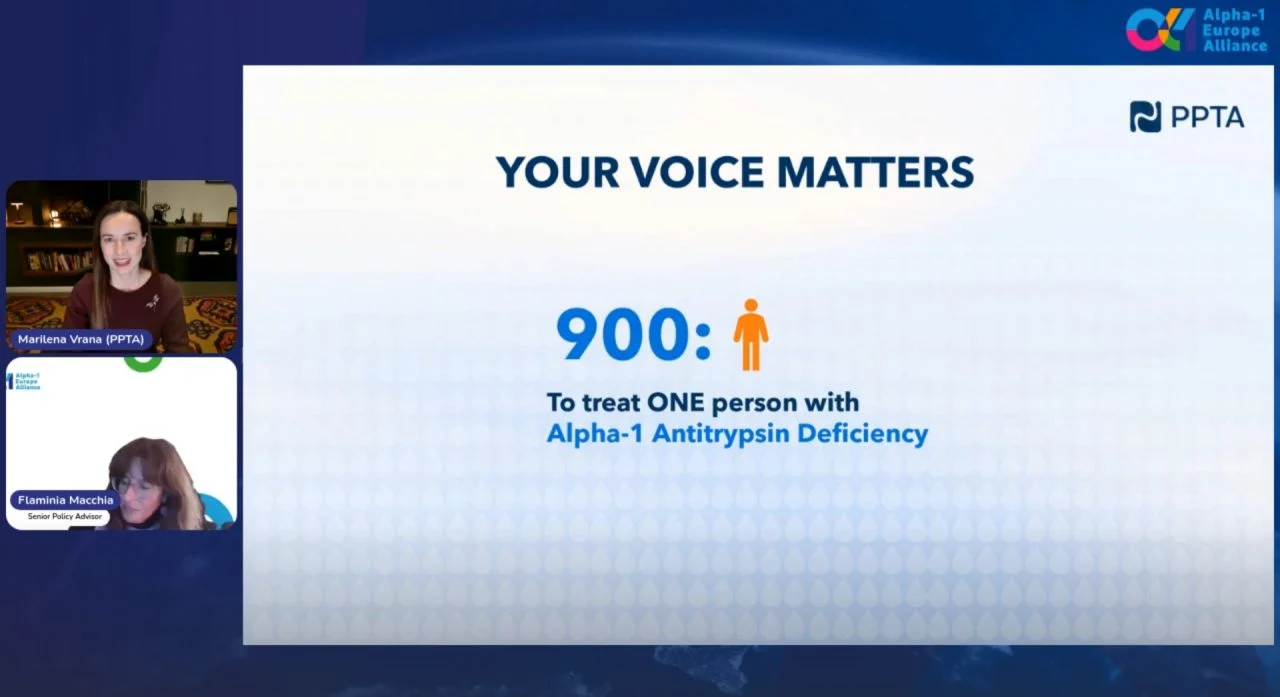
“There’s no silver bullet for weaning Europe off U.S. plasma. That was a key takeaway from yesterday’s Alpha-1 Europe Alliance asbl webinar, ‘Securing Europe’s Plasma Supply: From Policy Commitment to Action.’
Moving several levers at once is the best – and fastest – way to achieve European plasma autonomy and ensure uninterrupted patient access to plasma-derived medicines.
It was a pleasure to share perspectives with representatives of the Alpha-1 patient community, the International Patient Organisation for Primary Immunodeficiencies (IPOPI) and the European Commission.
Fernanda A., President, Alpha-1 Europe Alliance, shared her fear that the treatments she relies on for her debilitating respiratory condition might disappear. Imagine relying on a treatment to protect your lungs. You plan your life around it.
Then you wonder: will it be there when I need it?
Once the SoHO (Substances of Human Origin) regulation takes effect in August 2027, the hope is that plasma collection begins moving steadily upward.
This will happen only if Member States use the run-up to follow the lead of Austria, Czech Republic, Germany and Hungary Europe’s plasma-collection standouts.
What sets them apart? Public and private collectors that complement one another, extensive plasmapheresis backed by donor-health safeguards and well-conceived, legislated compensation models aligned with the voluntary, unpaid principle. Where a mixed collection system is in place, plasma collection runs around four times the EU average.
Patients need more plasma. It’s estimated that more than 1 million people in Europe are affected by the 12 best-known rare disease groups that can be treated with plasma medicines, including Alpha-1 and primary immunodeficiencies.
The continent shouldn’t have to import what it can collect at home. And no patient’s treatment should depend on governments depending on other governments.
Europe has the framework. Now it has to perform – for every patient who must have plasma medicines.”
Stay updated with Hemostasis Today.
-
Nov 28, 2026, 09:19Maha Othman: Raising Awareness of Cardiovascular Risks in Women
-
Nov 28, 2026, 09:07Faisal Alghamdi: Hemolytic Anemias and Sickle Cell Disease Review
-
Nov 28, 2026, 08:58Wolfgang Miesbach: Why Do Patients With Hemophilia B Still Bleed on Prophylaxis?
-
Nov 28, 2026, 08:47Chaza Alaji: Beyond Routine Tests – Investigating Cerebral Ischemia in Young Adults
-
Nov 28, 2026, 08:27Mandy Lauw: Sharing Expertise, Advancing Care – Highlights From EXPERT-PE
-
Nov 28, 2026, 08:03Saskia Middeldorp: Science and Collaboration – Learning at the EXPERT-PE Conference
-
Nov 28, 2026, 07:42Edward Lee Carter: Peptide Compounding – Kentucky Draws a Regulatory Line
-
Nov 28, 2026, 06:42Neema Ngugi: Understanding and Managing Anaemia in Chronic Kidney Disease
-
Nov 28, 2026, 05:40Sneha Singh: Why Can Haemophilic Arthropathy Progress even When Obvious Joint Bleeds are Prevented by Modern Prophylaxis?