

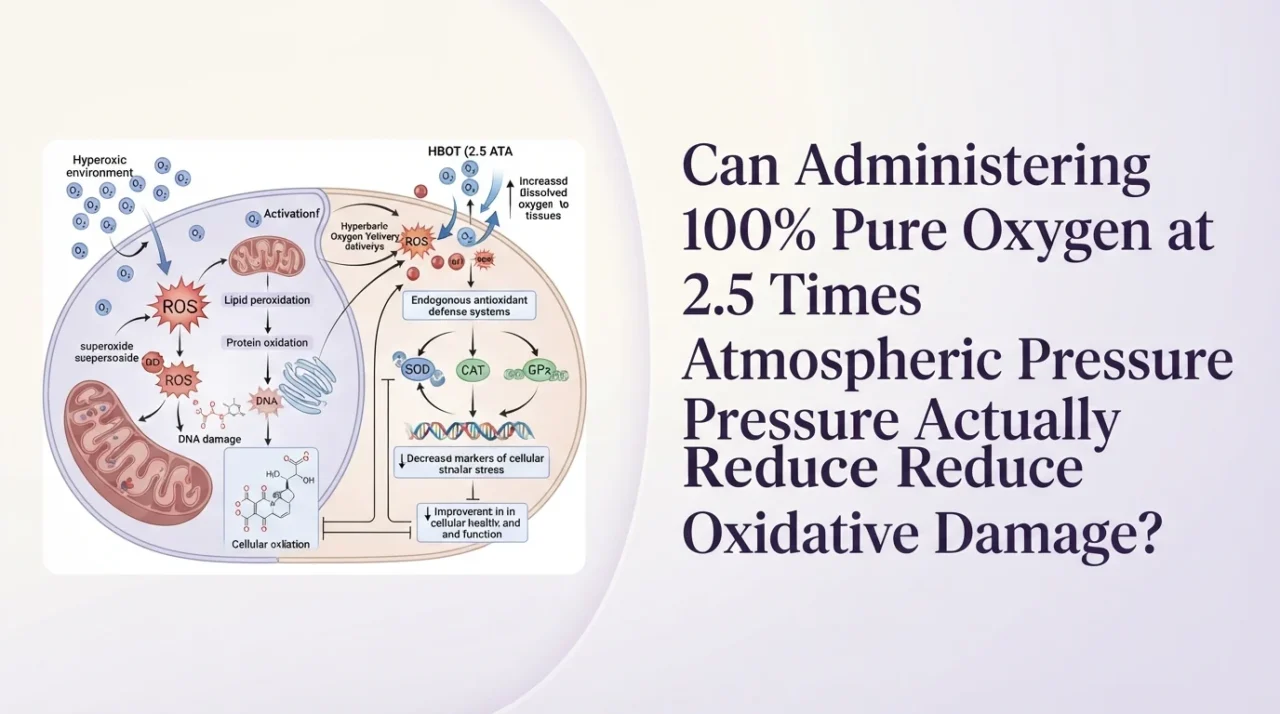
Hanie Salah: Can Administering 100% Pure Oxygen at 2.5 Times Atmospheric Pressure Actually Reduce Oxidative Damage?
Hanie Salah, Occupational Medicine Consultant, Diving and Hyperbaric Oxygen Therapy Consultant, shared a post on LinkedIn:
“Can administering 100% pure oxygen at 2.5 times atmospheric pressure actually reduce oxidative damage?
At first glance, it sounds completely counter-intuitive. In biology, we are taught that excessive oxygen fuels destructive reactive oxygen species (ROS). Yet in clinical medicine, Hyperbaric Oxygen Therapy (HBOT ) is deployed to halt some of the most aggressive inflammatory and ischemic cascades known to healthcare.
Here is the science behind the Hyperbaric Paradox:
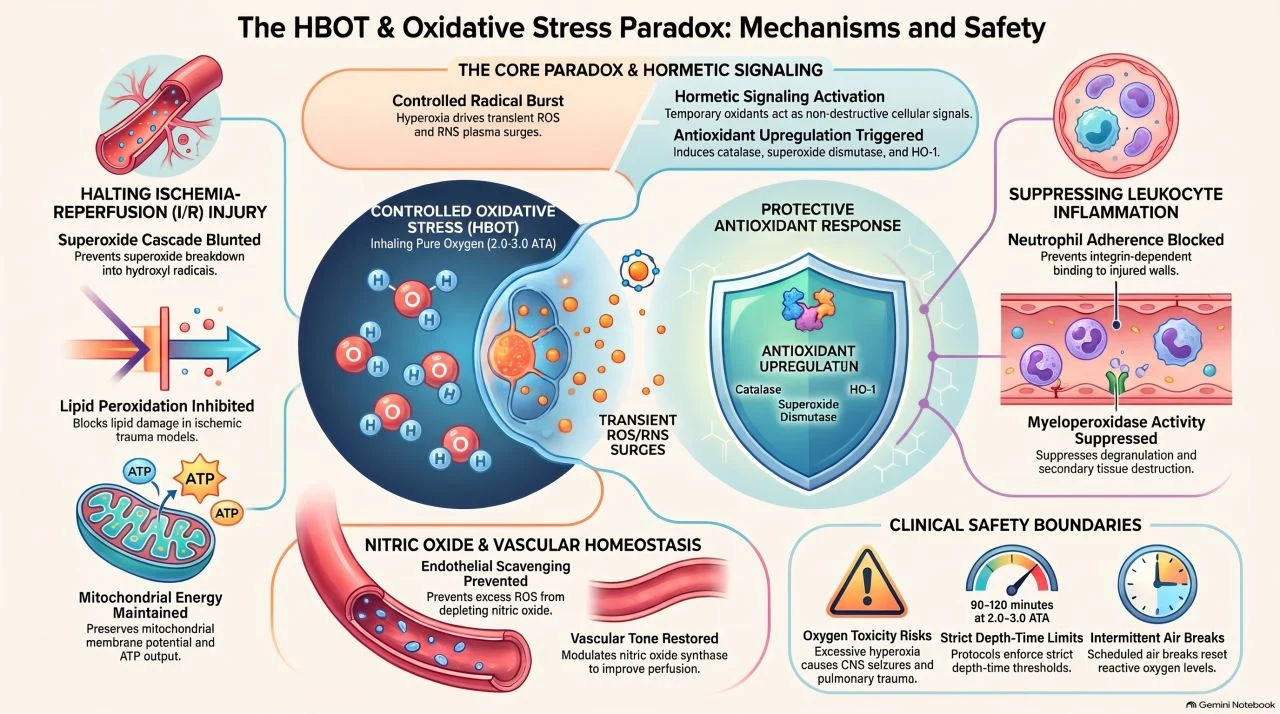
1. The Hormetic Spark (The Signal, Not the Poison)
Under clinical hyperbaric conditions (typically 2.0 to 3.0 ATA), dissolved plasma oxygen spikes dramatically, generating a transient, controlled burst of ROS and reactive nitrogen species (RNS).
Instead of overwhelming the cell, this brief burst acts as a redox signal (hormesis).
It triggers protective genetic pathways—upregulating the master antioxidant regulator Nrf2 and driving the synthesis of endogenous scavengers like:
- Superoxide Dismutase (SOD)
- Catalase (CAT)
- Heme Oxygenase-1 (HO-1)
The net result?
The tissue’s baseline antioxidant defense capacity is actively elevated against future insults.
2. Breaking the Ischemia-Reperfusion (I/R) Feedback Loop
Following severe trauma, compartment syndrome, or acute vascular occlusion, ischemic tissue starved of ATP faces a massive free radical surge upon reperfusion.
Clinical HBO directly preserves mitochondrial membrane integrity and energy production, arresting mitochondrial breakdown and actively blunting lipid peroxidation before secondary necrosis sets in.
3. Disarming Leukocyte Adherence
Much of the tissue destruction attributed to ‘oxidative stress’ is actually driven by activated neutrophils:
Hyperbaric oxygen temporarily inhibits beta_2 integrin-mediated adherence on polymorphonuclear neutrophils (PMNs).
By preventing PMNs from attaching to damaged microvascular endothelium, it shuts down localized myeloperoxidase (MPO) release, eliminating a major source of microvascular oxidative destruction.
4. Dose Makes the Medicine: Preventing Oxygen Toxicity
Because hyperbaric oxygen functions as an FDA-regulated drug, tight protocol adherence is non-negotiable. Unmonitored hyperoxia risks central nervous system (CNS) or pulmonary oxygen toxicity.
Accepted clinical protocols balance efficacy with safety using strict time-depth limits (90–120 minutes) and intermittent air breaks—allowing cellular reactive radical levels to reset while preserving therapeutic benefits.
The takeaway: Rather than simply asking how to suppress free radicals with exogenous supplements, modern medicine is learning how to harness transient oxidant pulses to reprogram endogenous cellular resilience.
Have you seen translational research where a physiological stressor is leveraged therapeutically to induce adaptation?”
Stay updated with Hemostasis Today.
-
Nov 28, 2026, 14:12Ahmed Kamal: RBC Morphological Abnormalities – Key Diagnostic Clues in Hematological Disorders
-
Nov 28, 2026, 14:01Intissar Haddiya: Antihypertensive Treatment Lowers Major Cardiovascular Events Even in Low-Risk Patients
-
Nov 28, 2026, 13:55Emily Bury: SVUH Thrombosis Team Raising Awareness for World Thrombosis Day!
-
Nov 28, 2026, 13:55Sanjeev Bagai: SARSCoV2 Infection and Long‐Term Risk of First‐Time PE and DVT
-
Nov 28, 2026, 13:48Does the Location of the Deletion of F8 Gene Matter for ITI outcome? – RPTH Journal
-
Nov 28, 2026, 12:10Yannig Querel: Recognising Undiagnosed Bleeding Disorders in Women and Girls
-
Nov 28, 2026, 12:09Diane J.: Understanding the Impact of Sickle Cell Disease on Children’s Lives
-
Nov 28, 2026, 11:38Ohad Houri: Low-Dose Aspirin for Preeclampsia Prevention in Women with Heart Disease
-
Nov 28, 2026, 11:23Ahmed Elshal: Promoting Nutrition Awareness and Iron Deficiency Prevention