


Cosmo Godino on DOAC Use in AF: Association With Acute Thromboembolic and Bleeding Events
Cosmo Godino, Interventional Cardiologist at Heart Valve Center, IRCCS San Raffaele Hospital, shared on LinkedIn:
”Is your blood thinner at the right level?
For years we’ve treated direct oral anticoagulants (DOACs) as “set and forget” drugs.
Routine monitoring wasn’t considered necessary. But the 4Levels Study challenges this assumption.
In 1 794 patients with atrial fibrillation presenting to the emergency department, we measured DOAC plasma levels at the exact moment they came in.
The findings are striking:
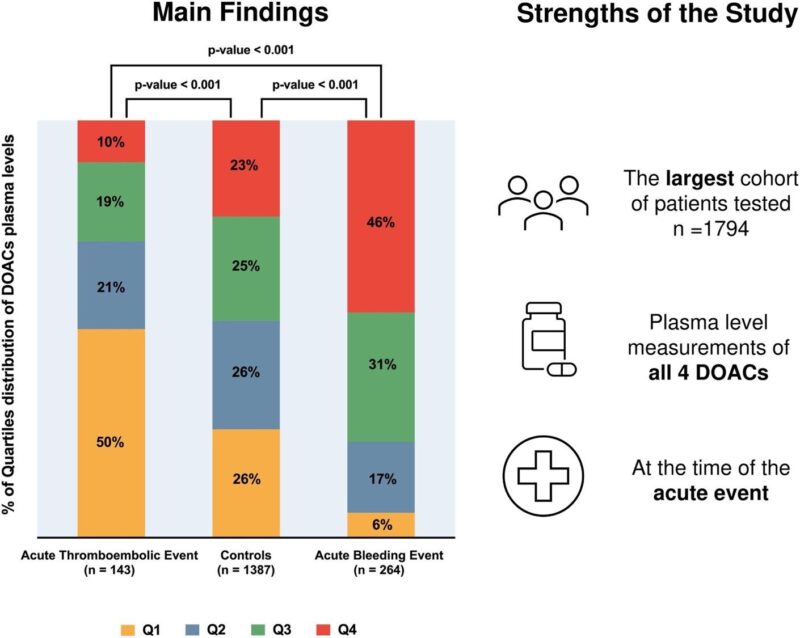
- Low drug levels ≈ doubled risk of thrombosis: half of all thromboembolic events occurred in patients with DOAC levels in the lowest quartile, versus 26 % of controls.
- High drug levels ≈ doubled risk of bleeding: 46 % of bleeding events occurred in patients with levels in the highest quartile, versus 23 % of controls.
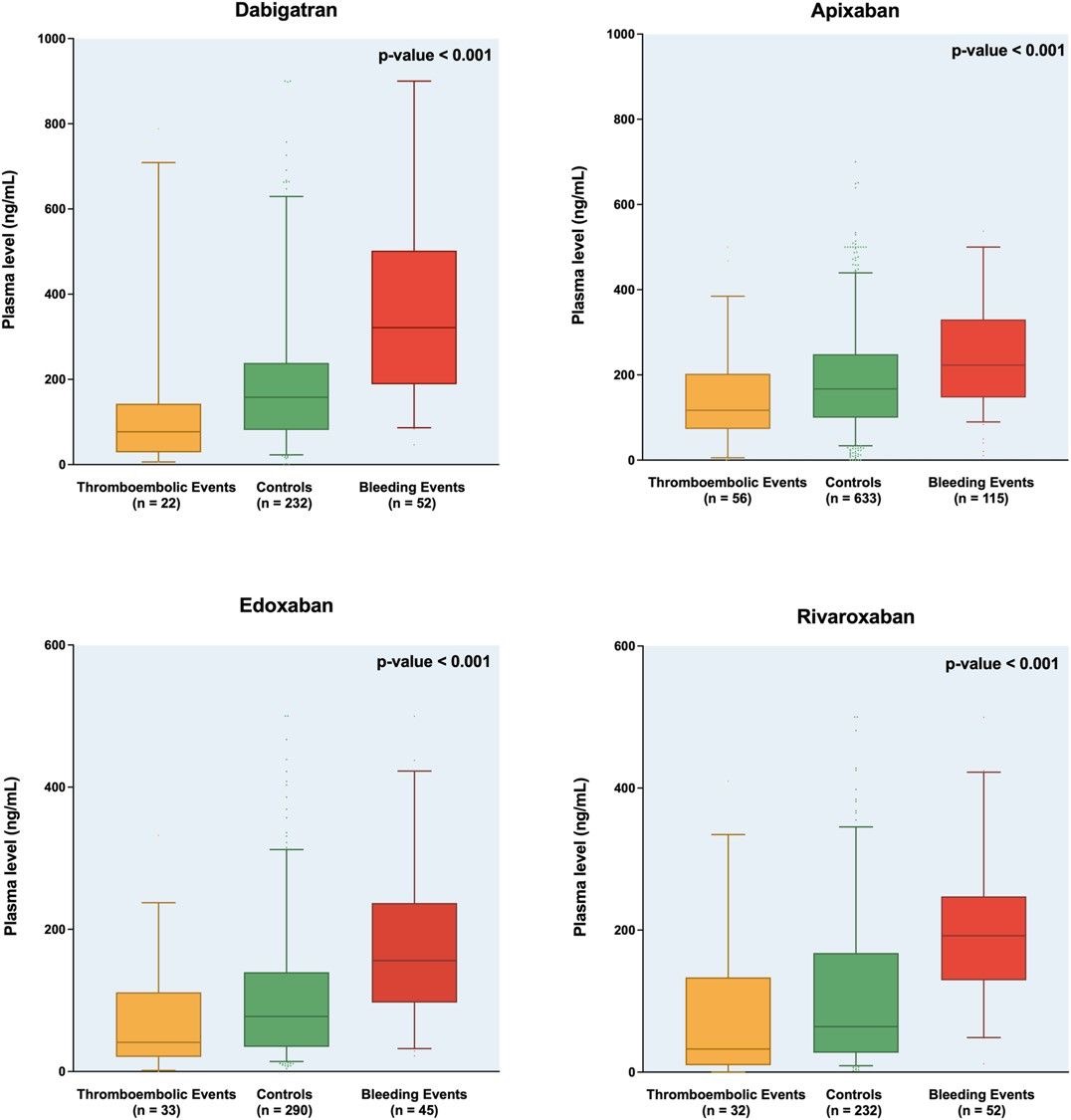
- These associations held across all four DOACs studied; odds of thrombosis or bleeding were about twice as high at the extremes.
This isn’t about trough or peak levels—it’s about drug levels at the moment patients are having strokes or spontaneous bleeds.
The controversial question: should we start monitoring DOAC levels in selected high‑risk patients? It’s too early to change practice, but the “one‑size‑fits‑all” approach may not be serving everyone.
Controlled trials are needed before any change in guidelines.
Proud to share this work with an incredible team.”
Read the full paper in JTH.
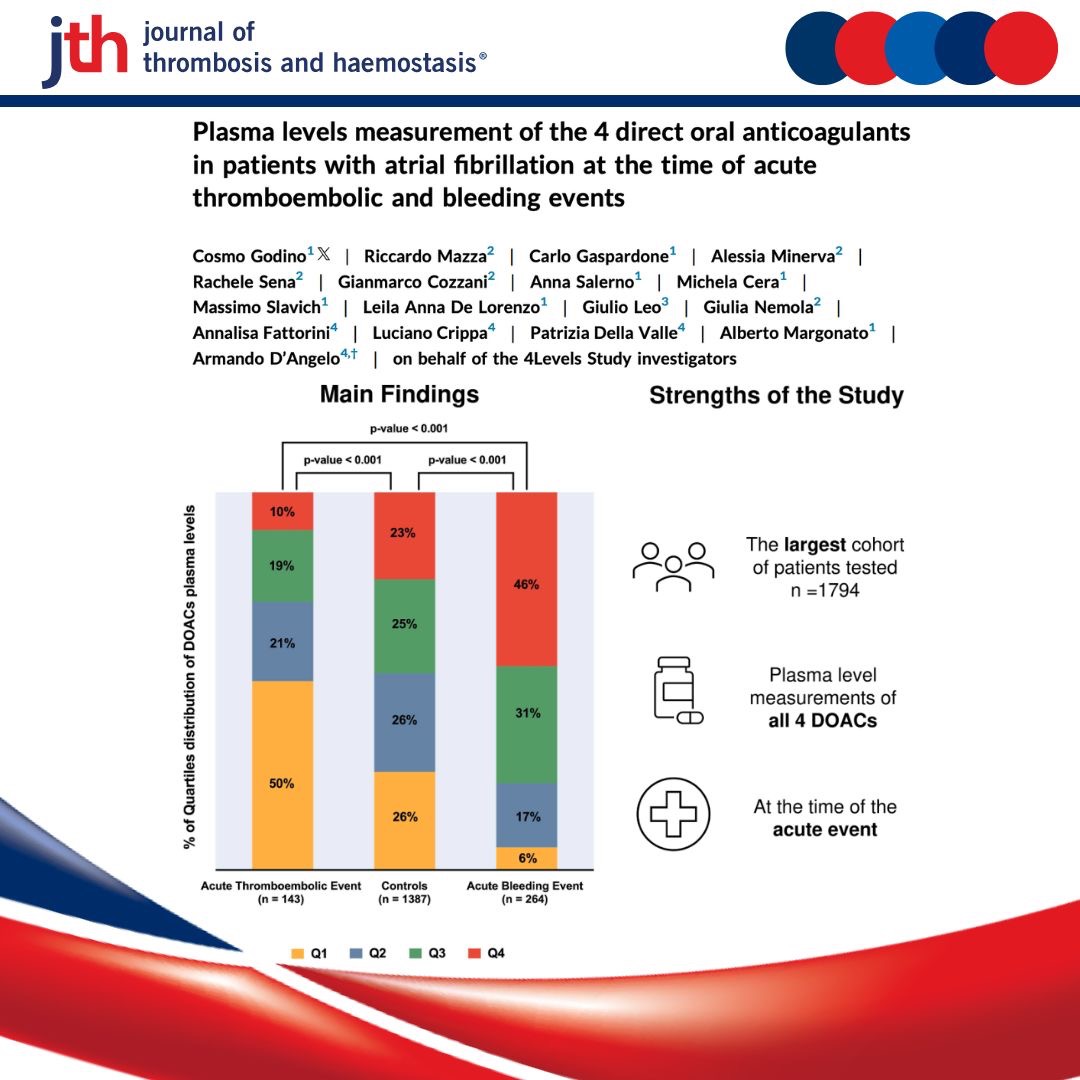
Article: Plasma levels measurement of the 4 direct oral anticoagulants in patients with atrial fibrillation at the time of acute thromboembolic and bleeding events
Authors: Cosmo Godino, Riccardo Mazza, Carlo Gaspardone, Alessia Minerva, Rachele Sena, Gianmarco Cozzani, Anna Salerno, Michela Cera, Massimo Slavich, Leila Anna De Lorenzo, Giulio Leo, Giulia Nemola, Annalisa Fattorini, Luciano Crippa, Patrizia Della Valle, Alberto Margonato, Armando D’Angelo
Stay updated on all scientific advances in the field with Hemostasis Today.
-
Nov 17, 2026, 15:26Hereditary Hemorrhagic Telangiectasia: The Molecular Connection Between Vascular Malformations and Bleeding
-
Nov 17, 2026, 14:54Cindy Neunert: Beyond Platelet Counts – Addressing Fatigue and Whole-Person Care in ITP
-
Nov 17, 2026, 14:44Strengthening Haemophilia Diagnosis Through Hands-On Laboratory Training – IAHAD
-
Nov 17, 2026, 14:40Platelet Membrane Protrusions Beyond Their Role in Hemostasis – JTH
-
Nov 17, 2026, 14:10Wolfgang Miesbach: Aspirin vs Anticoagulants – Who Needs More Than Aspirin?
-
Nov 17, 2026, 14:08Chaza Alaji: Soluble Transferrin Receptor – A Key to Uncovering Hidden Iron Deficiency
-
Nov 17, 2026, 14:03Shadi Tabibian: Fibrinogen – From Molecular Structure to Clinical Decision Making
-
Nov 17, 2026, 13:54Gabrielle Sarlon: Breaking the Silence on Menstrual Bleeding During Anticoagulant Therapy
-
Nov 17, 2026, 13:47Ksenia Guznova Kats: Advanced Venous Stenting in May–Thurner Syndrome