

Mark (Anthony) Young: Heart Intelligence Is Physiological, Not Poetic
Mark (Anthony) Young, Luos Foundation Founder, reposted from Vincentius Liong/Leong on LinkedIn:
”This research fits perfectly with what we see inside the Luos Foundation Framework. The heart isn’t just emotional it’s a biological Gate.
In Luos Foundation, the Heart Gate is the second checkpoint of perception: the stomach feels, the heart interprets, the skin broadcasts,
and only then does the brain create a thought.
So when neuroscience confirms that the heart is sending instructions upward, it validates what our Reset reveals every day thought is downstream of biology.
This is why people’s anxiety collapses, clarity returns, and identity stabilises once the organ networks are brought into coherence.
The body leads, and the mind finally follows.
Heart intelligence isn’t poetic.
It’s physiological.
And when the Gates are aligned, it becomes transformational.
© 2025 LUOS Foundation. All Rights Reserved.”
Qutoing Vincentius Liong/Leong‘s post:
”Your heart is literally thinking right now. No, seriously.
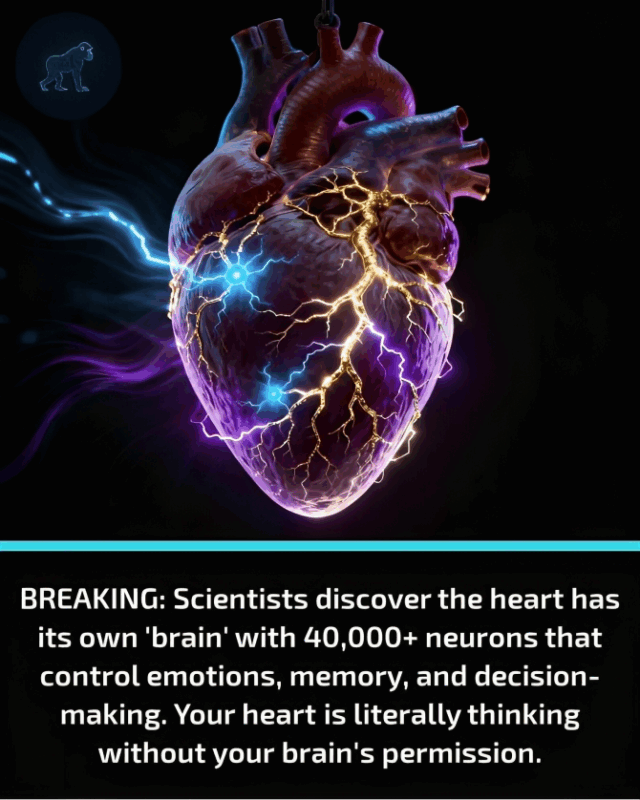
Scientists just confirmed something that sounds like science fiction but it’s 100% real. Your heart has its own brain with over 40,000 neurons that are actively shaping your thoughts, emotions, and decisions at this very moment.
Everything we thought we knew about how our body works just changed.
This isn’t some ancient philosophy or spiritual belief. This is cutting-edge neuroscience that’s rewriting the textbooks.
The heart contains what researchers call the ‘intrinsic cardiac nervous system’, a sophisticated network of neurons that operates independently from the brain. These 40,000+ neurons don’t just keep your heart beating. They process information, make decisions, and send commands UP to the brain that actually change how you think and feel. The heart isn’t taking orders. It’s giving them.
Studies at the HeartMath Institute have shown that the heart sends more signals to the brain than the brain sends to the heart. These signals can either enhance or inhibit brain function depending on the heart’s rhythm patterns. When you’re stressed or anxious, your heart sends chaotic signals that literally make it harder to think clearly. But when you’re calm and centered, your heart creates coherent patterns that improve cognitive function, emotional stability, and even reaction times.
This explains why heartbreak feels physical, why gut feelings often come from the chest, and why breathing exercises that focus on the heart can instantly shift your mental state. Your heart is reading your environment, processing emotional information, and communicating with every system in your body through electromagnetic fields that extend several feet beyond your skin. Other people can actually detect your heart’s signals, which might explain why we can ‘feel’ someone’s presence or energy.
The implications are massive. This research is changing how we treat anxiety, PTSD, depression, and even how we approach education and peak performance. Doctors and therapists are now incorporating heart-focused techniques into treatment plans with remarkable results.
Sources and References:
HeartMath Institute Research Library, Neurocardiology studies published in the American Journal of Physiology, Dr. J. Andrew Armour’s work on the ‘heart brain’ at the University of Montreal, and research from the Institute of HeartMath in California.
- For deeper reading, check out ‘The Heart’s Code’ research compilation and peer-reviewed studies on heart-brain communication in neuroscience journals.
- Read and learn more.”
Stay updated with Hemostasis Today.
-
Oct 16, 2026, 18:12Adil Nawaz: Extended Dual Antiplatelet Therapy After Coronary Stenting
-
Oct 16, 2026, 17:50Elad Asher։ STORM-PE Shows Functional Benefits of Thrombectomy
-
Oct 16, 2026, 17:32Shruthi Narayan: STORM-PE and STRIKE-PE Studies Advance Understanding of Recovery After Pulmonary Embolism
-
Oct 16, 2026, 17:22Wolfgang Miesbach։ What a Near-Perfect FISH Score Fails to See
-
Oct 16, 2026, 17:06Troels Wienecke: Connecting Myeloproliferative Disease and Ischemic Stroke
-
Oct 16, 2026, 17:03Only 5 Days Left to Submit Your Research for EAHAD 2027
-
Oct 16, 2026, 16:48Abdul Rahman: Reticulocyte Count and Bone Marrow Activity
-
Oct 16, 2026, 16:44DOAC Adherence in Stroke Patients With Atrial Fibrillation – International Journal of Stroke
-
Oct 16, 2026, 16:22Shannon Farmer: Driving Patient Blood Management Forward in Australia and New Zealand