


Jonathan Douxfils on a Dangerous Misconception: Why Factor V Leiden + the Pill Is a Major Problem
Jonathan Douxfils, Board Member of Belgian Society on Thrombosis and Haemostasis, shared on LinkedIn:
“Factor V Leiden, the pill and VTE: why “it’s not a problem” is a problem
Yesterday evening, in a discussion with colleagues, I heard:
“Prescribing a combined oral contraceptive (COC) to a woman with Factor V Leiden is not really a problem.”
➡ I fundamentally disagree.
Not because COCs are “bad” – they are highly effective and bring important benefits (cycle control, less bleeding and pain, acne, well-being, sexuality).
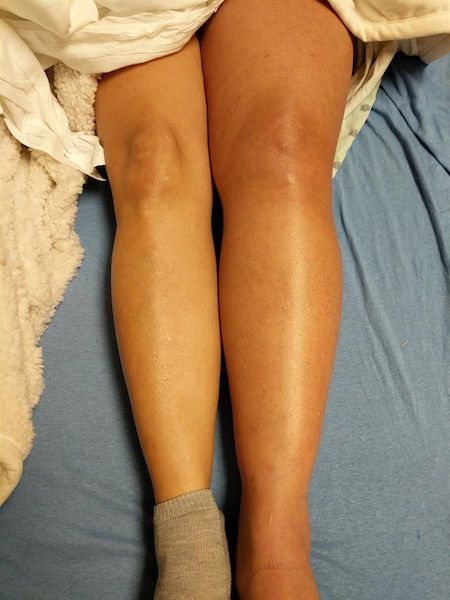
But in a young, otherwise healthy woman, a pill-associated VTE is not a minor, one-off complication.
1. FVL + COC: the risk is not trivial
We know that:
– COCs alone: 3–4× increase in first VTE
– Heterozygous FVL alone: 3–7× increase
– Combined FVL + COC: multiplicative, 20–35× higher VTE risk vs non-carriers without COCs
This is why WHO Medical Eligibility Criteria classify known high-risk thrombophilia (including FVL) as category 4 for combined hormonal contraception – i.e. unacceptable risk
2. VTE in a young woman is not “just a clot”
VTE is often reduced to “a rare event treated with a few months of anticoagulation”.
Reality:
– PTS after DVT in 20–30% (5–10% severe)
– After PE, up to 50% with persistent dyspnoea; 3–4% develop CTEPH
Large registry data: ≈2.3× higher risk of permanent work-disability after VTE
For a 20–30-year-old woman, this can mean decades of symptoms, anxiety, restrictions (travel, sport, pregnancies) and a real risk of long-term loss of work capacity.
3. The societal cost of “one VTE”
Economic data are rarely mentioned in contraceptive counselling:
– 3-year societal cost of a single VTE ≈ 50,000 € (2025 prices)
– If a major bleed occurs while on anticoagulation, total 3-year cost can reach ≈110,000 €
These figures exclude many long-term costs (chronic PTS/CTEPH, disability pensions, reduced productivity) – so true lifetime cost is higher.
4. POPs for everyone is not the answer
Progestin-only methods are essential, especially for high-risk women, but a blanket “POP-first” policy ignores that estrogens bring important added value and that many women will not accept unpredictable bleeding patterns long term.
The point is not COCs vs POPs for everyone, but:
The right method for the right woman, at the right time, based on her thrombotic risk and her priorities.
That implies: taking family/personal VTE history seriously, recognising hereditary/acquired thrombophilia as true modifiers of risk (and searching for it by exploring cost-effective screening strategies?), and favouring safer estrogen–progestin combinations (including natural estrogens) when an estrogen is truly beneficial.
It is time to think holistically and responsibly
A 20–35-fold increase in VTE risk in a young woman is not “not a problem” – medically, ethically, or economically.”
Never miss an update from Hemostasis Today.
-
Sep 21, 2026, 15:23Anis Mahjoubi: MRI Findings of Krukenberg Tumors
-
Sep 21, 2026, 15:08Fikreab Tesfaye Tefera: 10 Practical Take-Home Points for Diagnosing Iron Deficiency Anemia
-
Sep 21, 2026, 14:10Aswin K Mohan: Lessons from TRANSCON 2026: Building Resilient Blood Supply Systems Before Crisis Hits
-
Sep 21, 2026, 14:00Vincent Lu: Beyond PT and aPTT – How Hemostasis Evolves Across a Lifetime
-
Sep 21, 2026, 13:56Alex Knapp: Emerging Technologies and Advances in Hemophilia Care
-
Sep 21, 2026, 13:51Abdalhakim Shubietah: pLAAO Fails Noninferiority to OAC in Landmark Meta-Analysis of 7 RCTs
-
Sep 21, 2026, 13:21In His Last UNGA, António Guterres Delivers a Urgent Call for Global Unity
-
Sep 21, 2026, 13:14Fatih Mehmet Gul: Are We Moving Faster Than Our Ability to Ask ‘Should We?’
-
Sep 21, 2026, 13:08Sangita Reddy: How Does Our Own Healthcare Journey in India Look Through the Same Lens?