

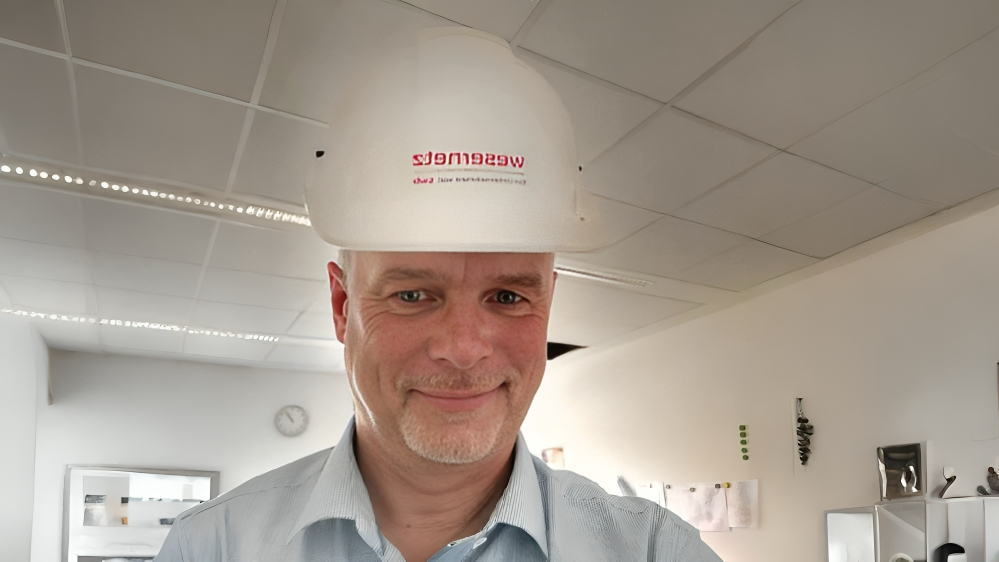
Thorsten Wunde: Michael DeBakey Did Not Wait for the Future of Medicine
Thorsten Wunde, Specialist at Wesernetz Bremen GmbH, shared on LinkedIn:
”When Michael DeBakey picked up a length of Dacron fabric in a Houston department store and told the clerk he needed it to rebuild a human artery, the man laughed. DeBakey did not. He walked out with the material because he knew the future of vascular surgery depended on something no manufacturer was willing to supply.
DeBakey lived in a world where medicine still surrendered to limits.
Heart patients died in operating rooms because surgeons did not yet have the tools or the techniques that could keep them alive.
DeBakey refused to accept that.
He believed the body could be repaired the same way a craftsman repaired a delicate machine: with precision, invention, and calm hands.
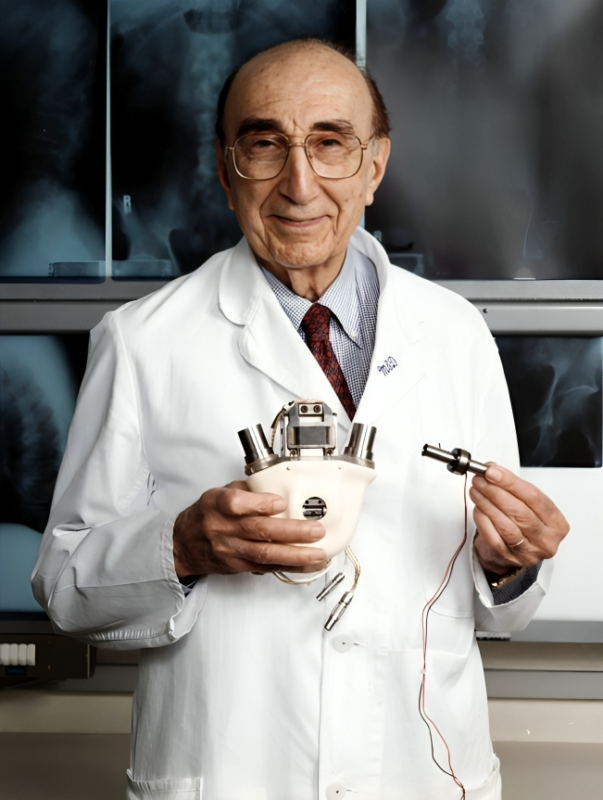
He designed a roller pump at 23 years old, a device that later became a core component of the heart-lung machine.
It kept blood moving outside the body during surgery, a breakthrough that opened the door to procedures once considered impossible.
Surgeons around the world adopted it.
DeBakey treated it as only the beginning.
In the 1950s, when no company produced grafts strong enough to replace damaged arteries, he went to a store, bought Dacron fabric, brought it back to the lab, and stitched prototypes on a sewing machine.
He tested them, refined them, and implanted them successfully.
Patients who had once been given weeks to live left the hospital walking upright.
Then came the era of open heart surgery.
DeBakey performed some of the first aortic aneurysm repairs ever attempted.
He operated on soldiers, senators, and ordinary people who arrived at the edge of death.
His team described his focus as almost unnerving.
He moved with a steadiness that made the room feel anchored even in moments when the stakes were measured in seconds.
In 1966, he helped develop the Mobile Army Surgical Hospital units.
Those MASH units brought advanced surgical care closer to the battlefield and dramatically increased survival rates.
DeBakey saw war not as a theater of heroism but as a place where medical innovation had to move faster than destruction.
He advised presidents.
He chaired committees that reshaped medical education.
He built one of the world’s leading cardiovascular centers.
But for all the influence and accolades, the moments that defined him happened in silence, in operating rooms where a surgeon’s mistakes had consequences no lecture hall could address.
Near the end of his life, he underwent the very aortic surgery he pioneered.
He survived it at age 97, a living contradiction who owed his life to his own ideas.
Michael DeBakey did not wait for the future of medicine.
He stitched it by hand, piece by piece, until the impossible became routine and the operating room became a place where hope could finally outrun fear.”
Stay informed with Hemostasis Today.
-
Aug 21, 2026, 21:58Toby Richards: WEHI Trial Solidifies IV Iron as Third-Trimester Standard
-
Aug 21, 2026, 21:51Mehak Trehan: From Reading the Chapter to Writing One
-
Aug 21, 2026, 21:38Ann Reilly: Navigating Postoperative vs. Acute Blood Loss Anemia – A CDI Case Study
-
Aug 21, 2026, 21:29Merlin Crossley: Atomic Precision in Sickle Cell Care – Structural Targeting for Fetal Globin Reactivation
-
Aug 21, 2026, 19:09Aphisit Thongthaisin: Admitted to Sorbonne University’s T2H University Diploma for 2026/2027
-
Aug 21, 2026, 19:07José Luis Ferreiro Gutiérrez: Proud to Be Elected Chairperson-Elect of the ESC Working Group on Thrombosis
-
Aug 21, 2026, 19:00Manuel Monreal: New RIETE Registry Data on VTE Recurrence and Bleeding During Anticoagulation
-
Aug 21, 2026, 18:39Ronak H. Mistry: Updated ASH ITP Guidelines Bring New Guidance for Managing ITP
-
Aug 21, 2026, 18:22Ahmed Bennis: NOAC Use Is Associated With Slower Cognitive Decline in AF and Alzheimer’s Disease