

Dr Abdul Mannan: Iron Deficiency Can Hide Beta-Thalassaemia Trait
Dr Abdul Mannan, Consultant Haematologist at Betsi Cadwaladr University Health Board shared a post on LinkedIn:
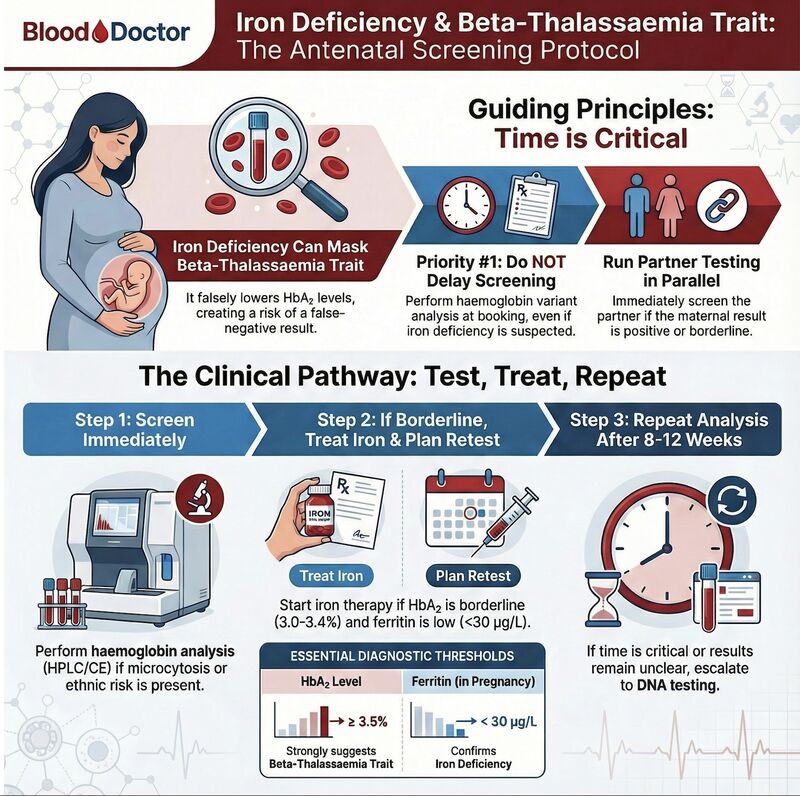
”Iron deficiency can hide beta-thalassaemia trait.
This creates a real problem in antenatal screening.
Here’s why: Low iron falsely lowers HbA₂ levels. The result? A pregnant woman with beta-thalassaemia trait can get a false-negative result. And that means missed genetic counselling.
The solution is simple. Don’t wait.
Here’s what every obstetric team needs to know:
Screen at booking, even if iron deficiency is suspected. Don’t delay haemoglobin variant analysis.
Borderline HbA₂ (3.0-3.4%) with low ferritin (<30 µg/L)? Start iron therapy and retest after 8-12 weeks.
Test the partner in parallel if the maternal result is positive or borderline. Time matters.
When results remain unclear, escalate to DNA testing. Don’t guess.
The UK NHS Sickle Cell and Thalassaemia Screening Programme is clear on this: Timing keeps options open for couples who may be at risk of having a child with thalassaemia major.
Are you seeing borderline HbA₂ results in your antenatal patients? How do you handle them?”
More posts from Dr Abdul Mannan on Hemostasis Today.
-
Sep 25, 2026, 12:43Thomas Dayspring: Reshaping the Biology of Atherosclerotic Plaques with New Therapies
-
Sep 25, 2026, 12:14Garima Sharma: Community Clinical Linkages for Better Postpartum Cardiovascular Care
-
Sep 25, 2026, 10:49Shefina S: From Presenting to Hosting at TRANSCON 2026
-
Sep 25, 2026, 10:37Michelle Leona Cecil: Hemophilia Advocacy and the Power of Community
-
Sep 25, 2026, 10:13Michael Baria: Platelet Concentration and PRP Outcomes in Partial Rotator Cuff Tears
-
Sep 25, 2026, 09:49Haley Coleman: Volunteering to Support Hemophilia Awareness
-
Sep 25, 2026, 08:55Hitarth Mehta: BHMS Students Gain Practical Exposure to Haemophilia Diagnosis
-
Sep 25, 2026, 07:25Varun Capoor: How Therapeutic Apheresis and Transfusion Medicine Can Complement Clinical Management in SCD
-
Sep 25, 2026, 07:14Manshi Kesharwani: SAK-GQDs Modulate Thrombus Burden and Endothelial Function in Deep Vein Thrombosis