

Yves Bikorimana: What Every Lab and Clinician Should Know on Pseudothrombocytopenia
Yves Bikorimana, CEO at MedData-Rwanda and Lab Scientist at The University Teaching Hospital of Kigali-Chuk, shared a post on LinkedIn.
“Pseudothrombocytopenia (PTCP): What Every Lab and Clinician Should Know
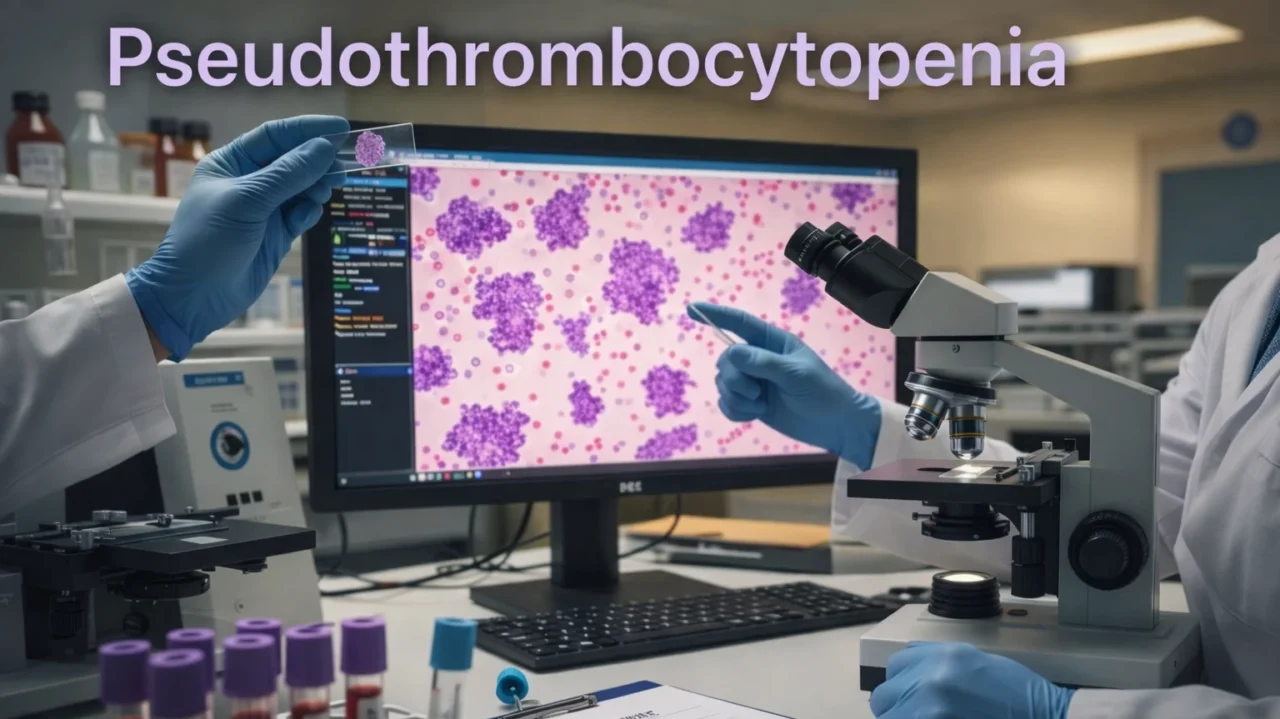
Pseudothrombocytopenia is a laboratory artifact where platelet counts appear falsely low on automated analyzers, despite the patient having a normal platelet count in vivo. Importantly, it is not a true clinical thrombocytopenia and does not increase bleeding risk.
Why does it happen?
The most common cause is EDTA-dependent platelet clumping. In some individuals, EDTA (the anticoagulant used in routine CBC tubes) exposes platelet surface antigens, leading to antibody-mediated platelet aggregation. Automated analyzers then misinterpret these clumps as leukocytes or exclude them entirely, resulting in a falsely low platelet count.
Key Laboratory Features
- Low platelet count on automated CBC
- Platelet clumps visible on peripheral blood smear
- Normal platelet count when blood is collected in:
- Sodium citrate
- Heparin
- Magnesium sulfate (rarely used but effective)
Clinical Significance
- Patients are usually asymptomatic
- No bleeding manifestations
- Can be mistaken for serious conditions like:
- Immune thrombocytopenic purpura (ITP)
- Bone marrow disorders
- Drug-induced thrombocytopenia
Why recognition matters
Failure to identify PTCP can lead to:
- Unnecessary platelet transfusions
- Inappropriate treatments (e.g., steroids, IVIG)
- Delays in surgeries or invasive procedures
- Patient anxiety and misdiagnosis
Best Practice Approach
- Always review the peripheral smear when thrombocytopenia is detected
- Repeat platelet count using an alternative anticoagulant
- Correlate laboratory findings with clinical presentation
Take-home message
Pseudothrombocytopenia highlights the importance of laboratory-clinical correlation and the continued value of manual smear examination in modern diagnostics.”
Find the latest updates on Hemostasis Today.
-
Oct 21, 2026, 10:11Tau Braun: Clots Through the Copper-Zinc Model
-
Oct 21, 2026, 09:55Cristina Figueroa Villalba: Celebrating Excellence in Transfusion Medicine
-
Oct 21, 2026, 09:43Ahmad Gharehbaghian: How Can Blood Supplies Be Sustained During a Crisis?
-
Oct 21, 2026, 09:30Adrián Dante De Angelis: Research That Opens New Possibilities for Recurrent iTTP
-
Oct 21, 2026, 09:13Jarod Horobin: Blood 2026 – Connecting Science and People
-
Oct 21, 2026, 08:35Raeeda Gheewala: VTE in Athletes – Risks Beyond the Playing Field
-
Oct 21, 2026, 08:29Andreas Kronbichler: The Changing Landscape of CV Risk in ANCA-Associated Vasculitis
-
Oct 21, 2026, 08:21Pham Quy: Taking Stroke Awareness Beyond Hospitals and Into the Community
-
Oct 21, 2026, 07:15Mahmoud Saad: Successful Mechanical Thrombectomy for Right Atrial Thrombosis